How Thais Tell Time: The 6 Hour System Explained
January 01, 2026 01:45 AM
Last edited: April 30, 2026
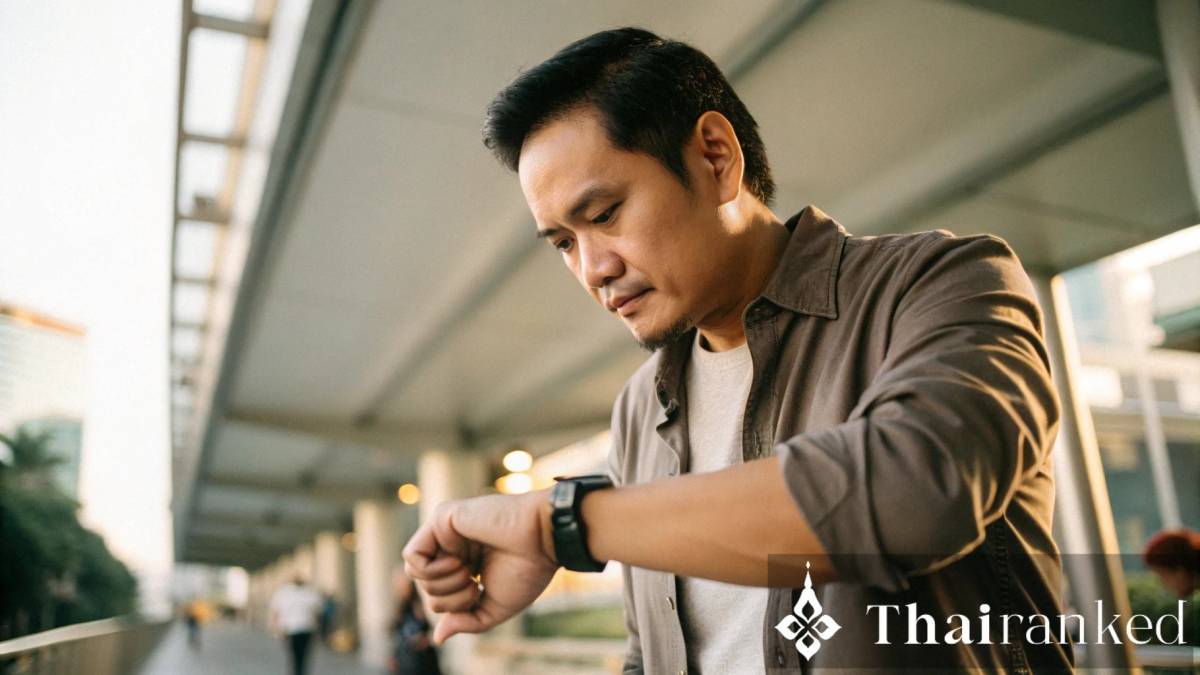

by Thairanked Guide
Thairanked helps you discover great places in Thailand!
Search Hotels & Flights





If you have ever set a meetup in Thailand and heard someone say “เจอกันหนึ่งทุ่ม (nueng thum),” you might have wondered, wait, what clock are we using? Thailand’s everyday, spoken time isn’t strictly a 12-hour or 24-hour system. Most Thais use a practical six-hour cycle with distinct words for different parts of the day. Once you learn the pattern, telling time in Thai feels intuitive and charming.
Why Thai time feels different
In daily conversation, Thais don’t use “7 p.m.” or “19:00.” They use a set of words that map the day into four blocks forming a 6 hour system cycle:
- Late night to early morning: ตี (dtii)
- Morning: โมงเช้า (moong chao)
- Noon and afternoon: เที่ยง/บ่าย (thiang/bai)
- Evening and night: โมงเย็น/ทุ่ม (moong yen/thum)
Thailand uses the 24-hour clock for timetables, tickets, hospitals, banking, and government services. In conversation, you hear this six-hour cycle everywhere, from street food stalls to a family dinner invite. If you're planning on experiencing more of daily Thai life, check out our guide to Thai street food culture.
The Thai six-hour cycle, step by step
Here is the “hour calculation” Thais use, from midnight through night. Master these anchors and you can convert any time quickly.
Midnight to before dawn: ตี (dtii)
This block covers 1:00–5:59 a.m. The word ตี means “to strike,” recalling striking a drum or bell to announce the hour at night.
- 1:00 a.m. = ตีหนึ่ง (dtii neung)
- 2:00 a.m. = ตีสอง (dtii song)
- 3:00 a.m. = ตีสาม (dtii saam)
- 4:00 a.m. = ตีสี่ (dtii sii)
- 5:00 a.m. = ตีห้า (dtii haa)
- 12:00 a.m. sharp = เที่ยงคืน (thiang khuen, midnight)
6:00 a.m. marks the switch to the morning block below.
Morning: โมงเช้า (moong chao)
Covering 6:00–11:59 a.m., this period counts hours with the word โมง and adds เช้า to mark the morning.
- 6:00 a.m. = หกโมงเช้า (hok moong chao)
- 7:00 a.m. = เจ็ดโมงเช้า (jet moong chao)
- 8:00 a.m. = แปดโมงเช้า (bpàet moong chao)
- 9:00 a.m. = เก้าโมงเช้า (gao moong chao)
- 10:00 a.m. = สิบโมงเช้า (sip moong chao)
- 11:00 a.m. = สิบเอ็ดโมงเช้า (sip et moong chao)
- 12:00 p.m. = เที่ยง or เที่ยงวัน (thiang wan, noon)
Noon to late afternoon: เที่ยง, บ่าย, and โมงเย็น
After noon, Thai splits the period into early afternoon “บ่าย (bai)” and late afternoon/early evening “เย็น (yen).” You hear both patterns in daily life:
- 1:00 p.m. = บ่ายโมง (bai moong)
- 2:00 p.m. = บ่ายสองโมง (bai song moong)
- 3:00 p.m. = บ่ายสามโมง (bai saam moong)
- 4:00 p.m. = สี่โมงเย็น (sii moong yen)
- 5:00 p.m. = ห้าโมงเย็น (haa moong yen)
- 6:00 p.m. = หกโมงเย็น (hok moong yen)
Some speakers drop บ่าย or เย็น if the context is clear. As a learner, using them makes things clear. เที่ยงครึ่ง (12:30 p.m.) is a useful term for half past noon.
Night: ทุ่ม (thum) and back to midnight
After early evening, Thai switches to ทุ่ม for night hours. This covers 7:00–11:59 p.m.
- 7:00 p.m. = หนึ่งทุ่ม (nueng thum)
- 8:00 p.m. = สองทุ่ม (song thum)
- 9:00 p.m. = สามทุ่ม (saam thum)
- 10:00 p.m. = สี่ทุ่ม (sii thum)
- 11:00 p.m. = ห้าทุ่ม (haa thum)
- 12:00 a.m. = เที่ยงคืน (midnight, cycle resets)
Quick conversion guide you can remember
- 00:00 = เที่ยงคืน
- 01:00–05:00 = ตีหนึ่ง ถึง ตีห้า
- 06:00–11:00 = หกโมงเช้า ถึง สิบเอ็ดโมงเช้า
- 12:00 = เที่ยง
- 13:00–15:00 = บ่ายโมง, บ่ายสองโมง, บ่ายสามโมง
- 16:00–18:00 = สี่โมงเย็น ถึง หกโมงเย็น
- 19:00–23:00 = หนึ่งทุ่ม ถึง ห้าทุ่ม
If you forget a word, say the 24-hour time. Most Thais will understand, especially in cities. Want more on daily routines? Our Bangkok digital nomad guide will help you fit in fast.
Saying minutes, halves, and quarters
Once you know the hour block, add minutes as in English. The key words: นาที (minutes) and ครึ่ง (half past).
- 7:30 a.m. = เจ็ดโมงครึ่ง (jet moong krueng)
- 2:15 p.m. = บ่ายสองโมงสิบห้านาที or บ่ายสองสิบห้า
- 5:45 p.m. = ห้าโมงสี่สิบห้านาที or ห้าโมงสี่ห้า
- 8:30 p.m. = สองทุ่มครึ่ง
- 12:30 a.m. = เที่ยงคืนครึ่ง
- 3:05 a.m. = ตีสามห้านาที
To say “in X minutes,” use อีก (eek): “อีกสิบนาทีถึงหนึ่งทุ่ม,” meaning “in 10 minutes it will be 7 p.m.” Thais often state minutes past the hour rather than minutes to the next hour.
Where to expect the 24-hour vs. Thai 6-hour system
Thailand runs two parallel systems: conversational six-hour, and the official 24-hour format. Knowing where each appears avoids mistakes.
- 24-hour is standard on airline and train tickets, bank slips, hospital appointments, hotel confirmations, official notices, and many shop signs.
- Six-hour Thai is standard in speech with friends, on the phone with a restaurant, with a taxi driver, and in daily interactions.
For government offices or visas, always check posted opening times in 24-hour format and confirm in Thai if you call. For Bangkok, see Immigration opening hours. The Thai Customs guide can also help you plan your timing at the airport.
Common pitfalls to handle
- 1 p.m. is not “หนึ่งโมงเช้า.” Use บ่ายโมง. “หนึ่งโมงเช้า” has no meaning because morning hours run 6–11 a.m.
- 6 p.m. is หกโมงเย็น, not หนึ่งทุ่ม. หนึ่งทุ่ม starts at 7 p.m.
- Noon and midnight use special words. Use เที่ยง (noon) and เที่ยงคืน (midnight). 12:30 p.m. becomes เที่ยงครึ่ง.
- Dropping time-of-day words may confuse. Thais often say only “สี่โมง” or “ห้าโมง” and rely on context. As a visitor, add เช้า/เย็น/บ่าย or confirm using the 24-hour time.
- Minutes formatting changes in casual speech. You may hear the full “นาที” or a short number, especially in informal contexts.
The roots of Thailand’s system
Thailand’s spoken time blends tradition and modernization. Before mechanical clocks, communities marked hours by sound, using drums or gongs at temples and city gates. Night hours take the word ตี (to strike) and evening hours use ทุ่ม (to strike or throw), echoing audible signals instead of numerals.
The term โมง is the spoken “o’clock” in Thai, and has links to regional Southeast Asian words for hours. Noon is เที่ยง, literally “straight” or “exact mid,” similar to how many cultures name midday. Thai also knew ยาม, night watches or segments, for military and household routines.
In the late 19th and early 20th centuries, as railways and trade grew, Siam standardized clock time and introduced modern calendars. A national time zone enabled schedules and long-distance connections. The 24-hour clock became the official written form. The listener-friendly six-hour phrasing stayed dominant in speech. That's why you see 24-hour digits on your tickets but hear “สองทุ่ม” at dinner. If you like stories of how Thai traditions meet modern life, also see why Thailand celebrates New Year three times.
Comparing Thai time with other countries
Most countries use a 12-hour frame (a.m./p.m.) or rely on the 24-hour clock, especially in transport. Thailand stands out for its six-hour spoken cycle using unique words for each block.
- United States and UK: Use a 12-hour clock in speech, a.m./p.m. to clarify, and 24-hour in transport and medicine.
- Continental Europe: Use the 24-hour clock. “19:30” spoken is normal in many languages.
- East Asia: China, Japan, and Korea use the 24-hour clock for speech and writing. Traditionally, China used 12 “double hours,” Japan had variable seasonal hours. Both moved to modern time by the 20th century.
- Nearby Southeast Asia: Laos, sharing roots with Thai, uses similar patterns. Cambodia and Vietnam use more global 12/24-hour methods, but local phrasing varies.
- Maritime and military: Use the 24-hour clock to prevent confusion, mirroring Thai public services.
Thailand’s six-hour system fits comfortably next to the 24-hour standard used for official needs. For more insight on local culture, browse our guide to Thai concepts like Kreng Jai.
Real-life phrases you will hear
- “เจอกัน บ่ายสาม ที่ห้างนะ” , See you at 3 p.m. at the mall.
- “รถออก ห้าโมงเย็น” , The bus leaves at 5 p.m.
- “นัดคุณหมอ สิบโมงเช้า” , Doctor appointment is 10 a.m.
- “ร้านปิด ห้าทุ่ม” , The shop closes at 11 p.m.
- “ส่งของ ตีสี่” , Deliver at 4 a.m.
Practical tips for mastering Thai time
- Learn the anchors: เที่ยง, เที่ยงคืน, บ่ายโมง, สี่โมงเย็น, หนึ่งทุ่ม. With these, you can handle any time reference.
- Confirm important times as digits: For flights or deliveries, repeat the time in 24-hour digits. Use these tips when planning or booking Bangkok hotels.
- Switch your phone to 24-hour display to avoid mistakes. For local phone numbers or data, read our eSIM vs SIM guide for Thailand.
- Use the right time-of-day word: เช้า for morning, บ่าย for early afternoon, เย็น for late afternoon/early evening, ทุ่ม for night, ตี for pre-dawn. It shows your grasp of the Thai system.
- Write it down for official visits: Immigration, banks, hospitals use precise hours. Reference Immigration opening hours if needed.
- Practice with events you care about: Planning a holiday dinner, countdown, or visit? Learn phrases like เที่ยงครึ่ง and หนึ่งทุ่ม to make plans smooth. For a deeper dive into Thai holidays and seasons, see why Thailand celebrates New Year three times.
FAQ for travelers and expats
- Do Thais understand 24-hour time if I say “19:00”? Yes. In conversation, they likely reply “หนึ่งทุ่ม.”
- Difference between 1 p.m. “บ่ายโมง” and “หนึ่งโมง”? Common usage: บ่ายโมง for 1 p.m. Some drop บ่าย and say หนึ่งโมง, but “บ่ายโมง” sounds clearer for learners.
- Use of “ครึ่ง” across blocks? Yes: ตีสองครึ่ง (2:30 a.m.), เจ็ดโมงครึ่ง (7:30 a.m.), เที่ยงครึ่ง (12:30 p.m.), สองทุ่มครึ่ง (8:30 p.m.).
- How to state exact times? Add “ตรง” for “on the dot,” as in หนึ่งทุ่มตรง (exactly 7:00 p.m.).
- Which system appears on signs and tickets? The 24-hour clock, so double-check departure times.
Cultural notes and clarity
The Thai time system developed for clear speech and easy hearing before digital displays. Dividing the day into practical chunks helps it thrive along with the 24-hour clock. As a traveler or expat, using it makes your Thai sound local and prevents mix-ups like showing up at 6 p.m. when your friend meant 7 p.m. For a cultural edge while planning, see our Thai lucky shirt color guide.
As you travel and set up routines, keep local essentials handy. Save the emergency numbers for Thailand, sync your phone’s time with a Thai SIM or eSIM, and when unsure, restate time both ways: “เจ็ดโมงเย็นนะ, 19:00.” Clear and unmistakable.
The takeaway
Thailand’s six-hour system is not a different clock. It is a practical way of speaking about 24 hours. Learn five or six key phrases, add minutes with ครึ่ง and นาที, and know that official life uses 24-hour digits. After a few days, “เจอกันสองทุ่ม” will feel as natural as “see you at eight.”
Search Hotels & Flights
Related Insights

Learn Thai business dining rules for 2026, how to behave at lunches and dinners, toast properly, handle the bill, and read sabai cues to win trust and respect.

Explore jasmine's meaning on Thailand's Mother's Day, learn garland traditions, buying tips, DIY advice, and where to find fresh flowers in Bangkok and beyond.

Discover why Thai Mother's Day falls on 12 August, the connection to Queen Sirikit's birthday, traditions like jasmine garlands, and ways visitors can join in.
Explore Thailand's Khao Phansa, the three-month Buddhist Lent. Learn origins, temple rituals, candle festivals, and traveler tips for respectful visits.
Explore the history of King Rama X's birthday, how Thailand honors July 28, royal ceremonies, religious rituals, public customs, and tips for visitors and expats.
What people ask about
"How Thais Tell Time: The 6 Hour System Explained"
Here you will find answers to the most popular questions about Thailand.