What Is Chulalongkorn Day in Thailand?
October 22, 2026 04:05 AM
Last edited: October 22, 2026

by Thairanked Guide
Thairanked helps you discover great places in Thailand!
Search Hotels & Flights


What is Chulalongkorn Day?
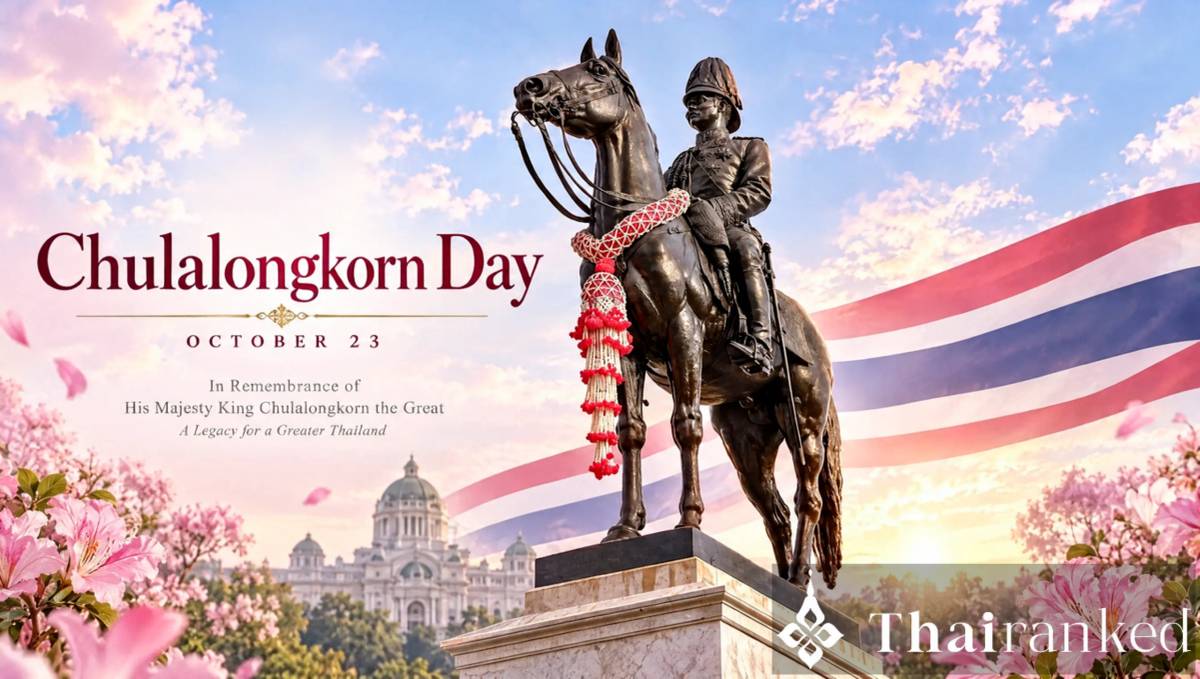
Chulalongkorn Day, known in Thai as Wan Piya Maharat, is the day Thailand remembers King Chulalongkorn, Rama V. It marks the anniversary of his death, and each year Thais pay respect to a monarch widely credited with modernizing the country. Observances combine formal royal ceremonies, public wreath-laying, temple offerings, and quieter personal acts of remembrance.
Who was King Chulalongkorn (Rama V)?
King Chulalongkorn reigned from 1868 to 1910. During his time on the throne he led a series of major reforms that reshaped Siam’s administration, education and legal systems. He introduced modern ministries and civil service structures, expanded infrastructure like railways and postal services, and moved the country toward a more centralized, bureaucratic state. One of his most important legacies was the gradual abolition of slavery, a complex process carried out through legal and administrative reforms rather than a single decree.
Because of these changes, many Thais view him as a progressive reformer who helped Siam survive a tumultuous era of colonial pressure in the region. His name lives on in institutions such as Chulalongkorn University, and his image appears on statues and monuments across the country.
When is Chulalongkorn Day?
The day is observed every year on October 23. The date marks the anniversary of King Chulalongkorn’s death, and it is a fixed point in the Thai calendar for remembrance and recognition of his contributions.
How Thais observe Chulalongkorn Day
Observances vary by location and by type of organisation, but common ways people mark the day include:
- Visiting statues and monuments of King Chulalongkorn to lay wreaths or flower garlands, especially the prominent statue in front of the Ananta Samakhom Throne Hall and the one at Chulalongkorn University.
- Attending official ceremonies organised by royal or government bodies, which may include speeches, musical tributes and moments of silence.
- Making merit at local temples, offering alms to monks, and joining religious activities, since many Thais link national remembrance with Buddhist practice.
- Schools and universities often hold commemorative events, including student ceremonies at memorials or statues on campus.
- Private acts of respect, such as visiting a local shrine dedicated to the king, or sharing historical readings and photos among family members.
Many of these rituals emphasise respect, continuity and gratitude. Public media typically run programs and documentaries about Rama V’s life and reforms, which helps younger generations understand his role in Thai history.
Where to see Chulalongkorn Day ceremonies
If you are in Bangkok or visiting Thailand around October 23, you can expect official ceremonies at several key places:
- The Royal Plaza area and other royal sites host formal commemorations.
- Chulalongkorn University, which takes part in ceremonies at its central statue and hosts academic reflections on his legacy.
- Local municipal halls and provincial statues often receive wreaths and visits from officials and citizens.
Smaller towns and provinces usually hold quieter events at their local monuments to the king, so you can often witness local traditions and community involvement if you travel outside Bangkok.
Practical tips for travellers
Chulalongkorn Day is primarily a day of respect and remembrance, so if you plan to be in Thailand at this time, keep these tips in mind:
- Dress respectfully when visiting temples, statues, or official ceremonies. Conservative clothing and covering shoulders are appropriate.
- Be mindful of local etiquette, remove your shoes when required, and follow the lead of locals during ceremonial moments.
- Avoid loud or boisterous behaviour around memorials. Photography is usually allowed at public statues, but be respectful and avoid stepping on or climbing monuments.
- Thailand has strict laws and cultural sensitivities related to the monarchy. Avoid political or negative comments about the royal family in public, online, or in private conversations with strangers.
- While government offices and some schools may hold events, many shops, restaurants and tourist services remain open, so normal sightseeing is usually possible.
Why Chulalongkorn is still important today
King Chulalongkorn’s reforms helped create the framework for modern Thailand, and his leadership during a period when neighbouring countries were colonised is a major part of his popular reputation. Many Thais view him as a symbol of national unity and progressive governance. Commemorating him reinforces national identity, civic education and historical memory.
If you want to learn more about royal ceremonies and how Thai traditions intersect with national holidays, our piece on History of King Rama X's Birthday and Thai Traditions explains similar customs and public rituals. For understanding religious observances you might see paired with national days, see What Thai Temple Rituals Mean. And if you are planning travel in Thailand around public holidays, our guide to Thai Holidays in 2026: The Best Festivals for Travelers helps with timing and expectations.
Common questions
Is Chulalongkorn Day a public holiday? Yes. Chulalongkorn Day (October 23) is an official public holiday in Thailand. Government offices and many banks are typically closed; some schools and public institutions hold commemorative events or close for the holiday. Many private businesses and tourist services, however, often remain open.
Can visitors participate? Yes, visitors can respectfully observe ceremonies, lay floral tributes at public statues where allowed, and visit temples that hold merit-making activities. Follow local customs and dress codes, and avoid behaviour that could be seen as disrespectful.
Where can I read more about King Chulalongkorn’s reforms? Museums, university libraries and historical exhibits across Thailand present his biography and documents from his reign. Chulalongkorn University also maintains archives and public displays that detail his influence on education and administration.
Further reading and places to learn more
- Visit Chulalongkorn University and its central statue for a contextual view of his legacy.
- Local museums and historical parks often display artefacts and timelines from late 19th and early 20th century Siam.
- Public broadcasters and cultural programmes air documentary features on the king around October each year, which are a good starting point for English-language summaries.
Key takeaways
- Chulalongkorn Day falls on October 23, and remembers King Chulalongkorn, Rama V.
- The day honours his modernization efforts, including administrative, legal and educational reforms.
- Observances include wreath-laying, temple offerings and official ceremonies, with an emphasis on respect and reflection.
- Visitors can observe and join respectful activities, while following local etiquette and legal sensitivities around the monarchy.
Search Hotels & Flights
Related Insights

Discover the unique national anthem tradition in Thailand, why everyone freezes in public at 8AM and 6PM, and tips on what to do if you’re caught by surprise.
Discover why Spirit Houses (San Phra Phum) are everywhere in Thailand, their non-Buddhist origins, rituals, and meanings for travelers and expats.
Discover how Wat Arun’s iconic tiles were made from broken Chinese porcelain, Thailand’s first recycled masterpiece. Explore the legend and eco-history behind the temple.
Clear steps and phone numbers for foreigners facing a home flood in Thailand, including safety tips, what to say, and insurance damage records.

Learn how expats can tackle mold and humidity issues in Thai condos, from prevention and cleaning to local solutions and expert tips for rainy season living.
What people ask about
"What Is Chulalongkorn Day in Thailand? "
Here you will find answers to the most popular questions about Thailand.
 Chat with us