The History of Bangkok's Airport Rail Link: Timeline & Guide
January 10, 2026 07:09 PM

by Thairanked Guide
Thairanked helps you discover great places in Thailand!
Search Hotels & Flights
Related Insights



Introduction to Bangkok's Airport Rail Link
Bangkok’s Airport Rail Link (ARL) is a rapid transit line that transformed travel between Suvarnabhumi Airport and downtown Bangkok. Whether you’re a first-time visitor navigating your way into the city or a local looking to dodge Bangkok’s notorious traffic jams, the Airport Rail Link has become a lifeline for fast, reliable access to Thailand’s main international gateway. But how did this crucial piece of infrastructure come to be, and what should newcomers know before hopping on board? Let’s dive into the timeline, design, operation and practical tips for using the ARL, so you can make the most out of your next trip.
The Birth of the Airport Rail Link: How & Why It Started
The idea of connecting Bangkok’s new Suvarnabhumi Airport directly with the city center emerged in the late 1990s and early 2000s. With Suvarnabhumi Airport under construction and the older Don Mueang Airport reaching capacity, planners recognized the need for a reliable mass transit solution to shuttle millions of passengers directly into town, bypassing unpredictable road traffic.
Construction for the ARL began in 2005. The line was intended to offer two services: a City Line (local train, stopping at all stations) and an Express Line (non-stop between the airport and downtown). After several delays due to technical and regulatory challenges, trial operations started in June 2010. The full public service was officially launched on August 23, 2010.
Project Timeline Highlights
- 1996: Early plans for a city-airport rail connection begin to circulate.
- 2002: Masterplans developed in parallel with Suvarnabhumi Airport’s construction.
- 2005: Construction contract awarded; physical works commence.
- 2010 (June): Trial operations begin, with free rides for commuters.
- 2010 (August): Official opening and start of commercial services.
- 2023-24: Upgrades and integration projects with the Orange and Eastern lines.
How the Airport Rail Link Works
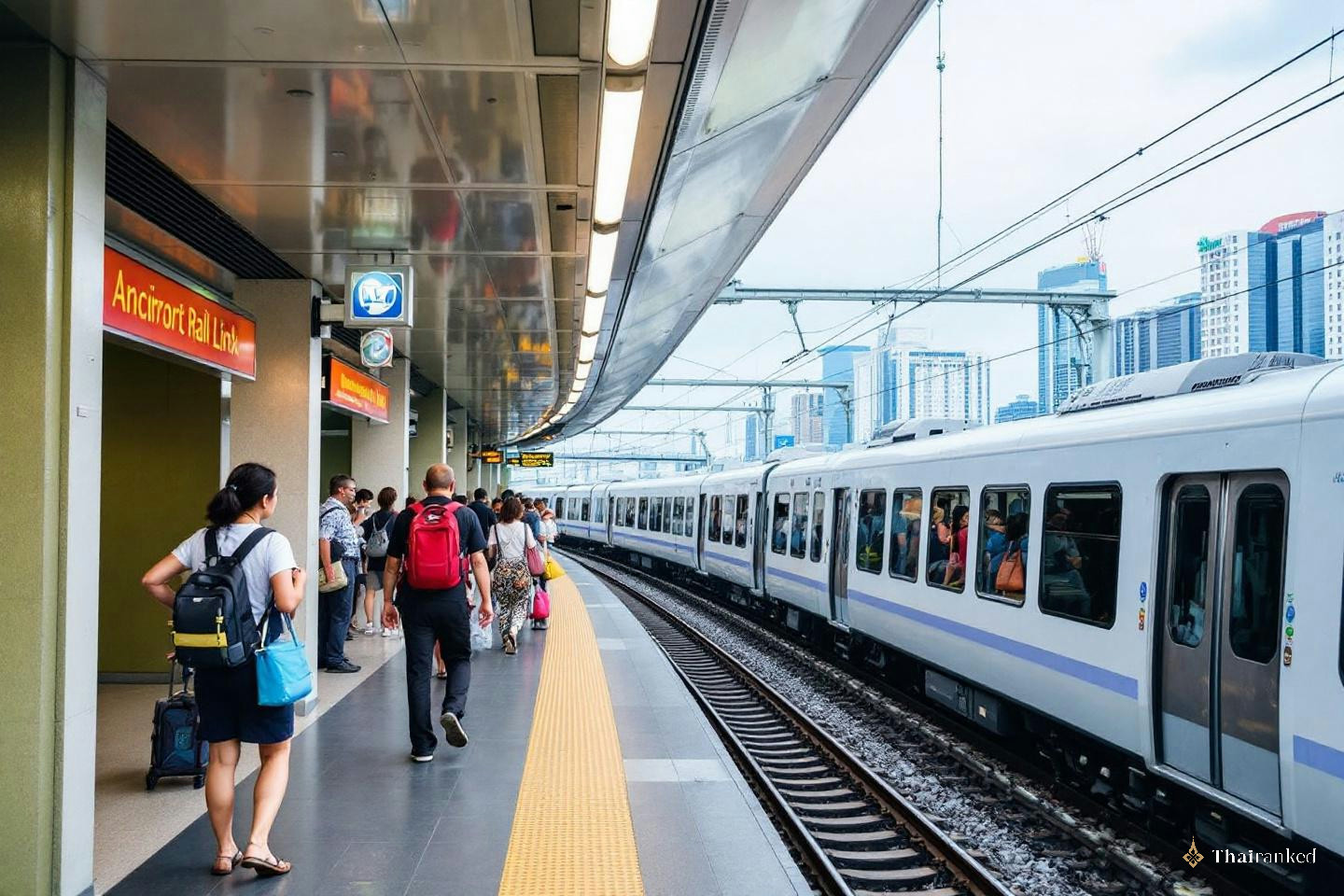
The ARL stretches for 28.6 kilometers, running from Suvarnabhumi Airport to Phaya Thai station (which connects to the BTS Skytrain). For most passengers, the journey is simple: buy a token at any ARL station, pass through the gates, and hop on a modern, air-conditioned train.
There are eight stations on the line:
- Phaya Thai (city center, interchange with BTS Sukhumvit line)
- Ratchaprarop
- Makkasan (interchange with MRT Phetchaburi)
- Ramkhamhaeng
- Hua Mak
- Ban Thap Chang
- Lat Krabang
- Suvarnabhumi Airport (underground terminal at the airport)
Trains run every 10–15 minutes from around 5:30 a.m. to midnight (subject to change for maintenance or events). The full journey from airport to city takes roughly 25–30 minutes, a huge improvement over taxi or bus options during rush hour, when Bangkok’s roads become gridlocked.
What Happened to the Express Line?
Originally, there were both City Line and Express Line services. The Express service ran non-stop between Makkasan and Suvarnabhumi Airport, promising a 15-minute trip. However, low ridership, higher operating costs, and technical issues led to the discontinuation of the Express Line. Today, all trains are part of the City Line, stopping at every station.
Fares & Ticketing: How Much Does It Cost?
Fares on the ARL are reasonably priced, especially compared to taxis or private airport transfers. As of 2024, one-way tickets cost:
- 15–45 Baht (approximately US$0.40–1.30), depending on distance.
- Phaya Thai to Suvarnabhumi (or vice versa): 45 Baht for the full length.
Tickets can be purchased at vending machines and ticket counters at every station. Single-journey tokens are the norm, but frequent travelers can buy a pre-paid Smart Pass for quicker entry. Children under 90cm ride for free.
Travel Tips for the ARL
- Large suitcases are welcome—there’s plenty of space for luggage, especially at airport and Makkasan stations.
- Consider off-peak travel if you want a seat—morning and evening rush hours can get crowded with commuters.
- If you’re connecting to hotels in central Bangkok, Phaya Thai and Makkasan offer easy links to BTS and MRT systems. Explore more hotel options with our top 10 hotels ranking for Bangkok or book your accommodation in Bangkok here.
- For those arriving late at night or with lots of bags, taxis are more convenient, but the ARL remains faster during most hours.
The ARL’s Impact on Bangkok & Travel
The Airport Rail Link’s introduction has been more than just a travel convenience. It’s played a big role in reducing road congestion, supporting sustainable transport, and setting the stage for more integrated rail systems in Bangkok. For tourists, the ARL offers a clear, safe, and reliable first impression of Thailand after landing. Locals, airport workers, students, and the business community rely on it every day.
The ARL is also a blueprint for future airport rail connections in Thailand—including potential future rail lines to Don Mueang and U-Tapao airports. To get a taste of what to explore after landing, don’t miss our history of Suvarnabhumi Airport and guide to Thailand’s most popular festivals for ideas on upcoming trips.
Practical Connections: Why It Matters for Your Trip
If you’re traveling in Thailand on a budget, or you want to avoid traffic stress, the Airport Rail Link is your friend. Once you hit the city, you can continue on the BTS, MRT, or grab a taxi to your final destination. For those transiting directly to hotels near the airport, see our guide to the best hotels near Suvarnabhumi Airport.
The ARL is continuously being improved with better security, increased train frequency, and more integration with new lines like the Orange Line. For upcoming upgrades and closures, always check ahead, especially around the New Year and major holidays in Bangkok. If you plan on visiting during a festival, have a look at tips for the best festivals and holidays in Thailand to make the most of your stay. And if you want to see how to get around the city after the ARL, our Bangkok transport guide can help you plan your routes.
What’s Next for the Airport Rail Link?
Looking ahead, the ARL will become even more essential as Bangkok expands. Ongoing projects for high-speed trains, additional lines, and improved access for disabled travelers are underway. In the next few years, expect even more seamless connections across the city and faster trips for international travelers—maintaining the ARL’s status as a pioneering model for airport-city journeys in Southeast Asia.
Key takeaways
- The Airport Rail Link connects Suvarnabhumi Airport with central Bangkok via an efficient, modern rail corridor.
- Launched in 2010 after years of planning, the ARL has become integral to Bangkok’s transport system.
- Tickets range from 15–45 baht; trains run every 10-15 minutes from early morning until midnight.
- ARL stations connect directly to other mass transit (BTS, MRT), making onward travel easy—see our outdoor adventure guide for fun post-airport activities.
- Plenty of space for luggage and frequent upgrades make the ARL reliable for all travelers.
by Thairanked Guide
Thairanked helps you discover great places in Thailand!
Search Hotels & Flights
Related Insights
Discover the origins of Khao San Road, from its roots as Bangkok’s biggest rice market to its transformation into a global backpacker and nightlife hotspot.
Discover the story behind the 12 giant Yaksha statues at Suvarnabhumi Airport. Learn about their Ramakien roots, Ravana, and Thai mythology.
Discover the history of Wan Dek, Thailand's National Children's Day. Learn why it is celebrated on the second Saturday of January, the unique traditions involved, and the meaning behind the Prime Minister's motto.
Discover why Lumpini Park was created, the history behind Bangkok’s first public park and how it became one of the city’s most important green spaces. Learn its royal origins, cultural role and why it remains essential to life in modern Bangkok.
Discover the surprising history of the Thai Belgian Bridge in Bangkok, Belgium’s donation to Thailand in the 1980s, how a fire reshaped it and why it remains an important symbol of Thai Belgian friendship today. Includes useful context and internal links for exploring more about Bangkok and Thai infrastructure.