Asanha Bucha Day in Thailand (Alcohol Ban)
July 27, 2026 05:21 AM
Last edited: July 27, 2026

by Thairanked Guide
Thairanked helps you discover great places in Thailand!
Search Hotels & Flights
Related Insights
Asanha Bucha Day ranks among Thailand's most sacred Buddhist holidays. You will find quiet temples, candlelit processions, and a nationwide ban on alcohol sales that affects shops, restaurants, and bars. This guide explains the history behind Asanha Bucha, the rituals Thai Buddhists perform, and practical steps you should take if you travel or live in Thailand around the holiday.
History and meaning
Asanha Bucha, also called Asalha Puja, commemorates the Buddha's first sermon after he achieved enlightenment. In that sermon, he presented the Four Noble Truths and set out the path that led people to end suffering. The sermon took place at the Deer Park in Sarnath, India, where five ascetics accepted the Buddha's teaching and formed the first community of ordained monks, the sangha.
Thai Buddhists honor three linked events during Asanha Bucha. The community remembers the Buddha's awakening, the first teaching, and the formal start of the sangha. Temples across Thailand host special sermons and merit-making activities that center on these three events.
What you will see at a temple
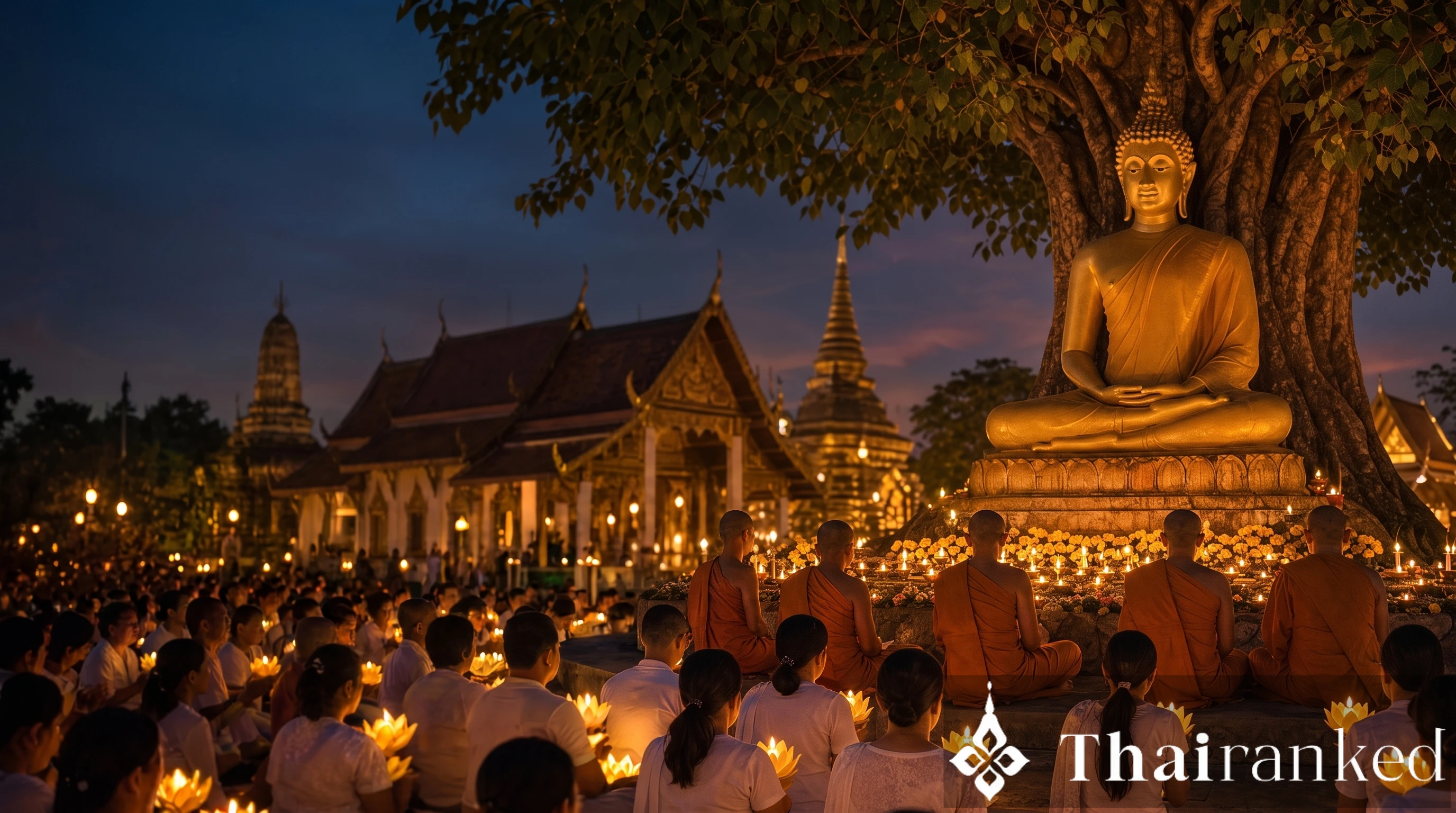
Thai temples change tone for Asanha Bucha. You will see offerings of flowers, incense, and candles at the main shrine. Monks wear saffron robes and sit on raised platforms while laypeople present offerings and listen to sermons. Many temples arrange a public sermon that explains the Four Noble Truths and the Noble Eightfold Path.
On the evening of the full moon, temples hold a candlelight procession called wian tian. Worshippers walk three times around the main ordination hall, carrying a lit candle, an incense stick, and a lotus or other flower. The procession symbolizes the Triple Gem, the Buddha, the Dhamma, and the Sangha. You may join the procession, but follow local customs: dress modestly, remove shoes when entering temple buildings, and keep voices low.
Common rituals and etiquette
Thai people perform simple acts that count as merit-making. You can take part in any of these actions.
- Offer food to monks, called sangha dana, often early in the morning.
- Give small donations to support temple upkeep and community services.
- Listen to a sermon, and observe a brief moment of meditation or silent reflection.
- Join a wian tian candlelight procession in the evening.
Dress rules remain the same as other Buddhist holidays. Wear clothing that covers shoulders and knees. Avoid bright clubwear. You must remove sunglasses and hats inside temple buildings. Use gentle behavior when photographing, and never step over someone who sits on the ground, especially a monk.
Alcohol sales ban: what that means for you
Thai authorities enforce a nationwide ban on alcohol sales during major Buddhist holy days, including Asanha Bucha Day. The ban prevents shops and licensed vendors from selling alcoholic drinks on the holiday. Many local convenience stores and supermarkets post signs that remind customers the store cannot sell alcohol that day.
Plan around the ban. Buy any alcohol you want the day before the holiday. Expect bars and restaurants to display notices if they will not serve alcohol. Some hotels serve guests as part of private services, but you should ask your hotel before assuming staff will serve drinks on the holiday.
Authorities treat this ban as part of national law and local enforcement. Police and municipal officers may patrol busy tourist areas to ensure businesses comply. You will avoid awkward moments and fines if you act ahead of time.
Travel and planning tips
Asanha Bucha changes local schedules and services in some places. You will want to prepare before you travel around the holiday.
- Check temple opening hours. Many temples remain open, but specific ceremonies may close access to main halls for a time.
- Expect larger crowds at major temples in Bangkok, Chiang Mai, and other urban centers on the evening of the full moon.
- Book transport and guided tours in advance if your dates fall on or near the holiday, because demand for temple visits rises.
- Buy alcohol and speciality items you expect to need before the holiday, because the nationwide ban stops sales on the day.
Public transport services operate normal timetables in most cities, but local buses and ferries may run reduced schedules for municipal observances. You should check specific operators for service notices rather than rely on broad assumptions.
Joining respectfully as a visitor
You may enter a temple and join public rituals. Follow these simple rules and you will show respect without confusion.
- Dress modestly, remove shoes before stepping onto inner areas, and keep your head lower than monks when you stand or sit near them.
- Ask permission before taking photos of monks, especially during rituals.
- Stand at the back of a procession, and let long-time participants lead the way during a wian tian.
- Offer small donations in the boxes provided rather than handing cash directly to monks in most public settings.
Children look curious during the evening processions. Make the visit a quiet learning moment. Explain the simple meanings behind the ritual instead of turning the procession into a performance for a camera.
Compare Asanha Bucha with other Buddhist holidays
Asanha Bucha shares features with other Theravada Buddhist observances in Thailand. The nationwide alcohol sales ban also applies on Visakha Bucha, Magha Bucha, and certain other holy days. You can read our full guide to the Visakha Bucha alcohol ban for practical tips from an expat perspective at Visakha Bucha Day, Alcohol Sales Ban Guide.
Exploring Thailand's festival calendar gives context. Browse our roundup of traditional celebrations at A Guide to the 10 Most Popular Festivals in Thailand, and compare temple rituals across holidays with our explanation of Makha Bucha at What Do Thai People Actually Do on Makha Bucha Day.
Practical reminders for expats and long-term visitors
Use these practical reminders as you prepare for Asanha Bucha Day.
- Confirm restaurant and hotel practices about serving alcohol. Policies differ across businesses.
- Keep a small altar kit or simple offerings if you plan to visit temples in the morning.
- Carry cash for donations. Many temple funds do not accept cards.
- Respect temple signs and volunteer directions during processions and sermons.
Final thoughts
Asanha Bucha offers a direct window into Thai Buddhist life. The day balances solemn public rituals, private acts of merit, and communal reflection. You will find the atmosphere in streets and temples changes for the day. The nationwide ban on alcohol sales reinforces the country's focus on spiritual practice during the holiday. Take time to observe, ask local friends about their traditions, and accept invitations to join ceremonies when hosts offer them.
Key takeaways
- Asanha Bucha commemorates the Buddha's first sermon and the founding of the sangha.
- Temples hold morning merit-making and evening wian tian candlelight processions.
- The government enforces a nationwide ban on alcohol sales during the holiday, so buy drinks before the day.
- Dress modestly, follow temple etiquette, and ask permission before photographing monks.
- Read our linked guides for more about Buddhist holidays and alcohol bans in Thailand.
Search Hotels & Flights
Related Insights
Explore the history of King Rama X's birthday, how Thailand honors July 28, royal ceremonies, religious rituals, public customs, and tips for visitors and expats.
Everything you need for the Thai Lottery draw on 1 August 2026, including where to watch, prize details, ticket tips, and how to claim winnings as a visitor.
Discover why 7-Eleven dominates Thailand through CP All's strategy, urban convenience, local demand, and innovative everyday services.
Planning to get a tattoo in Thailand? Learn how to choose the right tattoo studio with expert tips on artists, hygiene, pricing, and aftercare.
Complete guide to the Thai Lottery draw on 16 July 2026 (2569). Find where to watch the draw, prize breakdown, ticket buying tips, claim steps for tourists, and the next draw date.
What people ask about
"Asanha Bucha Day in Thailand (Alcohol Ban)"
Here you will find answers to the most popular questions about Thailand.