Ayutthaya’s Buddha Head in the Tree
January 26, 2026 04:00 AM
Last edited: January 23, 2026

by Thairanked Guide
Thairanked helps you discover great places in Thailand!
Search Hotels & Flights
Related Insights
The Enigma of the Buddha Head in the Tree at Ayutthaya
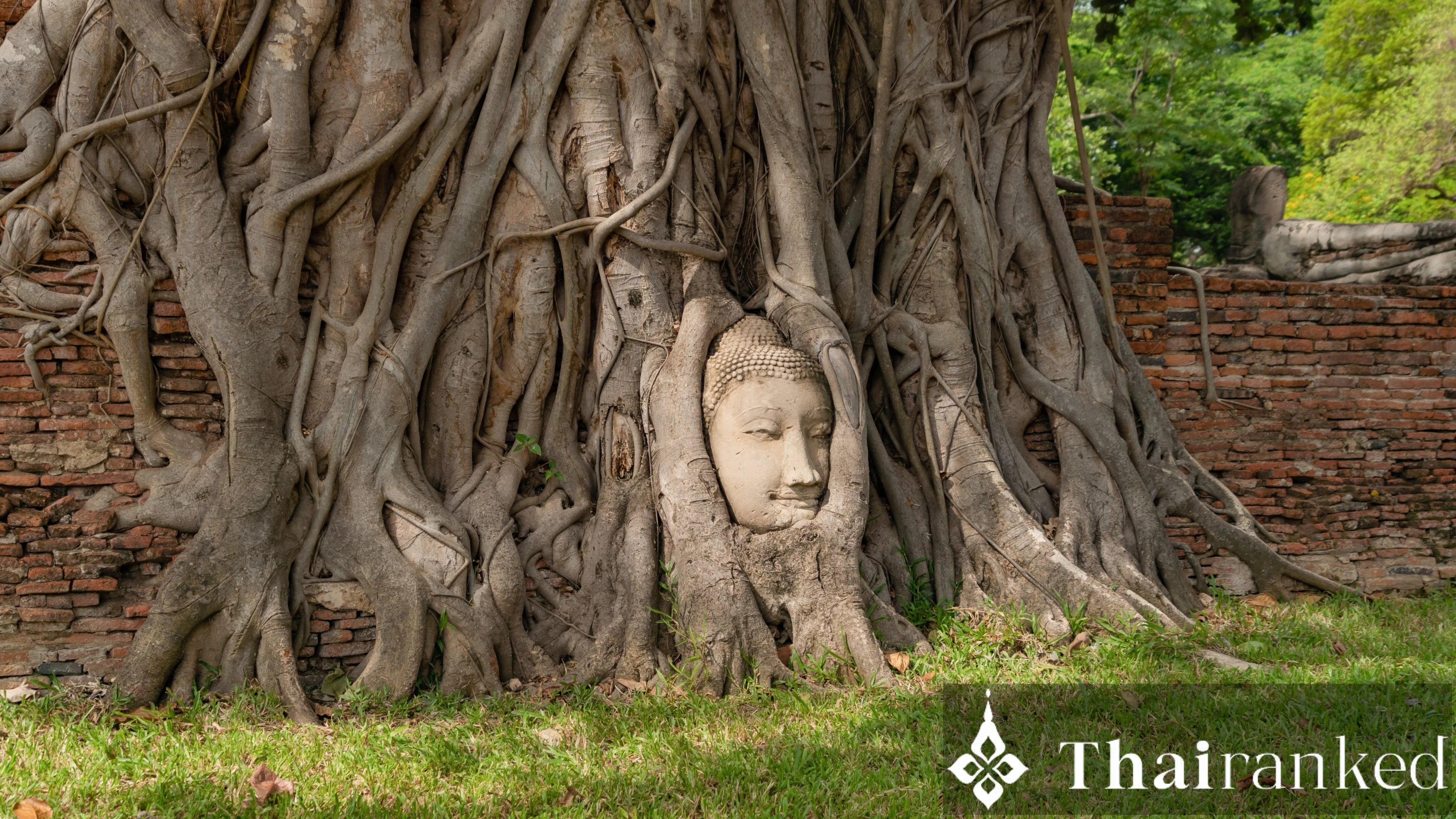
There’s a gentle hush that falls over visitors the moment they step into the grounds of Wat Mahathat in Ayutthaya. It’s not just another historic ruin, but home to one of the most iconic and mysterious images in all of Thailand: a serene Buddha’s face, perfectly cradled in the gnarled roots of a bodhi tree. This image has become almost synonymous with the ancient capital itself, adorning postcards, social media feeds, and travel guides. But how did this union of history and nature come to be, and what does it symbolize to Thais and visitors alike?
Wat Mahathat: The Spiritual and Historical Heart of Ayutthaya
First, let’s set the scene. Ayutthaya, once the thriving capital of Siam, saw its golden age between 1350 and 1767 CE. Wat Mahathat, or the “Temple of the Great Relic,” stood at the center of this bustling city, serving as a key religious and royal site for centuries. Walking among its ruins today, you’ll find prangs (tall, tower-like spires), crumbling chedis, and countless Buddha images in various states of preservation.
The city’s glory days, however, ended abruptly with the 1767 Burmese invasion, a pivotal event that not only shattered the kingdom but left its temples, including Wat Mahathat, in a state of ruin. But it’s this very calamity that set the stage for one of Ayutthaya’s most captivating sights.
The Buddha Head in the Tree: A Serene Symbol Born from Turmoil
At the northeast corner of Wat Mahathat, you’ll find the famed Buddha head. Unlike other statues, this head sits snugly in a tangle of bodhi tree roots, its features worn soft by time yet imbued with an almost mystical calm.
How Did the Buddha Head Get There?
The exact origin is debated, but historians and locals generally agree on a plausible story rooted in both history and the quiet power of nature.
- Historical Upheaval: During the sacking of Ayutthaya, Burmese invaders decapitated many Buddha statues, either to loot the precious materials or to symbolically undermine Siamese power. Heads and fragments were scattered or buried across temple grounds.
- Natural Intervention: Over the next two centuries, Ayutthaya’s temples fell into neglect. In this period, nature slowly reclaimed the ruins. Bodhi trees, a species deeply significant in Buddhism, grew unchecked among the bricks. At some point, the roots simply enveloped one of these lost heads, lifting it up over time to its current resting place.
- Symbolic Reconciliation: Today, the sight is profoundly moving. It is as if nature herself sought to restore a sense of dignity and peace to a symbol damaged by war. The tree’s roots support and protect the Buddha image, an apt metaphor for healing and resilience.
Sacred Meaning and Modern Appeal
The image of the Buddha head in the tree resonates on many levels. For Thais, it’s a powerful visual of how faith, culture, and nature are intertwined, and how destruction can lead to renewal. For Buddhists, the bodhi tree is especially meaningful: it was under a bodhi tree that Siddhartha Gautama gained enlightenment, and so these roots encircling the Buddha’s head evoke deep spiritual symbolism. Visitors are always reminded to bow or kneel when photographing the site, showing respect for its sacredness.
The site is also a favorite with photographers, artists, and history buffs. Its popularity means it’s almost always busy, but the moment you focus on the gentle face in the roots, the crowds tend to melt away. If you plan to visit, consider going early in the morning for softer light and fewer tourists. If you’re interested in architectural or natural wonders across Thailand, check out our Top 5 Must-Visit Temples in Ayutthaya for even more insight into the region’s religious heritage.
Legends and Local Beliefs
As with any ancient artifact, the blend of fact and folklore adds to the mystery. Some Ayutthaya locals tell stories of how the head “chose” its resting place, guided by the spiritual energy of the site. Others say the roots grew extra quickly to shield the head, protecting it from further desecration. While scholars might smile at these tales, they reflect the sense of reverence surrounding the site and Buddhist beliefs in interconnectedness.
Visiting Wat Mahathat: What You Need to Know
- Location: Wat Mahathat sits right in the historical park of Ayutthaya, just a short walk from the main entrance.
- Entry Fee: Foreign visitors pay an entry fee (usually around 50 Baht). Thai citizens get a lower rate or free entry on special days.
- Dress Code: As with all religious sites in Thailand, dress modestly. Shoulders and knees should be covered. Hats should be removed inside the temple ruins.
- Respect: Please do not touch or climb on the roots or the Buddha head. Photo-taking is allowed, but always do so respectfully, kneeling or standing below the head.
- Hours: Most sites in the Historical Park are open daily from 8 am to 6 pm.
Want to make the most of your Ayutthaya visit? Combine the Buddha head experience with other highlights by reading our Temple Guide to Ayutthaya and extend your temple travels with insights from What Thai Temple Rituals Mean.
Nature vs. History: Who Wins?
The magical coexistence of the Buddha head and the tree’s roots is a powerful symbol of what makes Thailand’s heritage so special. Nature may have emerged as the caretaker, but it is through history and memory that we continue to honor both the suffering and the survival embodied here.
If you leave Ayutthaya with only one photo, let it be this: not just a relic, but proof that wounds can lead to unexpected blessings. The roots will keep growing, the face growing gentler with time, and as long as visitors walk quietly in awe, this little corner of Ayutthaya will remain a bridge between ages past and a future of peace.
Key takeaways
- The Buddha head in tree roots at Wat Mahathat is a result of war, neglect, and natural reclamation.
- It symbolizes resilience, spiritual renewal, and the unity of nature and culture.
- The bodhi tree holds special significance in Buddhist tradition as the tree of enlightenment.
- Visitors should show respect by dressing modestly and bowing for photos.
- Ayutthaya’s historical park offers a wealth of sites for history and culture lovers.
- Nature’s role in reclaiming Ayutthaya’s ruins adds unique beauty to the ancient city.
by Thairanked Guide
Thairanked helps you discover great places in Thailand!
Search Hotels & Flights
Related Insights
Explore the fascinating origins and cultural journey of Pad Krapow, Thailand’s iconic basil stir-fry. Discover its history and significance in Thai cuisine.
Discover Makha Bucha, Thailand’s first major Buddhist holiday, its miracle story, teachings, and essential Thai traditions, making merit and candle processions.
Discover the true meaning of “farang” in Thailand. Is it offensive, neutral, or affectionate? Unpack the word’s origins and expat realities in Thai culture.
Discover the unique national anthem tradition in Thailand, why everyone freezes in public at 8AM and 6PM, and tips on what to do if you’re caught by surprise.
Discover why Spirit Houses (San Phra Phum) are everywhere in Thailand, their non-Buddhist origins, rituals, and meanings for travelers and expats.