5 Thai Texting Slangs Expats Must Know
March 18, 2026 05:42 PM
Last edited: March 19, 2026
From 555 to na and ja, decode 5 essential Thai texting slang for expats. Learn meanings, tone, and examples to chat naturally with Thai friends today.

by Thairanked Guide
Thairanked helps you discover great places in Thailand!
Table of Contents
Search Hotels & Flights
You might like







Table of Contents
What “555” really means, and why you’ll see it everywhere
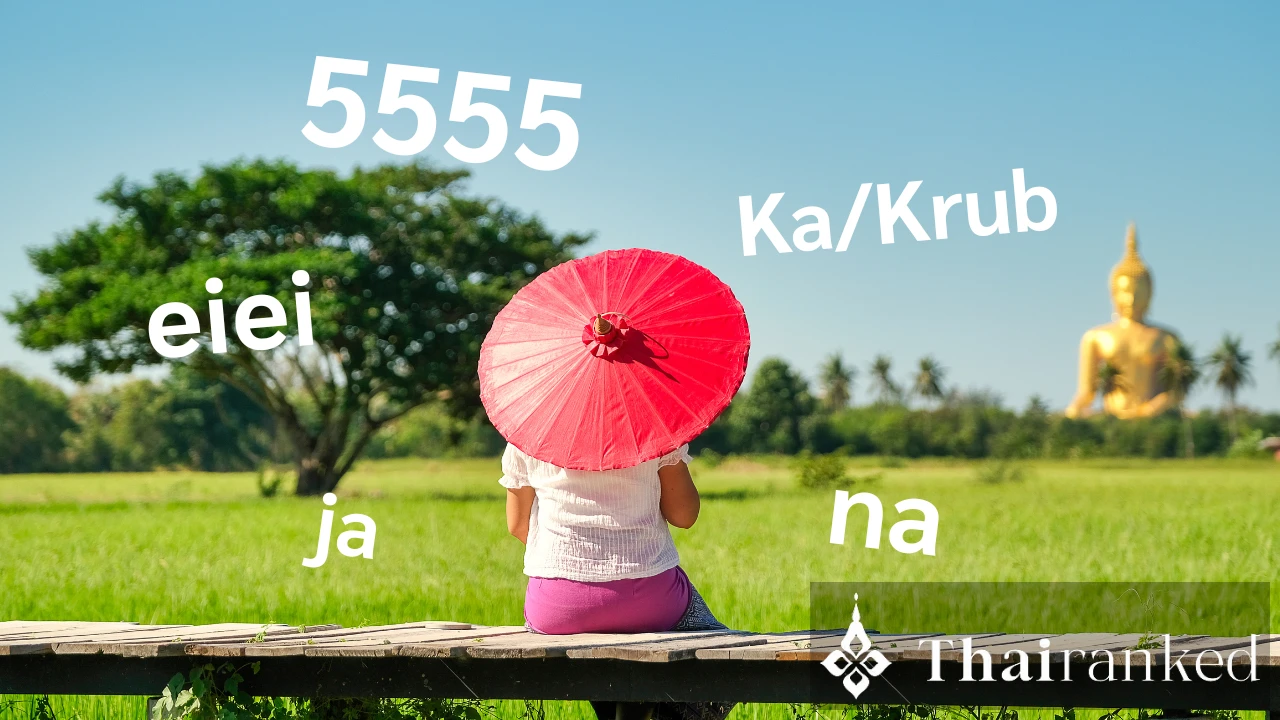
If you’ve ever opened a Thai chat and seen a wall of 5555, no one’s counting, they’re laughing. In Thai, the number 5 is pronounced “ha,” so 555 simply reads “hahaha.” More 5s mean a bigger laugh, while 555+ adds extra emphasis or a slightly cheeky tone. You may also see Thai script laughs like ฮ่าๆ or the cute giggle อิอิ written as “eiei.”
How Thai texting feels in real life
Thai chat blends numbers, Thai script, English, emojis, and stretched vowels for warmth and nuance. The secret sauce is sentence-ending particles that soften messages, show respect, or sound friendly. You’ll spot na, ja, and ka/krub everywhere, often elongated like “naaa” or “kaaa” to feel extra sweet or playful. Mastering these tiny words makes a huge difference in how your texts land.
Politeness, tone, and cultural vibes
In Thai, what you say matters, but how you say it matters more. Polite particles, gentle asks, and small laughs keep conversations smooth. This connects to the Thai idea of Kreng Jai, the cultural instinct to be considerate and avoid causing discomfort. In texting, that often shows up as softeners like “na” or a friendly “ja,” which can turn a blunt statement into something warm and welcoming.
Below are five must-know Thai texting slangs that will instantly make your chats feel more natural. We explain what they mean, when to use them, and easy examples you can copy and paste. Ready? 555, let’s go.

1. 555
The universal Thai “hahaha”

Highlight
The cornerstone of Thai texting humor, 555 reads as “hahaha” because the number 5 is pronounced “ha.” The more 5s, the louder the laugh: 55 is a chuckle, 55555 is a belly laugh. Adding a plus, like 555+, amps it up or adds a slightly teasing vibe. You’ll also see Thai-script laughs such as ฮ่าๆ, and the cute giggle อิอิ, sometimes typed as “eiei.”
How to use
- เจอกันพรุ่งนี้นะ 555 (See you tomorrow haha)
- แพงไป 555+ (That’s too pricey lol)
- ไม่เป็นไรๆ 55 (No worries, haha)
Tip: 555 is friendly and light. If the topic is serious, skip the laugh to avoid sounding insensitive.
2. Ka/Krub (ค่ะ/ครับ)
Your go-to politeness particle

Highlight
Ka (for women) and krub/krap (for men) are politeness particles that soften tone and show respect. In chats, spelling is casual, so you’ll see ka, kha, kaa, and krub, krubbb, kub, or krap. Gender rules are relaxed online, and many people mirror the other person’s style. Add them to statements, questions, or thank-yous to keep conversations smooth and courteous.
How to use
- ขอบคุณค่ะ/ครับ (Thank you ka/krub)
- ได้ค่ะ/ครับ (Sure ka/krub)
- รบกวนหน่อยได้ไหมคะ/ครับ (Could I trouble you, please?)
Tip: In professional or first-time chats, using ka/krub is a safe default. You can always relax later as the vibe becomes friendlier.
3. Na (นะ)
The gentle softener for asks

Highlight
Na is a softener that turns a statement or request into a gentle, friendly nudge. Think “okay?” or “please,” but warmer. It’s super common in daily texting and can stack with ka/krub for extra politeness, like “na ka/na krub.” Elongate it to “naaa” to sound sweeter or more persuasive, depending on context.
How to use
- ไปกินข้าวกันนะ (Let’s grab food, okay?)
- ช่วยหน่อยนะคะ/ครับ (Please help, na ka/na krub)
- อย่าลืมนะ (Don’t forget, okay?)
Tip: Na softens the mood. It’s great for invitations, reminders, and anything that could sound too direct without it.
See also
4. Ja (จ้า/จ๋า)
Warm, friendly “okayyy”
Highlight
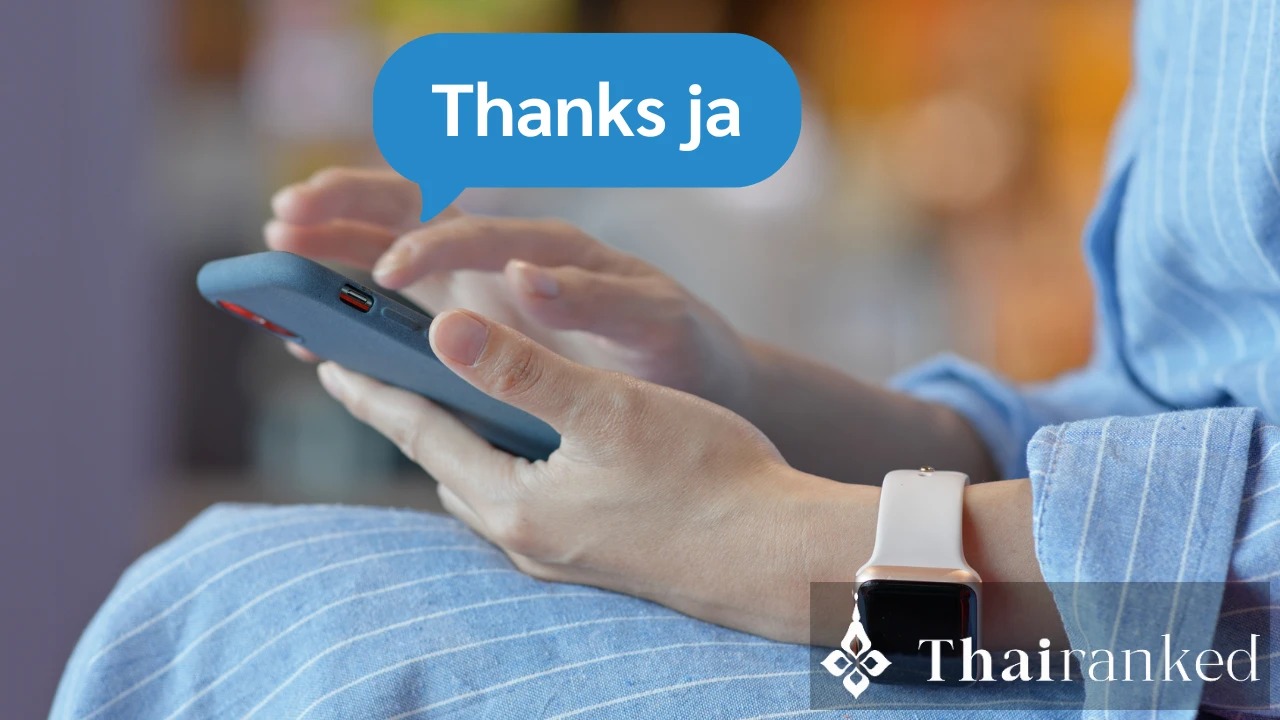
Ja signals friendly acknowledgment, agreement, or affection, similar to “yep,” “sure,” or “okayyy.” It’s casual and warm, commonly used among friends, partners, or close coworkers. You’ll see playful stretching like “jaaa” for extra sweetness. In more formal chats, swap ja for ka/krub to keep things respectful.
How to use
- โอเคจ้า (Okayyy got it)
- ขอบคุณจ้า (Thanks!)
- ถึงแล้วนะ จ้า (I’ve arrived, dear)
Tip: Ja is intimacy-coded. If you’re unsure of the relationship level, start with ka/krub, then mirror how the other person texts.
5. Eiei (อิอิ)
A cute, coy “hehe”

Highlight
Eiei is the typed form of the cute Thai giggle อิอิ, similar to “hehe.” It’s lighter and more coy than 555, often used to soften teasing, add playfulness, or show shy amusement. It pairs well with emojis and stretched vowels, and you’ll sometimes see it after a compliment or flirty joke.
How to use
- น่ารักจัง eiei (You’re so cute, hehe)
- แอบกินเค้กอีกแล้ว eiei (Snuck cake again, hehe)
- เดี๋ยวค่อยบอก eiei (I’ll tell you later, hehe)
Tip: Don’t confuse eiei with หึหึ (heh-heh), which can feel sarcastic or smug. Eiei should read sweet, not snarky.
Once you crack the code, Thai texting is friendly, playful, and full of subtle tone markers. Start with 555 for laughs, then layer in ka/krub for politeness, na for softening, and ja for friendly agreement. Add eiei when you want a gentle giggle rather than a full-on laugh. Lengthen vowels to sound sweeter, sprinkle in emojis, and you’ll blend into Thai group chats in no time.
If you want to understand why these tiny words carry so much weight, read about the cultural idea of Kreng Jai. For another fun peek into everyday language, see why so many locals go by playful nicknames in Why Is Your Thai Friend Named Beer, Golf, or Pancake?
Keep this guide handy, copy the sample lines, and don’t worry about getting everything perfect. Thais appreciate the effort, and a well-timed 555 can smooth almost any chat.
by Thairanked Guide
Thairanked helps you discover great places in Thailand!
What people ask about
"5 Thai Texting Slangs Expats Must Know"
Here you will find answer to the most popular questions.