Gold Panning in the Mekong: Ban Muang’s Revival of a Centuries-Old Thai Craft
February 16, 2026 06:26 PM
Last edited: February 16, 2026

by Vincent Thairanked
Long time expat in Thailand, loving the food and activities option Thailand has to offer.
Search Hotels & Flights
Related Insights





The Mekong Reveals Its Golden Secrets: Gold Panning in Ban Muang, Nong Khai
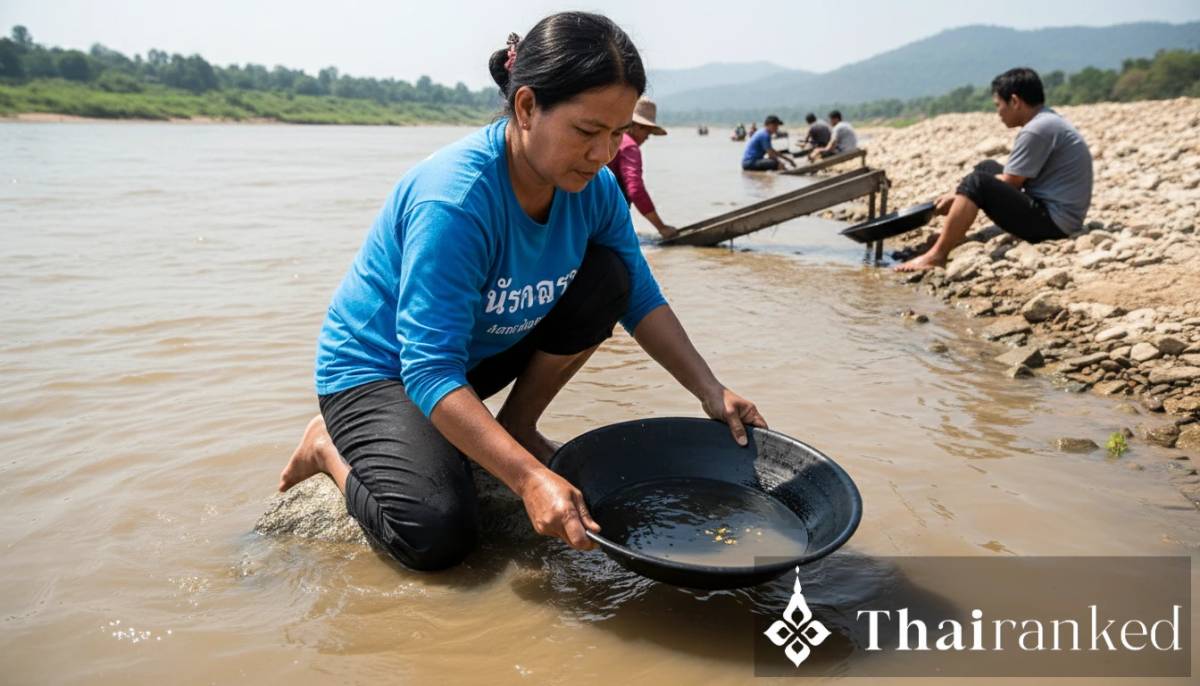
When the mighty Mekong River’s water level drops, it unveils more than just rocks and riverbanks—it opens a window into a centuries-old tradition. In Ban Muang Subdistrict of Nong Khai Province, Thailand, local villagers have revived the craft of gold panning, an ancestral skill known as “len kham” in the Isan dialect, which translates simply to “playing with gold.” But this is serious work that sustains livelihoods, preserves heritage, and delivers fascinating insight into a riverside way of life.
Why Does the Mekong in Ban Muang Yield Gold?
The Mekong River isn’t just a highway of commerce and transportation; it’s also a treasure chest for those who know where—and how—to look. As the river winds through Thailand, Laos, Cambodia, and beyond, it cuts through mineral-rich lands. Specifically in Ban Muang, Sangkhom District, geological conditions are just right: a six-kilometre rocky stretch known locally as “Pan God San Krai” creates natural eddies and traps that gather gold-bearing sediment.
Over decades, these river currents sift and deposit precious minerals into crevices and sandbanks, setting the stage for modern-day prospectors to pan for gold much as their ancestors did a hundred years ago.
Tools and Wisdom Passed Down the Generations
The tools of gold panning in Ban Muang are humble—but remarkably effective. The primary implements are:
- A small hoe for breaking up sediment
- A sturdy bucket or woven basket to carry sand and gravel
- The most essential: a bang, or cone-shaped wooden pan. This is crafted from dense local hardwood and is passed from hand to hand, sometimes for decades within a family.
Villagers collect sand and gravel from between river rocks, often digging into crevices where the flow slows and heavy particles settle. They swirl river water in the bang to wash away lighter silt, allowing heavier gold flakes to sink and gather at the pointed bottom.
This process blends both skill and patience. Seasoned panners develop an instinct for which spots might yield the best returns, watching the shifting currents and learning from the river’s subtle cues—a tradition of local wisdom that’s equal parts art and science. Once collected, gold in the sediment may be extracted with mercury, though today’s environmentally minded villagers are increasingly exploring safer alternatives.
Seasonal Gold Panning: When the River Drops, Opportunity Rises
Gold panning in Nong Khai isn’t a year-round job—it’s dictated by the river’s seasonal rhythms. The best time to search for gold is during the dry season (October onwards), when the Mekong recedes and exposes more of its gold-laden banks. With lower water, it’s easier and safer to access promising stretches.
Villagers used to fish during the dry months, but with dwindling fish catches due to climate and environmental changes, returning to len kham has become both a cultural revival and an economic lifeline. Each year, the best panning spots shift as the riverbed changes, making every season a new adventure.
Early discoveries of gold attract larger groups, with sometimes more than 20 people panning together in Ban Muang. The sense of community and collaboration endures as panners share knowledge and sometimes even the day’s finds.
How Much Do Nong Khai Gold Panners Make?
This isn’t a get-rich-quick scheme, but for villagers, the earnings are nothing to sneeze at. On a good day, experienced panners can earn 800–2,000 baht—sometimes even more. Typically, panners will accumulate around a gram of gold in two or three days, selling it directly to gold shops in Nong Khai.
The gold from this stretch of the Mekong is particularly sought after for its high purity—99–100%—and brilliant yellow sheen. Shopkeepers are happy to buy, knowing the river’s gold is some of the finest in Thailand.
Choosing the Best Spot for Gold Panning
A seasoned gold panner looks for spots where the Mekong’s water has flowed through rocky crevices and settled. These natural traps catch the heaviest bits of sediment—gold included. The “gold line” running through Sangkhom District is believed to originate in neighboring Loei Province and extend into Laos, making this region a truly special slice of the Mekong’s winding journey.
Anyone Can Try: A Welcoming Tradition
One of the most beautiful things about the gold panning revival in Ban Muang is the open attitude of its people. Villagers are happy to teach newcomers, and anyone curious about the craft is welcome to join in. Typically, the day starts early, at around 7am, and activities can last until evening as participants work together, share techniques, and even split profits.
If you’re curious about experiencing this unique piece of Isan culture for yourself, Nong Khai is an accessible destination that promises more than just gold—there’s riverside serenity, local cuisine, and a fascinating glimpse at a lifestyle where tradition and resourcefulness converge.
More Than Just Gold: Ban Muang’s Riverside Way of Life
The revival of gold panning is about more than just supplemental income or the thrill of discovery—it’s an affirmation of Ban Muang’s resilient spirit. Modern challenges like falling fish stocks and fluctuating Mekong water levels have meant adaptation is essential. By returning to gold panning, villagers have turned crisis into opportunity, keeping their heritage alive and passing it forward to new generations.
This deep connection between the Mekong and its people echoes across multiple layers of Thai culture and history. The river isn’t just a border or roadway through Southeast Asia—it’s part of the identity and lifeblood of entire communities.
Planning Your Visit to Nong Khai and the Mekong
If you find riverside cultures inspiring, add Nong Khai and Ban Muang to your Thailand itinerary. Beyond gold panning, you’ll discover temples, markets, festivals, and the legendary friendship bridge to Laos. For practical tips on exploring the area, check out our guide to getting to Chiang Mai from Bangkok if you’re journeying around Isan, or top travel spots in Chonburi for more regional adventures.
If you’re keen to understand more about Thai tradition and culture, see our overview of Thai nicknames or explore the concept of “Kreng Jai” in Thai culture.
Key takeaways
- Low Mekong river levels have revived gold panning in Ban Muang, Nong Khai.
- The tradition, known as “len kham,” dates back more than 100 years.
- Panning provides extra income of 800–2,000 baht a day, especially during the dry season.
- Anyone interested is welcome to learn; villagers are happy to share this fading skill.
- The river’s gold is highly pure and sought after for its bright yellow shine.
- Ban Muang’s story is one of adaptation, resilience, and keeping riverside heritage alive.
by Vincent Thairanked
Long time expat in Thailand, loving the food and activities option Thailand has to offer.
Search Hotels & Flights
Related Insights

Join the global Muay Thai community at Ayutthaya on March 17, 2026, for the legendary Wai Kru Ceremony. Learn about the tradition and what to expect at this iconic event.

Learn when Thailand’s 2026 election alcohol ban starts, when it ends, and what you can (and can’t) do. Stay informed and avoid penalties on Election Day.

Complete schedule and practical guide for the royal cremation ceremonies of Queen Sirikit, the Queen Mother, held December 15 to 19, 2026 at the Grand Palace and Sanam Luang.

On Makha Bucha Day 2026, Thailand will witness a stunning total lunar eclipse, learn how, where, and when to watch this rare brick-red moon event.
Learn the meaning behind Thailand’s morning alms (Tak Bat), how to respectfully observe or participate, and the best places to witness this beautiful tradition.
 Chat with us