Did It Ever Snow in Thailand? Myths, Facts & Frost
January 02, 2026 07:43 AM

by Thairanked Guide
Thairanked helps you discover great places in Thailand!
Search Hotels & Flights
Related Insights


The short answer: No, it hasn’t truly snowed in Thailand
Let’s clear this up right away. Despite persistent rumors, there is no verified record of natural snowfall in Thailand. The country’s tropical climate keeps it warm and humid for most of the year, and even the highest peaks rarely see conditions that would allow snow to form and reach the ground. What Thais sometimes call “snow” in old anecdotes is almost always hail from intense thunderstorms or frost forming on grass and leaves during rare cold snaps in the mountains.
So where did the rumors come from, and what about the famous stories of “snow in Chiang Rai” decades ago? Let’s unpack the myths, the science, and where you can still chase a real chill in the Land of Smiles.
Why natural snowfall is almost impossible in Thailand
To get snow, you need more than just cold air at ground level. You need a deep layer of sub-freezing temperatures from the clouds all the way to the ground. Thailand’s location near the equator, combined with its maritime influences, makes that incredibly unlikely.
Elevation and temperatures
Thailand’s tallest mountain, Doi Inthanon in Chiang Mai Province, rises to 2,565 meters. In the coolest months, late December to January, the summit can dip just below 0°C at dawn. That is cold enough for frost, but that brief surface chill does not mean the whole column of air above is below freezing. By late morning, sunshine warms the slopes quickly. Sustained, day-long sub-zero temperatures are rare even at the summit.
The atmosphere needs to be cold from top to bottom
Snowflakes form high in clouds where temperatures are very cold. For snow to reach the ground, the air must remain cold enough to prevent melting as flakes fall. In Thailand, warm layers typically sit between the cloud base and the surface, so any ice crystals that form aloft melt into rain on the way down. In strong storms, updrafts can create hail, which is different from snow and can survive the fall even through warmer air because it is dense and often large.
Monsoon patterns and cold surges
Thailand’s cool season, roughly November to February, is driven by northeasterly monsoon winds and occasional Siberian cold surges. These events can make northern valleys feel crisp and can push mountain temperatures below freezing before sunrise. Still, the air mass is not normally cold enough through the entire depth of the atmosphere to allow snow. You will feel the chill, you will see fog and sometimes frost, but snow is a bridge too far for Thailand’s climate.
The famous “snow in Chiang Rai” rumor, explained
Ask around in northern Thailand and you might hear older stories about “snow” falling long ago, especially in Chiang Rai. The tale typically goes something like: one winter morning in the 1950s, white pellets fell from the sky and covered the ground. People called it “snow,” and the memory stuck. The most cited year is 1955, though some versions mention other mid-20th-century dates.
What almost certainly happened was a hailstorm. Powerful convective storms can produce small, pea-sized hail that blankets the ground like a dusting of snow, especially if it falls quickly. Photographs from various hail events in northern Thailand show streets and fields turning white for a short time, which is understandably confusing. But hail forms in thunderstorms via repeated freezing in strong updrafts, whereas snow is a gentle aggregation of ice crystals in cold stratiform clouds. They are different phenomena, even if they can look similar for a few minutes.
Other “snow sightings” that were really hail
Thailand has seen multiple hail events, particularly in the North and Northeast during the pre-monsoon months and at the tail end of the cool season. Towns in Chiang Rai, Chiang Mai, Nan, and Loei have reported hail that briefly whitened rooftops and roads. Social media often erupts with captions calling it “snow,” but meteorologists and the Thailand Meteorological Department consistently classify these as hailstorms, not snowfall.
Bottom line, despite memorable stories and viral photos, there is no official, verified record of natural snowfall reaching the ground anywhere in Thailand.
So what about the frost people talk about on Doi Inthanon?
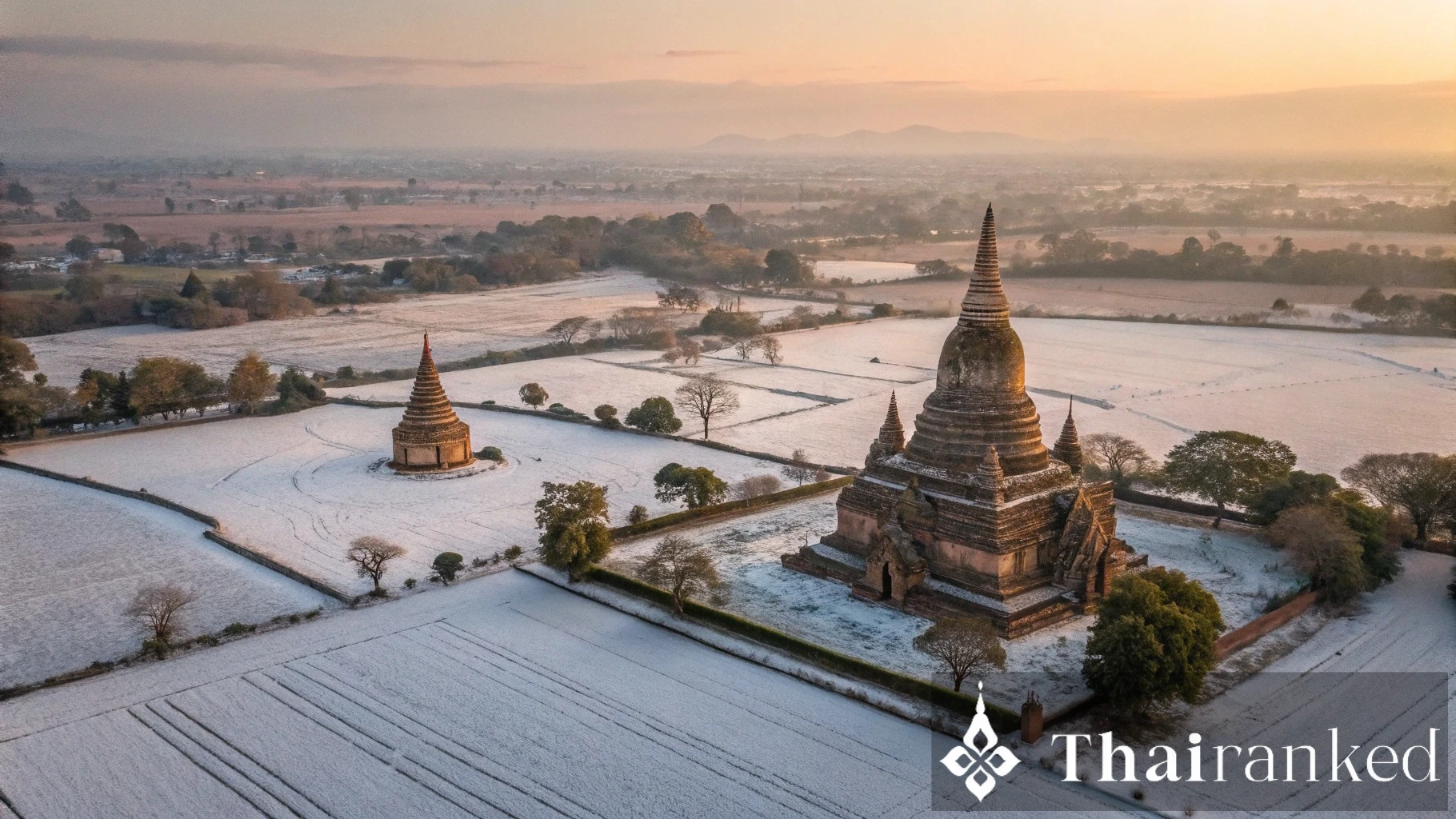
That part is real, and it’s magical in its own way. In the highest parts of Chiang Mai and surrounding ranges, visitors sometimes wake up to a shimmering white coating on grass and leaves called Mae Kha Ning, a Thai term used for hoarfrost. It forms on clear, calm nights when temperatures dip below freezing at the surface, usually just before sunrise, and disappears as soon as the sun warms the landscape.
Where and when you can see frost in Thailand
The most reliable place is the summit area of Doi Inthanon, typically in late December and January, around 5 to 7 a.m. after a strong cold surge. Frost can also appear on ridgelines in Doi Ang Khang, Doi Pha Hom Pok, and occasionally in the highlands of Northern Chiang Rai. There is no guarantee on any given day, but if you time your visit with a cool spell, your chances improve.
Planning a northern winter trip? Our guide on celebrating a cozy Christmas up north covers the season’s vibe, wardrobe tips, and where to base yourself. Check out Why Chiang Mai is the Best Place for a "Cozy" Christmas in Thailand for inspiration and timing.
Safety and comfort tips for cold mornings
- Layer up with a light down jacket or fleece, gloves, and a hat. Temperatures can be near freezing before sunrise on the summits, then jump 10 to 15 degrees by mid-morning.
- Drive carefully if you are riding a scooter to the summit viewpoints. Pre-dawn roads can be foggy and slick with dew. Read our practical advice in The Ultimate Guide to Renting a Motorcycle: Safety, Scams, and Tips.
- Arrive early for sunrise. The best frost reveals itself right before dawn. Once sunlight hits, it melts fast.
- Respect park rules and stay on paths. Frost-coated plants are fragile, and Thailand’s national parks are actively protected.
How hail differs from snow, in plain language
It is easy to mistake the two if you only see the ground after a storm. Here is the simple breakdown:
- Snow is made of delicate ice crystals. It forms in cold clouds and drifts down in flakes. It feels soft, and it accumulates when the air is below freezing for a long stretch.
- Hail is made of hard ice balls. It forms in strong thunderstorms when updrafts repeatedly toss raindrops above the freezing level, adding layers of ice. It can fall during hot weather, and it often arrives suddenly with wind and lightning.
- Frost is a coating of ice that forms on surfaces from moisture freezing on contact, usually overnight when the ground cools below 0°C. Nothing “falls” from the sky with frost, it grows on surfaces.
Thailand gets hail on occasion, frost in the highest mountains during cold snaps, but not true snowfall.
Where to chase winter vibes in Thailand, minus the snow
Even without snow in Thailand, the cool season brings crisp air, golden light, and a gentler pace, especially in the North. If you want to “feel winter,” here is how to do it.
Choose a northern base
Chiang Mai is the obvious pick thanks to its coffee culture, hill temple views, and easy access to nearby mountains. For budget-friendly stays with great locations, our roundup of value options is a good starting point: Top 5 Affordable Hotels in Chiang Mai.
Make time for day trips to Doi Inthanon or Doi Ang Khang for sunrise chill and misty horizons. If you visit during the winter harvest, strawberry farms open for self-pick fun, which pairs perfectly with a chilly morning. See our seasonal guide: Where to Pick Strawberries in Chiang Mai.
Time your trip for the coolest weeks
Late December to late January is the sweet spot for chilly mornings. Around New Year, northern Thailand often sees its lowest temperatures of the year. For a festive atmosphere, browse Why Chiang Mai is the Best Place for a "Cozy" Christmas in Thailand to plan markets, light shows, and hot chocolate stops.
Embrace the seasonal foods and drinks
- Warm up with Thai tea, ginger infusions, or mountain-grown Arabica coffee in Mae Rim and Samoeng.
- Snack on grilled sweet potatoes, chestnuts, and steaming bowls of khao soi on cool evenings.
- Visit night markets with a jacket, and enjoy the rare pleasure of walking Bangkok or Chiang Mai without breaking a sweat.
Dress the part, but keep it practical
Pack a compact puffer or fleece, a light scarf, and closed shoes for the early mornings. By midday, you will likely be back in T-shirts. Layering saves you from carrying bulky clothing you will not need after 10 a.m.
Cold season wellness: what to watch for
Thailand’s “winter” is still relatively mild, but the sudden swings from pre-dawn chill to afternoon warmth can challenge your immune system, especially if you are riding motorbikes or spending long hours outdoors. Hydration and sleep matter, and a simple mask can prevent the spread of seasonal bugs in crowded places. We put together a practical overview of common ailments and prevention tips here: Seasonal Diseases in Thailand.
Common questions about snow in Thailand
Has it ever snowed in Thailand, officially?
No. There is no official, verified record of natural snowfall in Thailand. When you hear about “snow,” it is almost always hail or a misunderstanding based on old vocabulary or local storytelling.
What is the coldest it gets in Thailand?
On high peaks like Doi Inthanon, dawn temperatures can dip a few degrees below 0°C during strong cold surges, leading to frost. In northern valleys and cities such as Chiang Mai and Chiang Rai, cold mornings usually fall to 8–15°C in the coolest weeks, warming rapidly after sunrise.
Can I see ice or anything like snow in Thailand?
You can see frost on the highest mountains on select mornings in December and January. You might also witness hail during a thunderstorm in the North or Northeast, especially in the pre-monsoon season. For genuine snow, you will need to hop to nearby destinations abroad with higher mountains.
Why do some people swear they saw snow in the 1950s or 1960s?
Memory, vocabulary, and the impressive effect of hailstorms are a powerful mix. In Thai, some older speakers casually used “hima,” the Sanskrit-derived word for snow, in a poetic sense for various icy phenomena. Meanwhile, a quick hailstorm can blanket roads in white, and the story becomes “snow” in everyday speech. Without measurements or consistent meteorological records of snowflakes reaching the ground, we rely on the science of the region’s climate, which firmly points away from true snowfall.
Is Doi Inthanon the best place to feel winter in Thailand?
Yes for frost and truly chilly mornings, especially at sunrise in peak cool season. Arrive very early, layer up, and check park notices the night before. If you are driving yourself, review safety tips in The Ultimate Guide to Renting a Motorcycle: Safety, Scams, and Tips before tackling dark mountain roads.
What about “snow shows” at malls and theme parks?
In big-city shopping centers during December, you might find artificial “snow” blown for holiday events. It is fun and festive, but it is foam or chilled flakes from machines, not weather. If you are traveling with kids and want a quick winter feel in Bangkok, these pop-ups are cute, short-lived, and photo-friendly.
Climate trends: could Thailand ever see snow in the future?
Never say never in meteorology, but given Thailand’s latitude, altitude, and surrounding warm seas, natural snowfall is extraordinarily unlikely. Long-term climate change could shift rainfall patterns and temperatures, but the basic geographic constraints remain. If anything, warming makes widespread snowfall even less plausible.
Final verdict: myth charming, frost real, snow no
Thailand’s snow stories make for great campfire chat, but the science and records agree, it does not snow in Thailand. What you can enjoy, and what locals truly treasure each winter, are cool mornings, mountain frost, sea of mist sunrises, and bright blue skies. If your heart is set on snowy landscapes, plan a regional side trip. If you are content with a crisp northern morning and a hot bowl of khao soi, Thailand’s cool season is a joy all on its own.
Ready to plan a northern itinerary for the chill season? Start with the essentials: a cozy base in Chiang Mai via Top 5 Affordable Hotels in Chiang Mai, a festive calendar from Why Chiang Mai is the Best Place for a "Cozy" Christmas in Thailand, and seasonal wellness reminders in Seasonal Diseases in Thailand. If you will be riding to the viewpoints, brush up on two-wheel safety with The Ultimate Guide to Renting a Motorcycle: Safety, Scams, and Tips. Winter in Thailand may be snow-free, but it is definitely worth the trip.
by Thairanked Guide
Thairanked helps you discover great places in Thailand!
Search Hotels & Flights
Related Insights
Why does the mountain at Thamluang Khunnam Nangnon National Park look like a pregnant woman? Discover the tragic legend of Jao Mae Nang Non, the forbidden love story behind the "Sleeping Lady" mountain in Chiang Rai.
Discover Makha Bucha, Thailand’s first major Buddhist holiday, its miracle story, teachings, and essential Thai traditions, making merit and candle processions.
Discover the true meaning of “farang” in Thailand. Is it offensive, neutral, or affectionate? Unpack the word’s origins and expat realities in Thai culture.
Discover the unique national anthem tradition in Thailand, why everyone freezes in public at 8AM and 6PM, and tips on what to do if you’re caught by surprise.
Discover why Spirit Houses (San Phra Phum) are everywhere in Thailand, their non-Buddhist origins, rituals, and meanings for travelers and expats.