Top Auspicious Thai Wedding Desserts & Meanings
May 08, 2026 09:30 AM
Last edited: May 08, 2026
Ja Mongkut to Thong Ek, discover the most auspicious Thai wedding desserts, what each name signifies, and which sweet carries the strongest blessing.

by Thairanked Guide
Thairanked helps you discover great places in Thailand!
Search Hotels & Flights
You might like
Ja Mongkut carries the strongest blessing among Thai wedding desserts, with Thong Ek close behind.
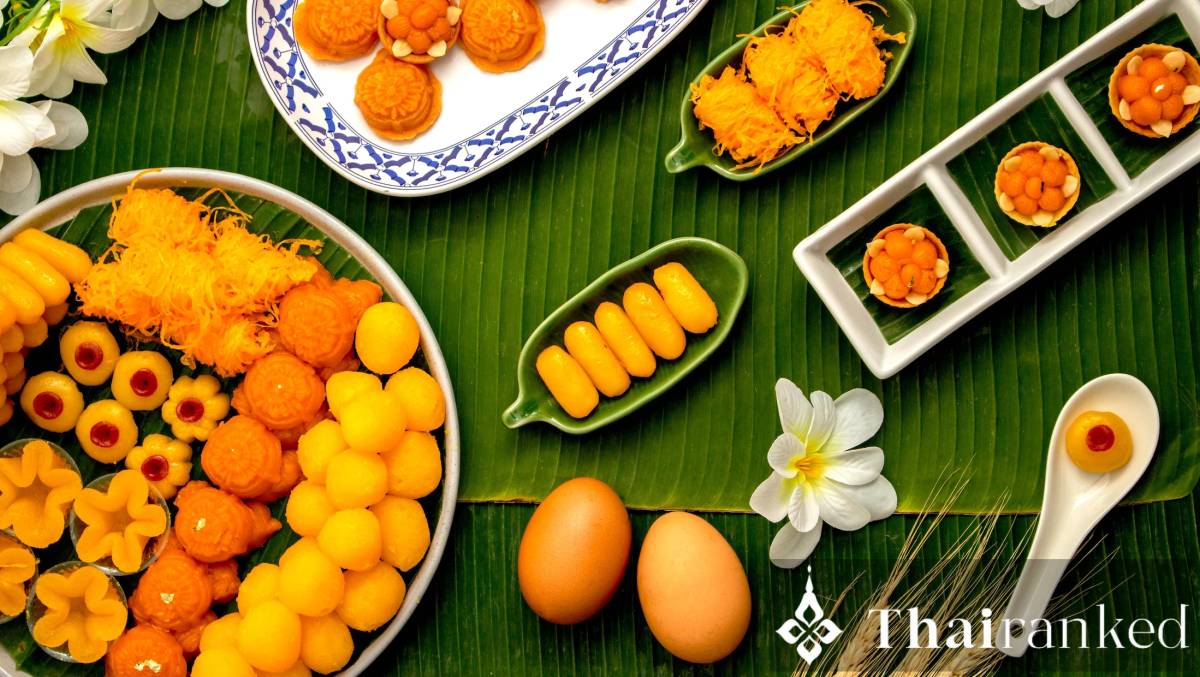
Thai families set these sweets on engagement trays and wedding tables to call in rank, wealth, loyal supporters, growth, and a love that lasts. Names drive the meaning. Thais hear thong as gold, so desserts with gold in the name signal money, status, and good fortune. Shape and number matter as well. Couples often pick nine items, a lucky number for progress, then add flower shapes, crowns, and long threads to signal an unbroken bond.
You will find these auspicious Thai desserts, or khanom mongkhon, at heritage sweet shops, palace-style kitchens, and old markets. Cooks scent many recipes with candle smoke and jasmine, then finish with gold leaf for a royal touch. Expect egg yolks, sugar syrup, coconut milk, and mung bean flour to show up often. We ranked the most meaningful Thai wedding desserts by cultural weight, presence on engagement trays, and the specific blessing Thai elders say out loud when they present them. Use this guide to pick the right mix for your ceremony or to read the symbolism when you attend a Thai wedding.

1. Ja Mongkut (จ่ามงกุฏ)
The crown sweet for rank, honor, and wealth
Highlight
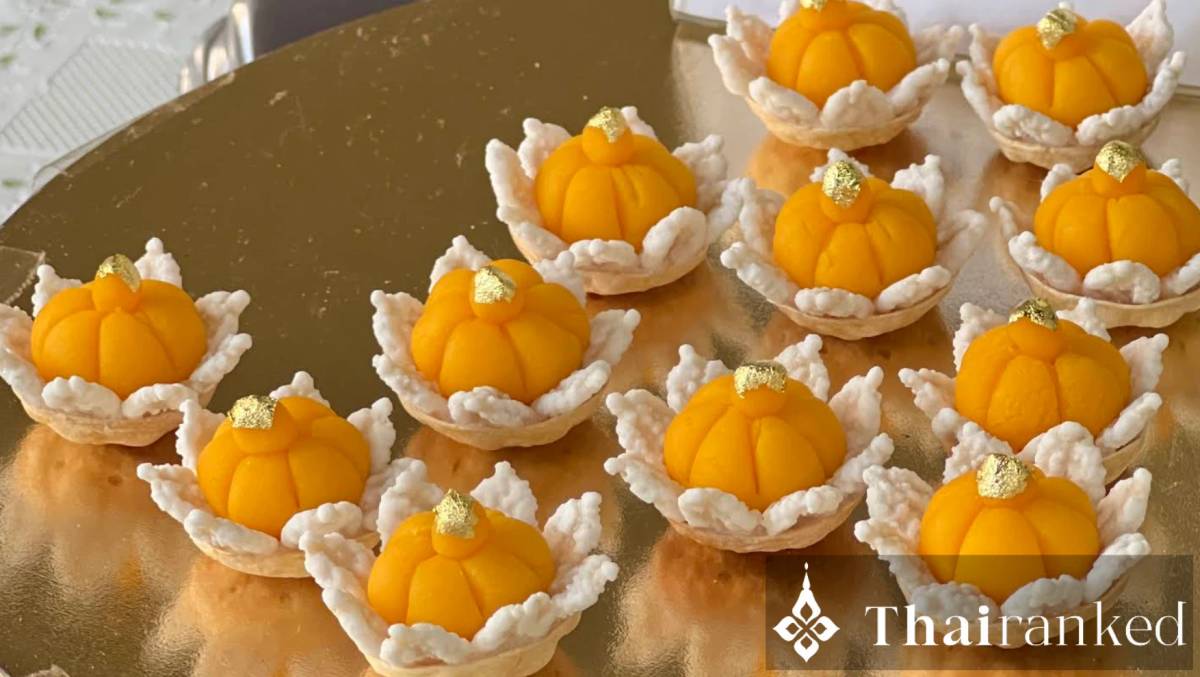
The name means crown, and Thai elders treat this sweet as the peak of wedding blessings. Cooks shape a tiny crown from a paste of mung bean flour, egg yolks, sugar, and fragrant water, then set a bead of gold leaf on top. Families present Ja Mongkut to call in rank, honor, and steady leadership for the couple. The crown signals status raised with virtue, not swagger. Brides and grooms who want maximum auspice make space for this piece, since relatives point to it first during the blessing. You can taste a firm bite on the outside with a soft core, a balance that mirrors grit with grace. Shops make Ja Mongkut by hand in small batches, which adds weight to the gift. Place it at the center of the tray to set the tone.
2. Thong Ek (ทองเอก)
Top-gold blessing for first place, forever
Highlight
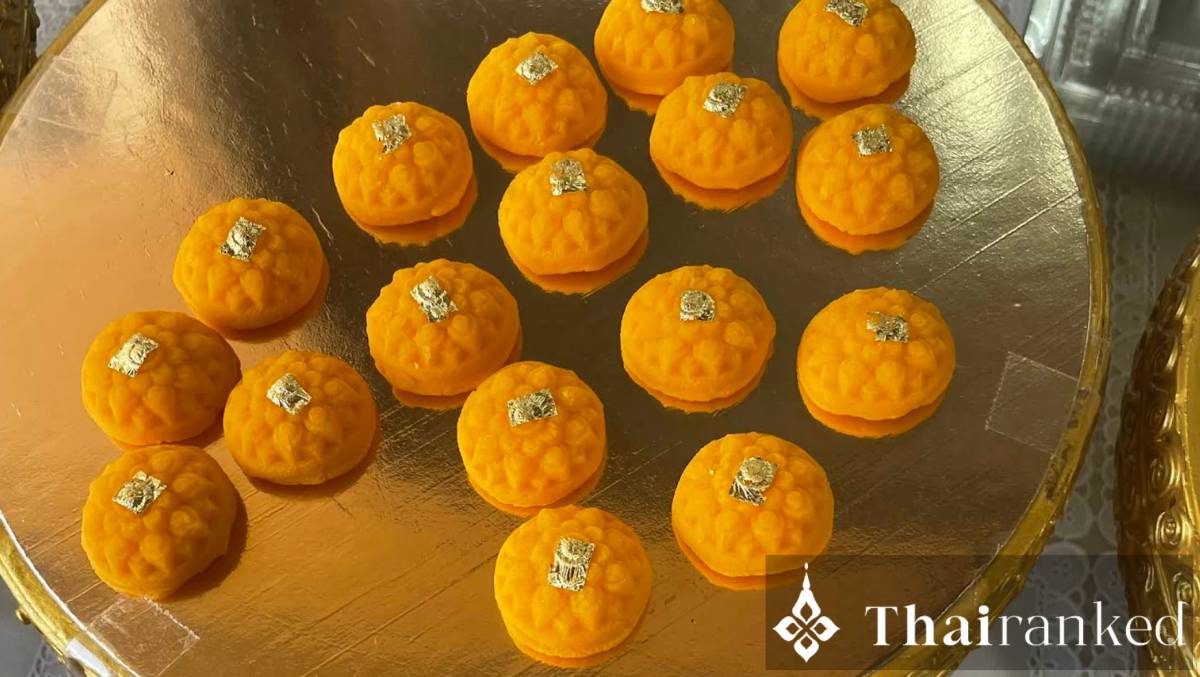
Thong Ek reads as top gold. Thai hosts use it to wish the couple first place in work, social standing, and love. Artisans shape a flower rosette from mung bean flour and egg yolks, glaze it with syrup, then mark the heart with gold leaf. You see a carved version called Thong Ek Krajang as well. Families love this sweet for its clear message, you stand out and stay admired. The flavor leans rich and nutty from the mung bean base, with a syrup sheen that keeps each bite lush. Thong Ek pairs with Ja Mongkut on the same tray, crown and top gold side by side, so the wish covers both rank and success. Give it to mentors and in-laws to show respect and to signal your work and home will shine.
3. Thong Yip (ทองหยิบ)
Pinched gold that gathers wealth
Highlight
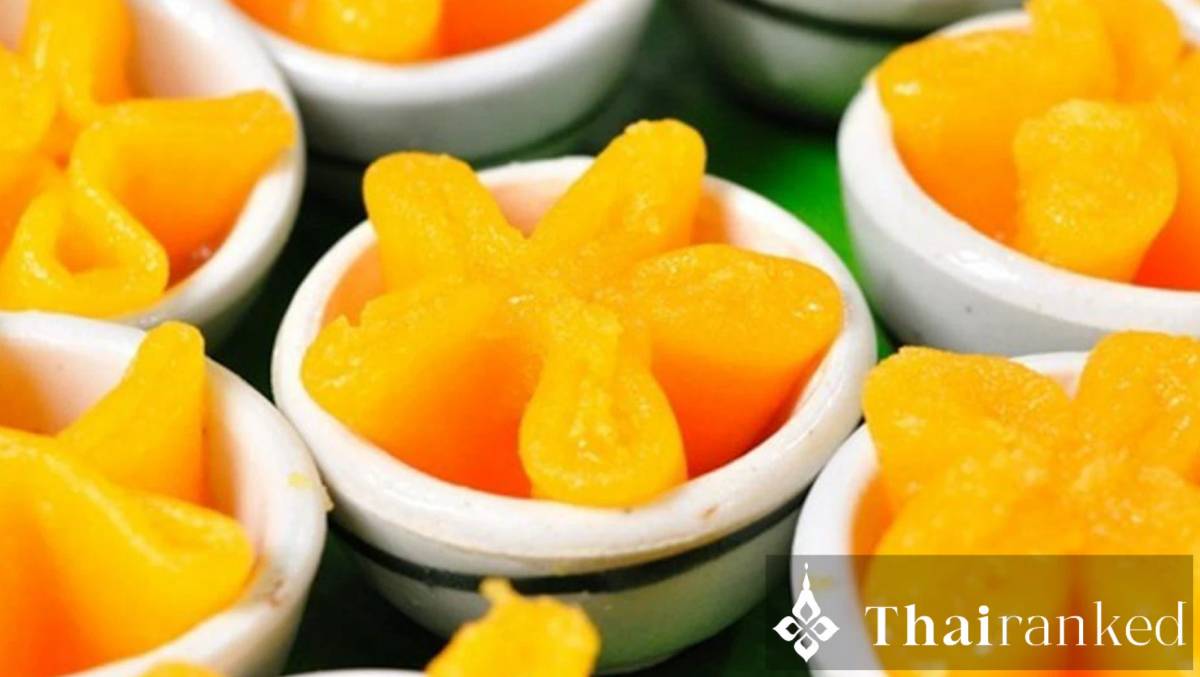
Thong Yip means pinched gold. Cooks whisk egg yolks, drop the batter into syrup, then pinch the soft sheet into a star or flower so it stands up inside a tiny cup. Guests read that pinch as a hand that gathers money and luck. Families like Thong Yip for new ventures, shared savings, and a home that fills up with good things. The texture sits between custard and flan, with a glossy surface that holds shape on the plate. Place Thong Yip near Thong Yod to double the wealth signal, grab and flow, both at once. You can hand these in sets of five or nine for an extra push on progress. Elders smile when they see the crisp folds, a clear sign that skilled hands shaped the wish with care.
See also
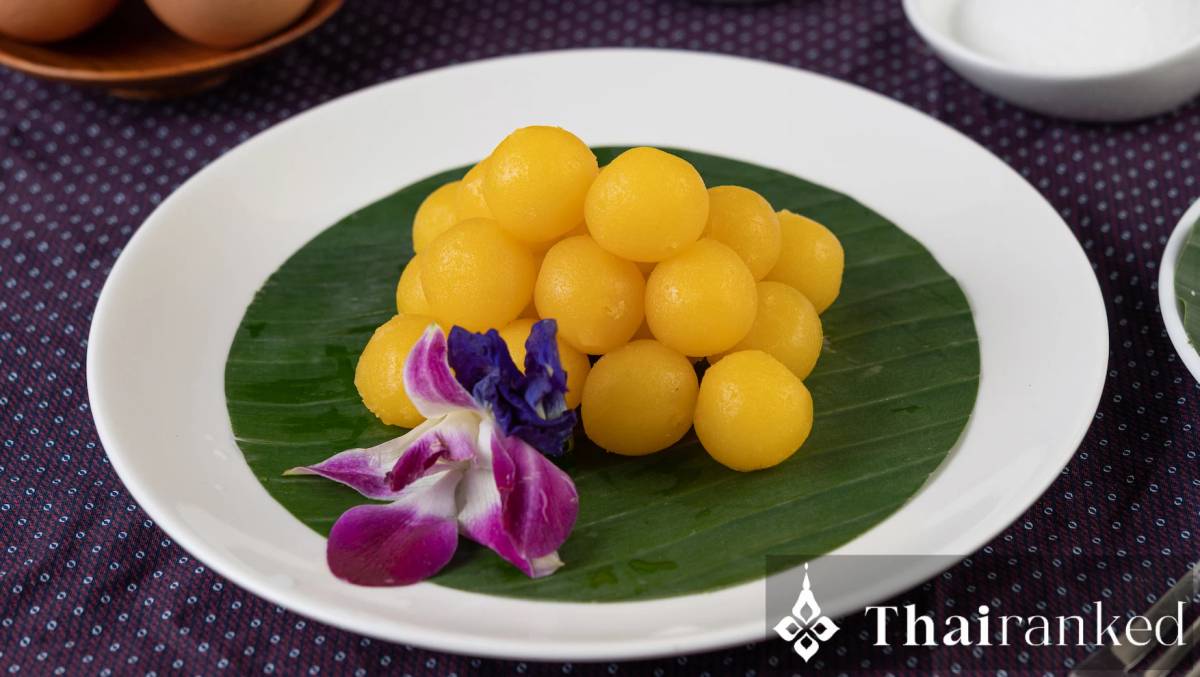
4. Thong Yod (ทองหยอด)
Golden drops for steady incoming luck
Highlight
Thong Yod means golden drops. Makers roll egg yolk batter into smooth pearls and cook them in sugar syrup until the center sets. Guests read the drops as money and fortune that keep coming without stop. Couples use Thong Yod with Thong Yip to cover both action and flow. The bite runs tender, with a sweet core that releases syrup as you press it on your tongue. Hosts like to fill small bowls with these or line them in rings around the tray for a full look. You can pack them as favors for friends who travel home after the party. The message lands fast, may gold drop into your life day after day, may your pantry never sit bare.
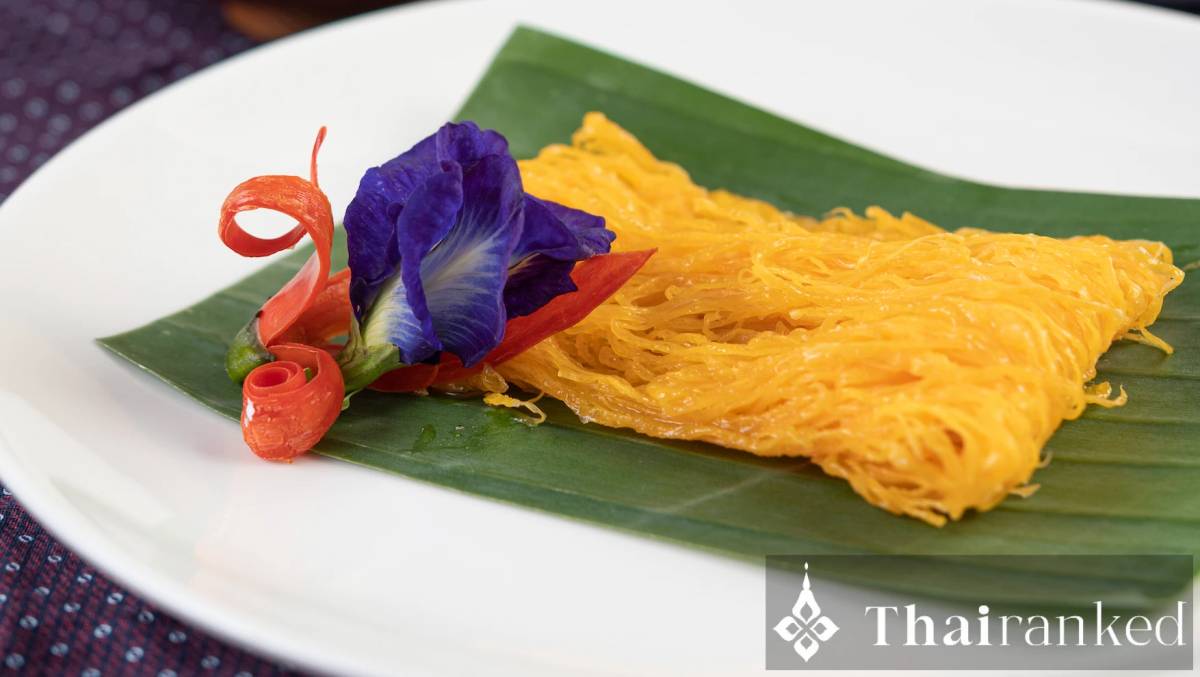
5. Foi Thong (ฝอยทอง)
Golden threads for long life and long love
Highlight
Foi Thong means golden threads. Cooks stream thin lines of yolk into hot syrup, then gather the threads into nests and long skeins. Families drape Foi Thong over gifts and cakes to wish a long life and a bond that never breaks. That image sticks, two partners tied with gold threads, step by step through each season. The texture runs light and springy, with a syrup kiss on the surface. You can cut Foi Thong into rings for individual servings or roll it into fat bundles for the centerpiece. Pair it with Thong Ek to link long life and top rank, a set that pleases grandparents and bosses alike. The color pops on camera, so it earns space on the photo table as well.
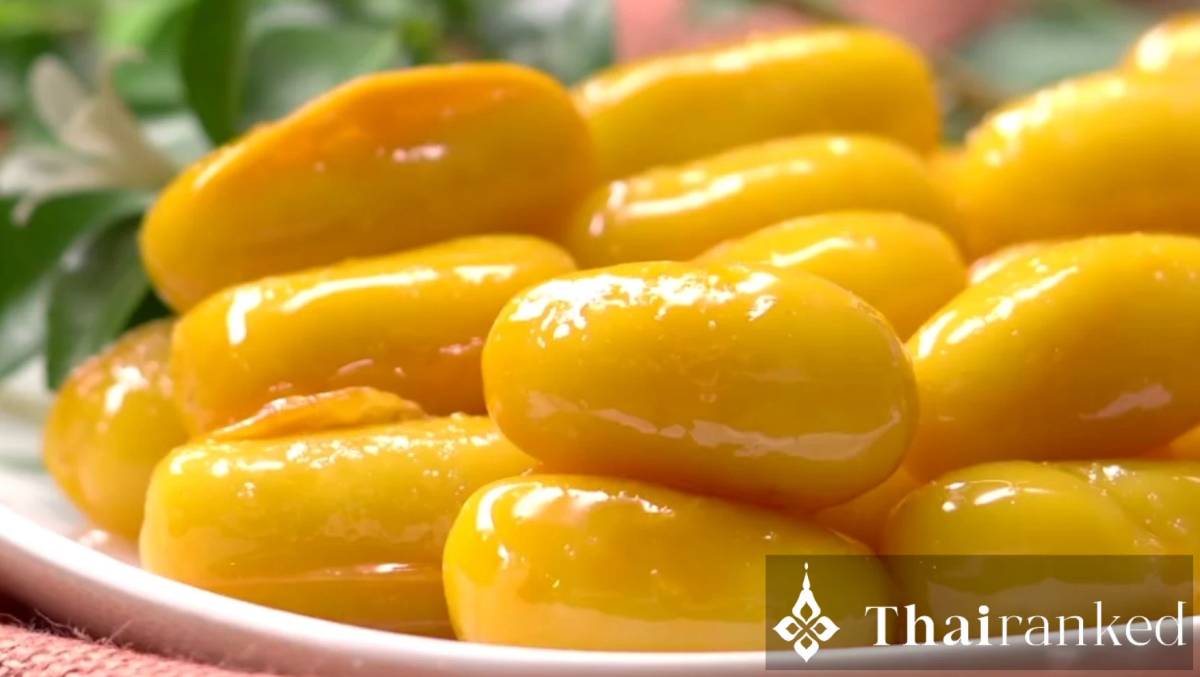
6. Med Kanun (เม็ดขนุน)
Seeds of support, mentors, and backing
Highlight
This sweet takes its shape from a jackfruit seed. Cooks grind mung beans to a smooth paste, form neat ovals, then glaze them in egg yolk syrup. The name plays on kanun, which sounds like support. Families bring Med Kanun to ask for strong backers, kind in-laws, and steady mentors for the couple. New households need guidance and a network. This piece speaks to that need. The texture feels dense and creamy, with a glossy coat that keeps each bite intact. Serve it beside Khanom Chan to tie outside support to your own stepwise growth. Med Kanun travels well, so hosts like it for boxed sets that guests take home after the blessing.
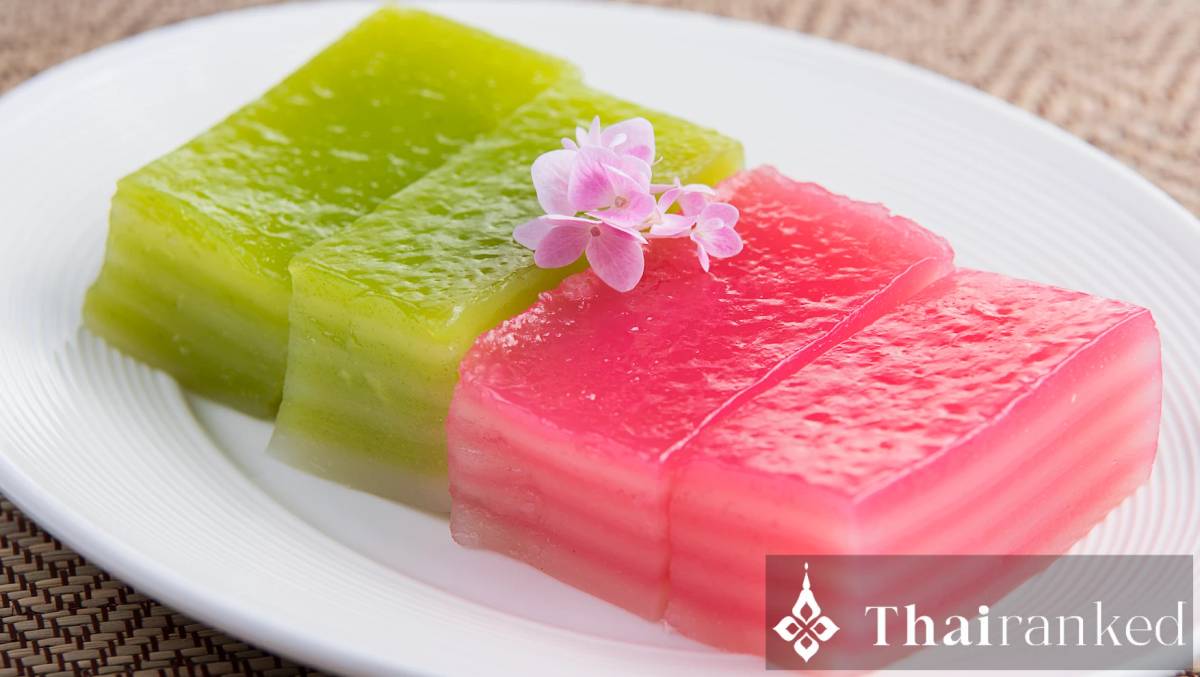
7. Khanom Chan (ขนมชั้น)
Nine layers for step-by-step progress
Highlight
Khanom Chan means layered sweet. Makers steam thin sheets of rice flour and coconut milk, stack them, and cut neat squares or flower shapes. Couples ask for nine layers to mark progress through each stage of life. The wish sounds clear, rise layer by layer, build patience and depth, move up with grace. The texture sits soft and bouncy, with pandan scent and a mellow coconut finish. Choose green and white for a classic look, or add pink and purple to suit the theme. Children love to peel the layers, which turns into a sweet moment at family tables. Place Khanom Chan near the front edge of the tray so the layers show from the first glance.
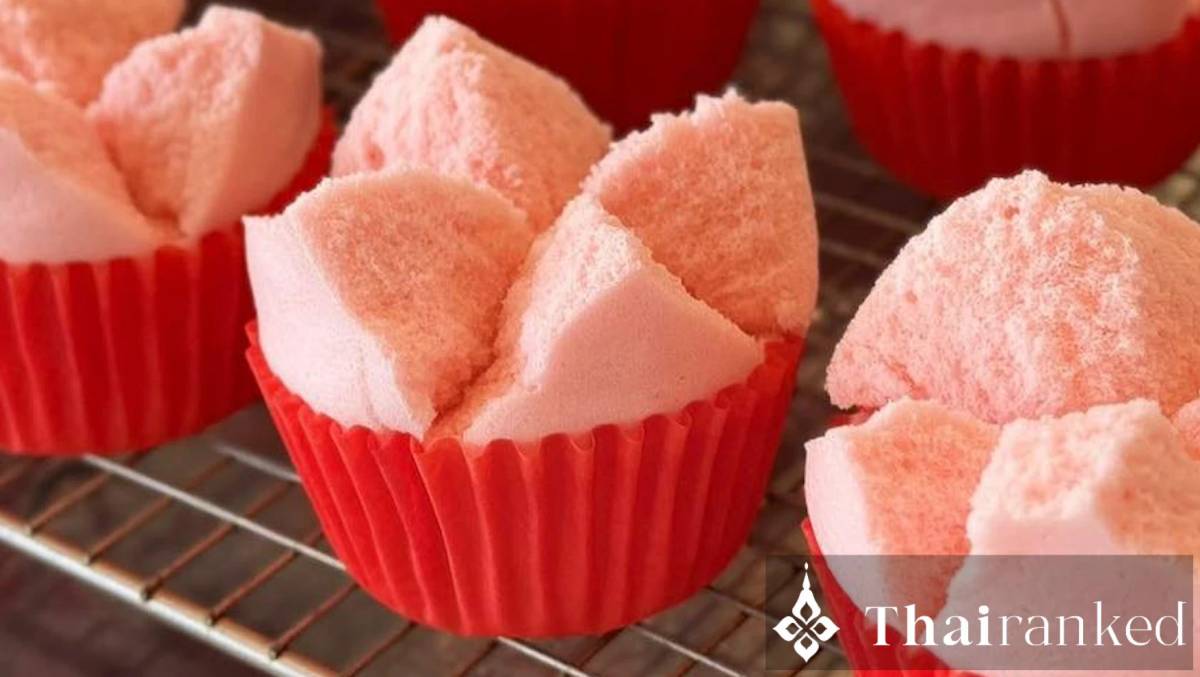
8. Khanom Tuay Foo (ขนมถ้วยฟู)
Blooming cups for growth and promotions
Highlight
Khanom Tuay Foo rises and blooms in the cup, so families use it to wish growth, promotions, and a home that feels full. Bakers steam a batter of rice flour, sugar, and coconut milk until the top cracks open like a flower. That open top signals expansion and luck that lifts. The crumb feels light and airy, with a gentle coconut note that pleases kids and grandparents. Pick white and pink for engagement trays or match the wedding palette. Hand each guest a small cup during tea service to spread the blessing across the room. Pair this with Med Kanun if you want both outside support and inner lift.
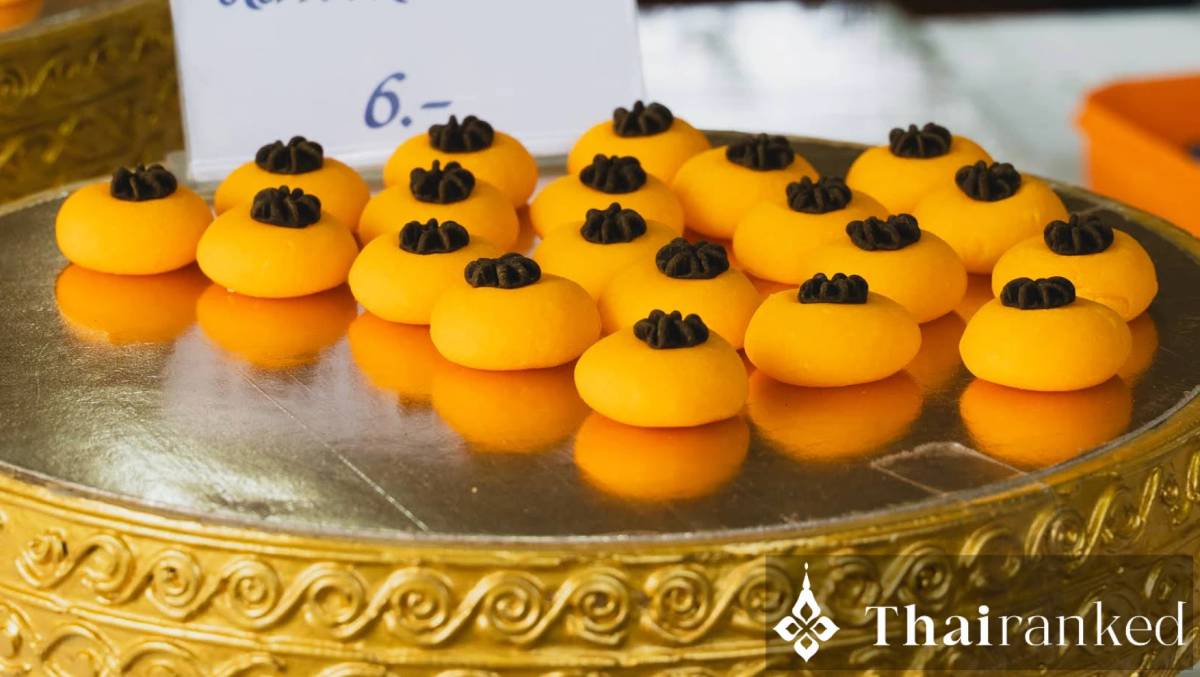
9. Saneh Jan (เสน่ห์จันทน์)
Fragrant charm for love and warm ties
Highlight
Saneh Jan translates as moon or sandalwood charm, and hosts use it to bless the couple with grace, affection, and warm ties. Cooks knead flour, sugar, and egg yolks with fragrant spices like nutmeg and mace, then scent the dough with candle smoke before baking small golden orbs. The room fills with perfume as trays come out of the oven. Guests read that aroma as charm and welcome, a perfect note for a new household. The cookie snaps on the first bite, then melts into a buttery finish. Offer Saneh Jan to friends and neighbors who help stage the party, a sweet way to say thanks and to ask that their goodwill follows you into married life.
Missing a business you'd recommend?
Tell us who belongs on this list and our editors will review it.
Couples who want the fullest blessing place Ja Mongkut at the center, then add Thong Ek, Thong Yip, Thong Yod, and Foi Thong for wealth and a bond that holds. Med Kanun brings supporters, Khanom Chan stacks progress, Khanom Tuay Foo lifts fortunes, and Saneh Jan adds charm and warm ties. Nine items strike the classic note, though you can tailor the set to your story and region. Ask elders for their take, then balance shapes, textures, and scent for a tray that looks regal and carries clear meaning.
Curious about the wider cultural calendar that shapes Thai celebrations and sweets? Read our guide to Thailand’s most popular festivals, then learn how families bless the New Year in our feature on the real history of Songkran. These customs sit together, so the more you see, the richer each wedding table feels.
by Thairanked Guide
Thairanked helps you discover great places in Thailand!
What people ask about
"Top Auspicious Thai Wedding Desserts & Meanings"
Here you will find answers to the most popular questions about Thailand.
 Chat with us