Scariest Thai Ghosts: 10 Spirits That Haunt Thailand
February 21, 2026 03:45 AM
Last edited: February 20, 2026
From Mae Nak of Phra Khanong to the gut-churning Krasue, meet 10 scariest Thai ghosts, their origins, how to recognize them, and beliefs that keep locals safe.

by Thairanked Guide
Thairanked helps you discover great places in Thailand!
Search Hotels & Flights
You might like






Thailand’s ghost stories are so woven into daily life that you’ll spot spirit houses on street corners, red-sashed trees along canals, and offerings at roadside shrines from Bangkok to the backcountry. Thai ghosts aren’t just Halloween material, they shape how people travel at night, where they camp, and even what they say after sunset. In this guide, we rank the scariest, most famous Thai ghosts by a mix of cultural impact and pure fear factor, from tragic legends to gut-churning apparitions. If you’re new to the supernatural side of the Kingdom, brush up on local etiquette with our guide to Thai ghost beliefs and nighttime taboos so your curiosity stays respectful.
At the top, you’ll meet Mae Nak, the heartbroken spirit of Phra Khanong, a love story told for generations through films, TV, and shrine pilgrimages. Things get far more visceral with the floating entrails of the Krasue, and towering with the temple-haunting Pret. We also include notorious spirits travelers whisper about around campfires, like the toe-biting Phi Kong Koi and the chest-sitting sleep demon, Phi Am. Each entry explains origins, what sightings are said to look or sound like, why Thais fear or respect them, and the small customs people use to stay safe.
Whether you’re a folklore fan, a late-night urban explorer, or simply someone who doesn’t want a supernatural surprise on your Thailand trip, this list will help you understand what locals already know, ghosts here have personality, rules, and reputations. Read on, and maybe keep a light on tonight.

Highlight
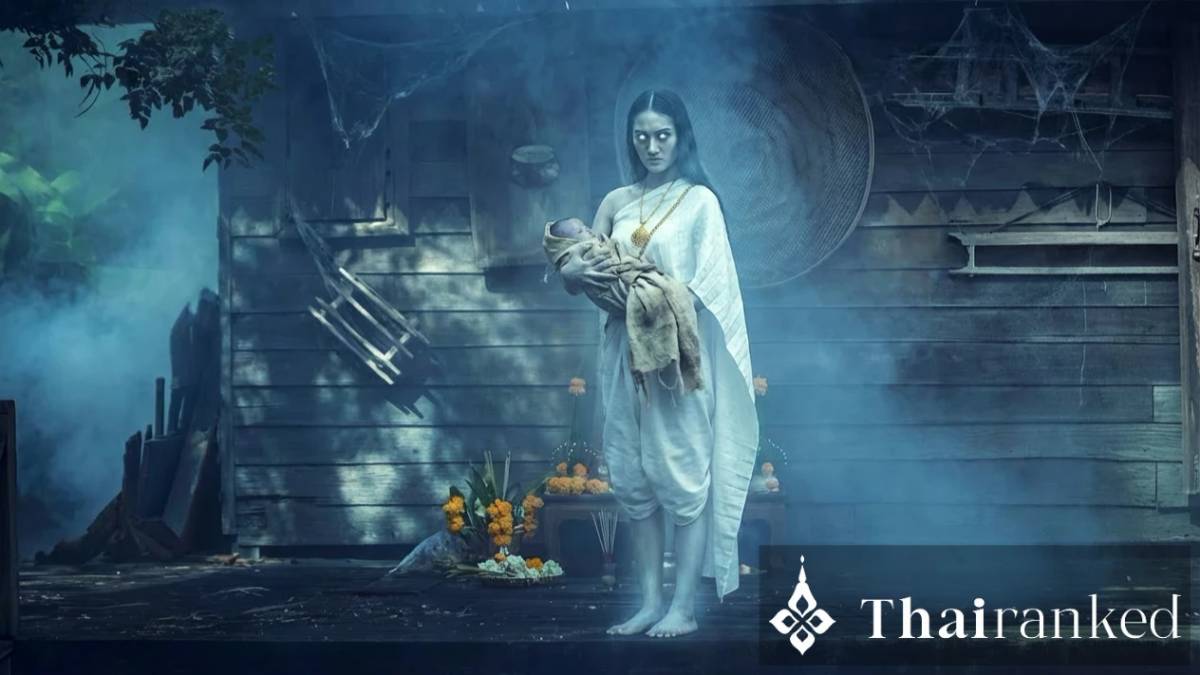
Thailand’s most famous ghost is a tragic heroine. Mae Nak died in childbirth while her husband, Mak, was away at war. When he returned, he unknowingly lived with her spirit, until neighbors revealed the truth and chaos followed. The tale speaks to fierce devotion, the dangers of denial, and the power of love that refuses to let go. Countless films and TV dramas retell her story, and her shrine at Wat Mahabut in Phra Khanong draws steady streams of visitors asking for blessings, safe childbirth, and protection for soldiers. Offerings of toys, clothing, and incense line the altars, and people speak softly, out of respect. More than a jump scare, Mae Nak endures because she’s human, a reminder that grief can haunt as deeply as any monster. For many Thais, she’s the benchmark of a ghost story done right, equal parts romance, dread, and deep cultural memory.
Essential Information
Phra Khanong, Bangkok
2. Krasue (Phi Krasue)
The floating head with glowing entrails
Highlight
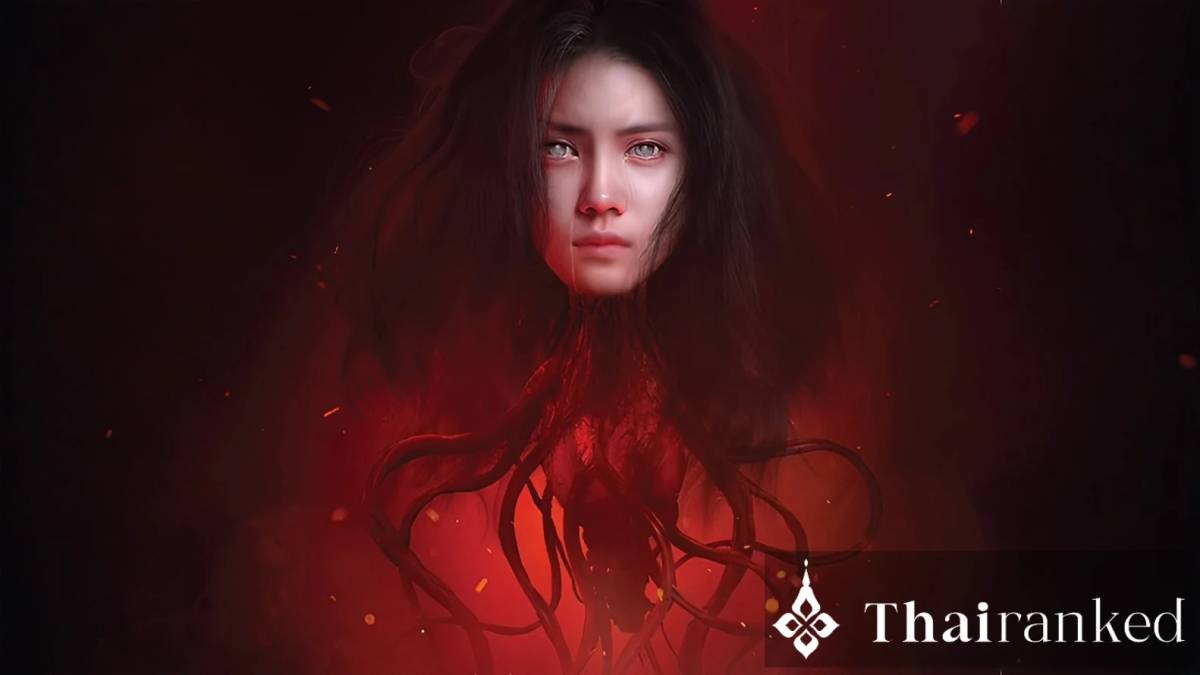
The Krasue is nightmare fuel for anyone with a weak stomach. By day she’s an ordinary woman, by night her head floats free trailing a tangle of glowing entrails. She hungers for blood and raw offal, slipping through windows or barns to feast. Rural defenses are as visceral as the legend itself, people hang thorny vines, pineapple leaves, or rough branches to snag intestines and keep her at bay. Farmers say dogs sense her first, and midwives warn of her taste for placentas. Across Thailand, Laos, and Cambodia, sightings share common details, a faint rot-like smell, a soft red glow, and the rustle of something that isn’t quite flying. Modern horror films keep Krasue in the limelight, but old rules persist, keep the house secure, avoid tempting smells, and don’t linger alone near barns after dark. Few spirits elicit the same mix of dread and disbelief.
3. Pret (Phi Pret)
Towering hunger ghost of karmic punishment
Highlight
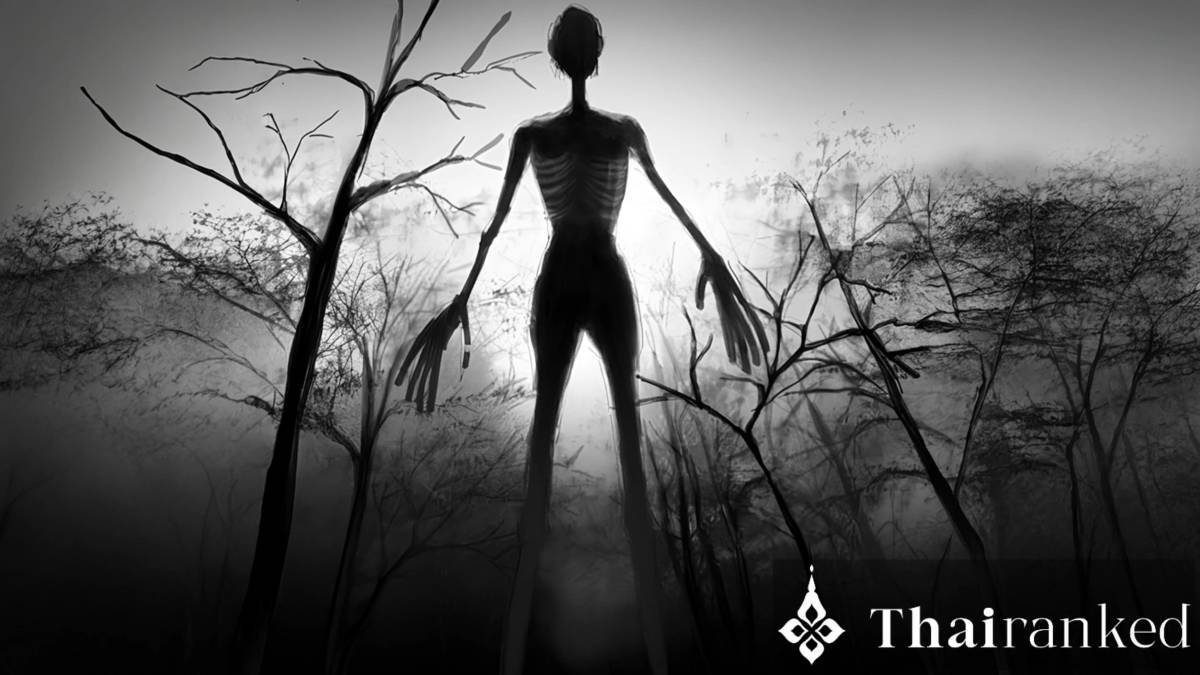
The Pret is the giant of Thai ghostdom, a gaunt, towering figure with a mouth as tiny as a needle’s eye. Condemned by karmic debt, it wanders near temple grounds and banyan trees, forever starving because it can’t swallow enough to satisfy its cravings. In Buddhist storytelling, Pret embodies greed, disrespect toward parents, or abuses of power, a moral lesson set to a terrifying silhouette. People describe a whistling wind that seems to moan like a long, hollow throat, and some claim the scent of funeral smoke heralds its passing. Monks advise making merit, dedicating offerings, or chanting to ease such tormented beings. Children are warned not to point at sacred things or speak cruelly, lest they attract a Pret’s attention. Whether you view it as a ghost or a spiritual allegory, the Pret’s scale and sorrow make it one of Thailand’s most unforgettable specters.
See also

4. Phi Tai Hong
Spirits of sudden, violent, or untimely death
Highlight
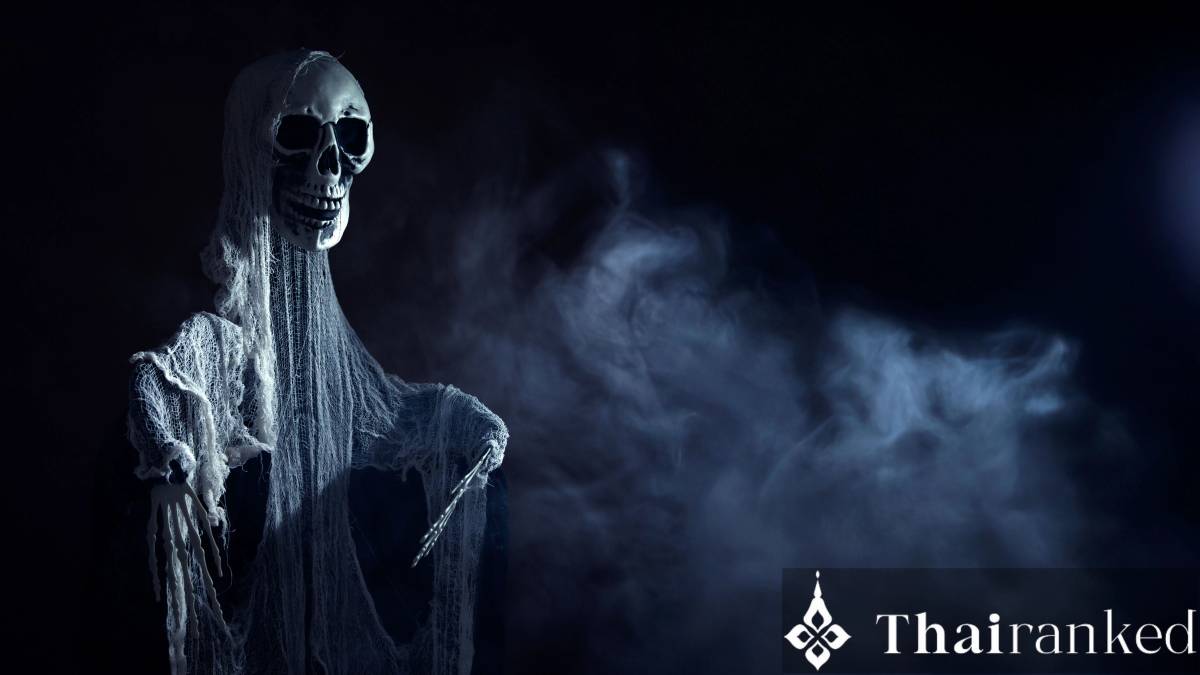
Phi Tai Hong are spirits of those who died suddenly or violently, in accidents, murders, drownings, or disasters. Restless by nature, they’re believed to linger at the site of death, which is why makeshift roadside altars bloom with incense, flowers, and bottles of red soda. People avoid bold talk near such places at night and offer quick apologies if they must pass through. In folktales, these ghosts have sharp tempers and unfinished business, demanding respect and remembrance. Monks are often invited to chant and transfer merit to soothe them. Travelers learn simple courtesies, don’t mock the dead, don’t disturb offerings, and don’t whistle after dark. Unlike a single named spirit, Phi Tai Hong are many and everywhere, which is why Thais give fractured bridges, sharp bends, and deep ponds an extra measure of caution. Fear here isn’t superstition alone, it’s also a survival instinct.
5. Phi Pop (Phi Pob)
Possessing spirit with a taste for human offal
Highlight
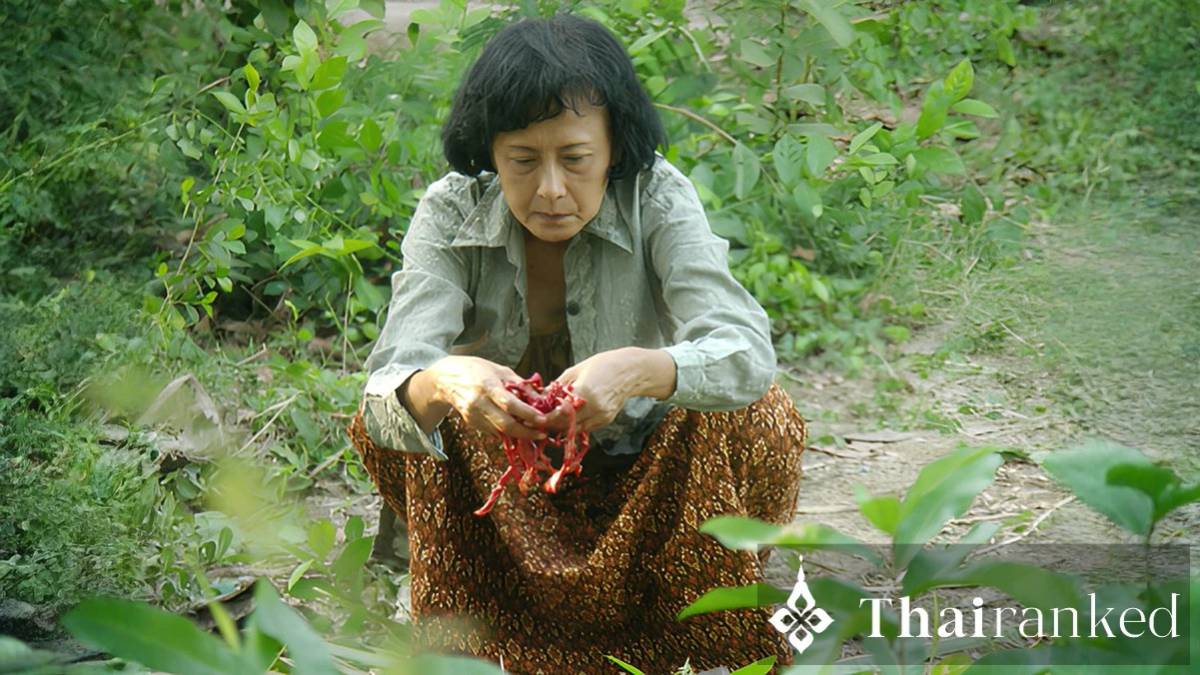
Part possession story, part cannibal nightmare, Phi Pop is said to inhabit a human host and feast on internal organs, especially liver and intestines. The legend is strongest in Isaan and the North, where communities once blamed unexplained wasting illnesses on Pop’s hidden appetite. Folklore describes exorcisms led by a mor phi (spirit doctor), music from a khaen reed pipe, and dramatic rituals to drive the entity out. Households might avoid sharing certain foods or watch for telltale cravings. Even today the term “Pop” can be hurled as a serious insult in rural disputes. Whether you treat it as an allegory for disease and social tension or as a literal predator, the fear it inspires is real enough to keep gatherings quiet when someone falls mysteriously ill. In campfire rankings of Thai horrors, Pop’s mix of secrecy and savagery puts it near the top.
6. Krahang (Phi Krahang)
Loincloth-clad flyer with winnowing baskets
Highlight
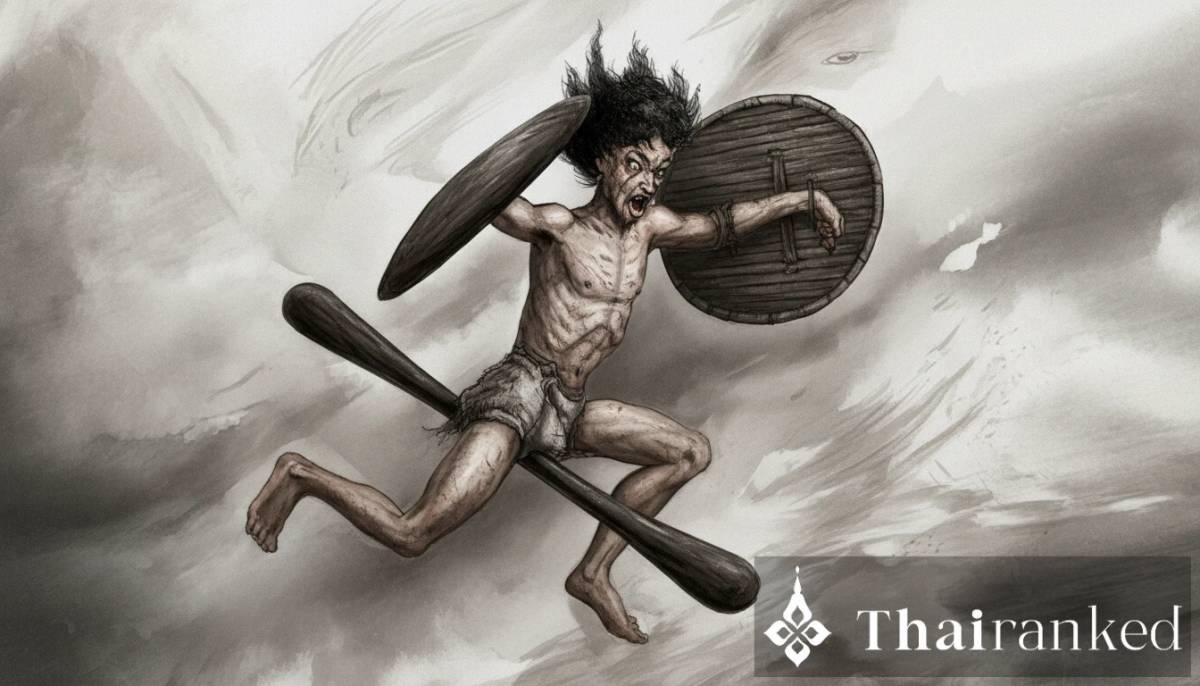
Krahang is the nocturnal foil to Krasue, a male spirit who takes to the skies using a pair of winnowing baskets as wings and a broom as a tail. He wears only a loincloth and is blamed for late-night attacks or creepy rooftop thumps in quiet villages. Some tales paint Krahang as a shapeshifting criminal who preys on isolated homes, others as a cursed man bound to fly when the moon is bright. Rural households keep dogs, avoid drying laundry outside overnight, and add extra locks to barns and kitchens as informal protection. Unlike purely moral fables, Krahang’s menace feels physical and immediate, a prowler with an aerial advantage. While modern streetlights have dimmed old fears, his legend survives in TV soaps and ghost-comedy films, where the sight of woven rice baskets flapping through the dark still earns a collective shiver and a nervous laugh.
7. Nang Tani
Green-clad banana grove enchantress
Highlight
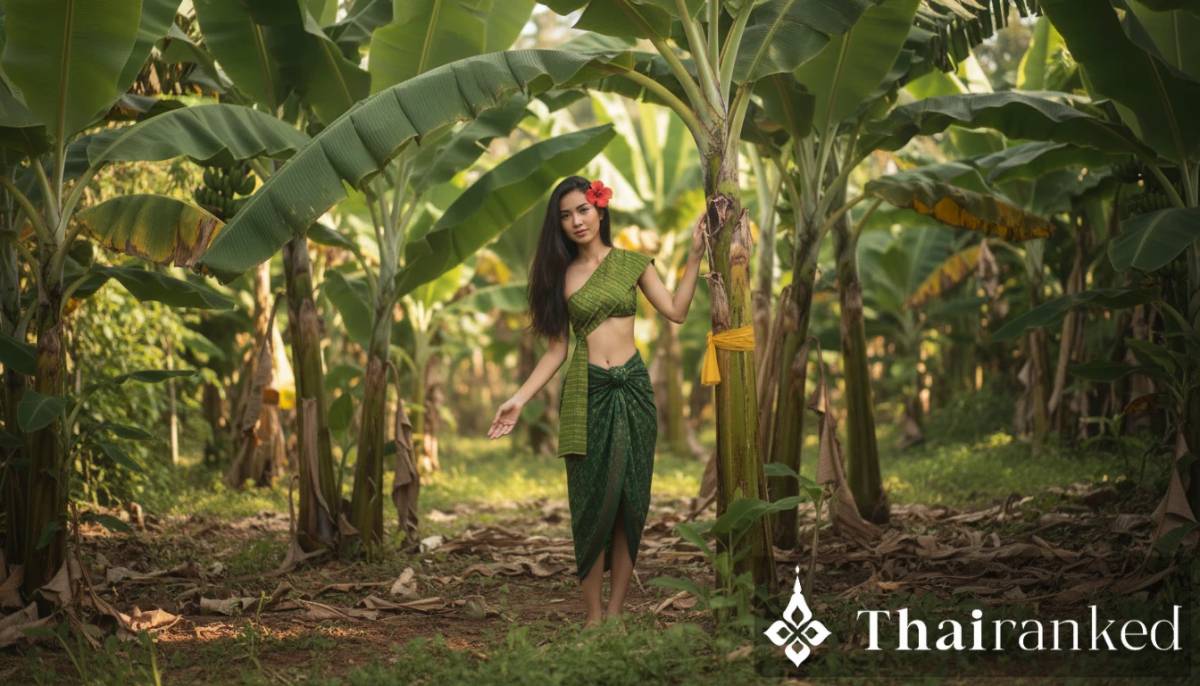
Nang Tani is the elegant spirit said to dwell in clumps of wild banana trees. She appears as a beautiful woman in green traditional dress, often under a full moon, and is known to favor kind men while punishing the unfaithful or abusive. Devotees tie green or red sashes around banana trunks to honor her, and you’ll sometimes see lipstick and compact mirrors left as offerings. Farmers give her space at night and avoid cutting certain trees without a small apology first. In stories, she can be protective, even generous, but the line between blessing and curse is thin. Tani reflects an old countryside code, respect nature, respect women, and know that charm can hide teeth. For travelers wandering canals and orchards on the city fringe, those quietly ribboned trees are a sign you’re brushing against the edge of Thailand’s living folklore.
8. Nang Ta-Khian (Mae Ta-Khian)
Glamorous guardian of the Ta-khian tree
Highlight
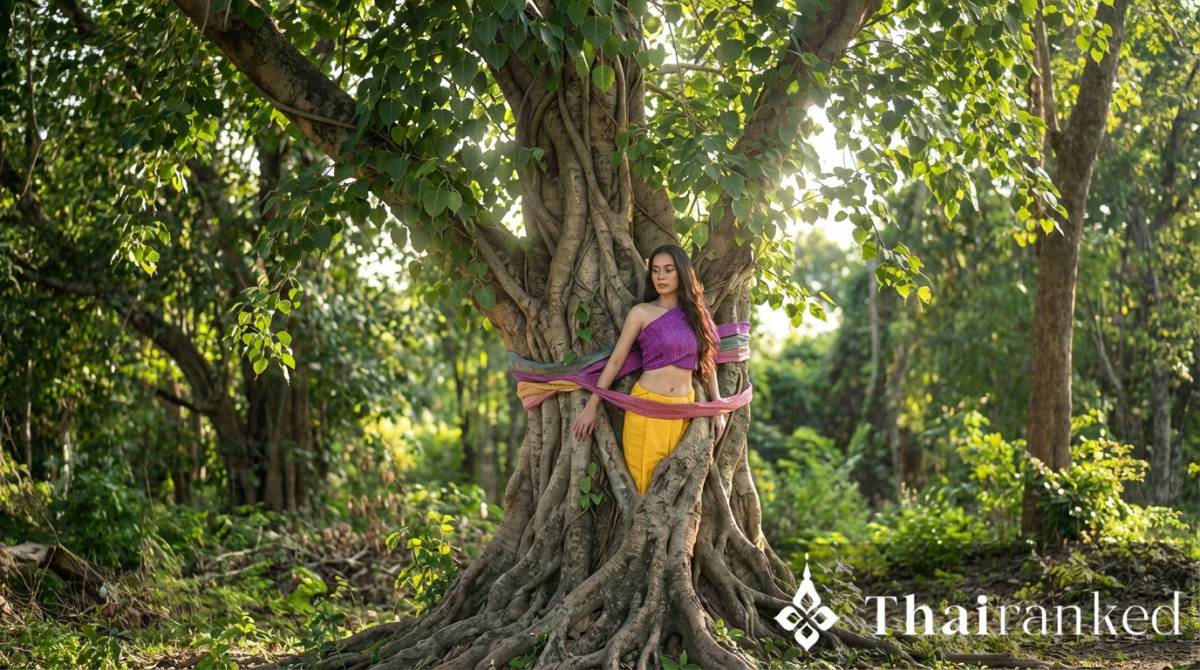
Haunting the massive Ta-khian tree (Hopea odorata), this female spirit is both feared and fervently courted. Drivers ask her for safe journeys, gamblers beg for lucky numbers, and craftsmen seek her permission before felling wood. Red sashes, long dresses, and perfume often adorn her shrines, and devotees promise offerings if wishes are granted. But disrespect carries a price. Tales warn against urinating on sacred trunks, carving names, or boasting after receiving a favor. Witnesses describe a stunning woman in traditional attire, sometimes glimpsed riding a log on floodwaters or standing near waterways in the hours before dawn. She embodies reciprocity, gifts for gifts, courtesy for protection. For outsiders, the takeaway is simple, when you see a roped-off tree with red cloth and trays of incense, step wide and keep your voice low. Somewhere, Mae Ta-Khian might be listening.
9. Phi Kong Koi
Toe-biting hopper of the deep forest
Highlight
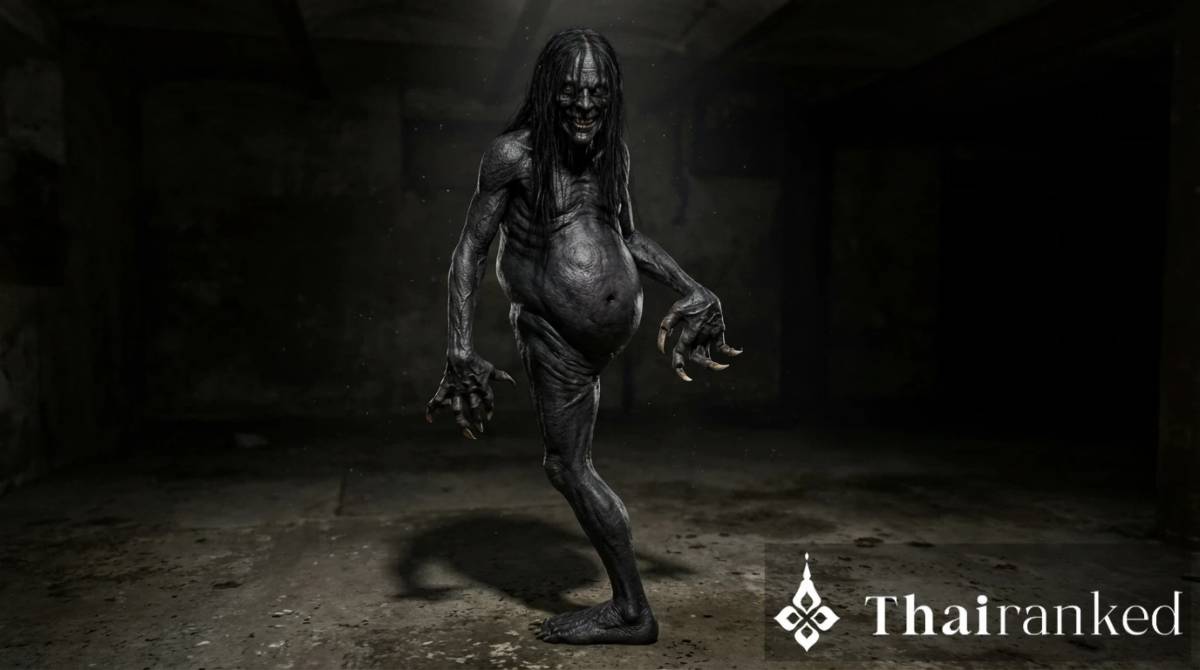
Campers in Thai forests trade goosebump tales of Phi Kong Koi, a one-legged, child-sized ghost that hops through the underbrush chanting “koi, koi.” It’s said to suck the blood from the toes or heels of travelers who sleep with their feet exposed. Traditional advice is oddly practical, wear socks, elevate your feet, keep a strong campfire, and don’t pitch a tent right beside game trails. Some ethnologists link the legend to warnings against careless camping in areas with leeches or predators, but that doesn’t blunt the fear when footsteps circle the tent and leaves rustle at ankle height. Many claim the best defense is noise and numbers, hike in groups and sing a little on night treks. Whether you buy the story or not, few Thais will stick a bare foot out of the sleeping bag after midnight in deep jungle.
10. Phi Am
Chest-sitting sleep demon behind paralysis
Highlight
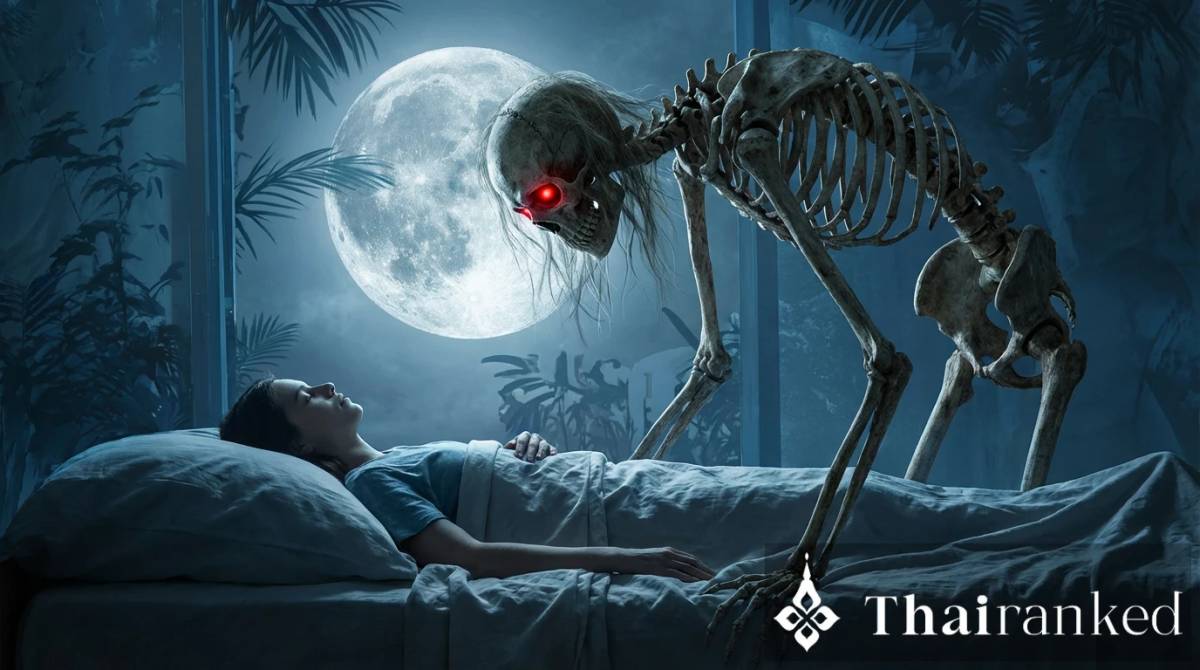
Phi Am is the Thai name often given to a terrifyingly common experience, sleep paralysis. The ghost is said to sit on the chest, stealing breath and pinning victims in place, sometimes leaving mysterious bruises by morning. Men, especially soldiers and laborers who nap face-up, are warned they’re most at risk. Classic folk defenses include tucking a small knife under the pillow, placing a broom at the bed’s foot, or wearing protective tattoos known as sak yant. In cities, science has reframed the phenomenon, but belief lingers alongside it, and many still mutter a short prayer or mantra before lights out. As a “ghost,” Phi Am blurs lines between the supernatural and the psychological, which might be why it’s so unsettling, it doesn’t wait on lonely roads or in haunted groves, it visits the one place you should feel safest, your bed.
Missing a business you'd recommend?
Tell us who belongs on this list and our editors will review it.
Thai ghost lore blends Buddhist morality tales, rural cautionary stories, and big-city legends into a living belief system that still shapes behaviors today. From Mae Nak’s enduring shrine visits to whispers about Krasue in farming communities, these spirits are cultural touchstones as much as they are nightmare fuel. If you plan to explore after dark, remember that small gestures matter, avoid whistling at night, step around offerings, and keep your campsite tidy. For more do’s and don’ts, our guide to Thai ghost beliefs and nighttime taboos is a smart next read.
Feeling curious about the spiritual side of everyday life? Understanding offerings, incense, and merit-making helps explain why ghosts often "behave" the way they do in stories. Dive into rituals that locals use to invite protection or make amends with what Thai temple rituals mean. Whether you’re visiting a shrine in Phra Khanong or hiking through forest where campers swap Kong Koi tales, a little cultural fluency goes a long way. Respect the beliefs, enjoy the stories, and sleep easy, unless you hear someone softly calling "koi, koi" near your tent.
by Thairanked Guide
Thairanked helps you discover great places in Thailand!
 Chat with us