Para Sports Classifications Explained: Thailand Para Games Guide
January 09, 2026 07:01 AM
Last edited: January 09, 2026
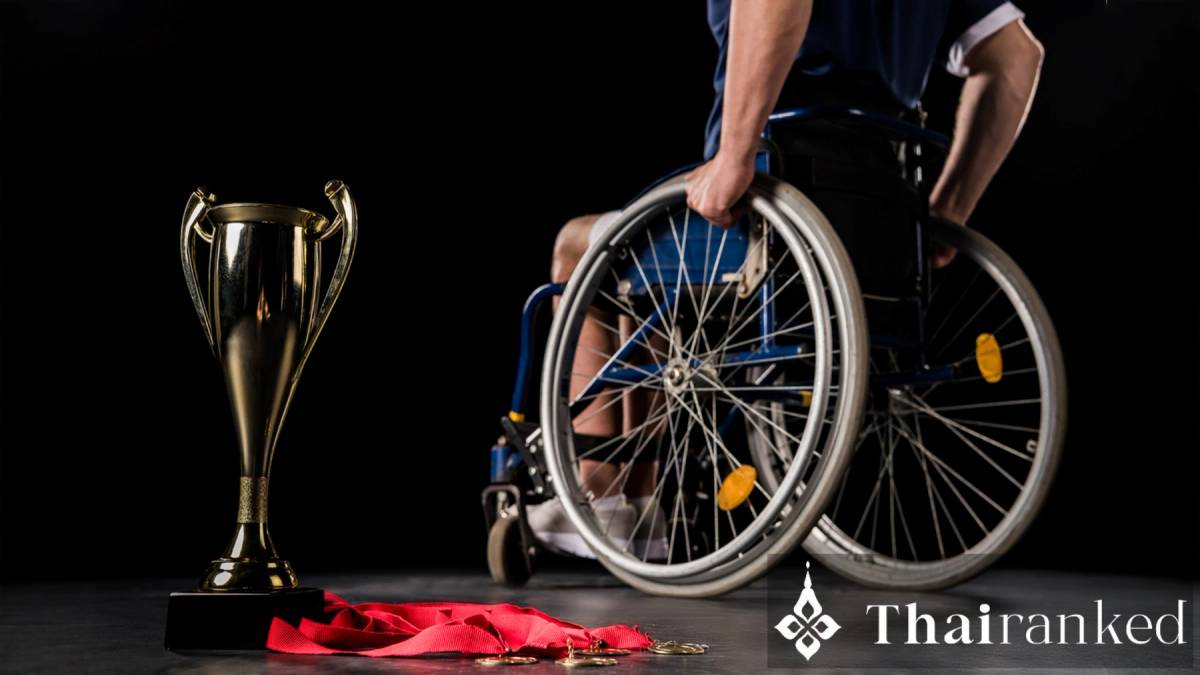

by Thairanked Guide
Thairanked helps you discover great places in Thailand!
Search Hotels & Flights
Related Insights



Understanding Para Sports Classifications: The Key to Fairness at the Thailand Para Games
If you have ever watched the Thailand Para Games or other major para-sport events, you may have wondered why athletes compete in so many different categories within the same sport. Terms like "S5" in swimming, "T12" in track, or "WH2" in badminton can seem confusing to newcomers. In this easy-to-understand guide, we’ll break down the essentials of para sports classifications and explain how they create a level playing field for athletes with different types of impairments.
What Is Para Sports Classification?
Para sports classification is a fair system that groups athletes by the type and severity of their impairment, so athletic ability, not disability, determines the outcome. Classification ensures that para-athletes compete in categories where they have a similar level of function or limitation, creating a true test of skill, training, and determination.
Without classification, athletes with very different abilities could be matched, leading to unfair results. This system is as fundamental to the integrity of the Thailand Para Games as the rules of the sports themselves.
The Basic Steps of Classification
Most para sports follow a three-step process to classify athletes:
- Medical Assessment: A review of the athlete’s diagnosis and supporting evidence about their impairment.
- Physical or Functional Testing: Sport-specific tests to measure what an athlete can and cannot do (such as muscle strength, range of motion, coordination, etc.).
- Observation in Competition: Classifiers watch athletes in real games or races to see if their functional abilities match the earlier assessments.
This multi-stage approach helps prevent unfair advantages and misclassifications. For further insight on sports integrity, explore our guide to the SEA Games 2025 in Thailand.
Main Types of Impairments in Para Sports
The International Paralympic Committee recognizes ten eligible impairment types. The most commonly seen at the Thailand Para Games include:
- Physical Impairments: Such as limb deficiencies (amputations), muscle power impairments (for example, due to spinal cord injury or polio), short stature, and coordination impairments (like cerebral palsy).
- Visual Impairments: From partial to total vision loss.
- Intellectual Impairments: Affecting cognitive function.
Each sport adapts classification systems to account for the impact an impairment has on performance within its rules and demands. You can find more interesting facts about Thailand’s inclusive sporting culture in our Thailand LGBTQ+ Events Calendar 2026.
How Classification Codes Work in Major Sports
Every para sport uses its own classification codes, usually a mix of letters and numbers. Here are a few examples you’ll see at the Thailand Para Games:
Para Athletics (Track & Field)
The letter stands for the type of event ("T" for Track, "F" for Field). The number indicates the type of impairment and its severity.
- T11–T13: Athletes with visual impairments (T11 being totally blind; T13 being partially sighted)
- T/F31–38: Coordination impairments (T31 is most severely affected; T38 is least)
- T/F42–47: Limb deficiencies or amputations (lower numbers = higher impact or more severe impairment)
Para Swimming
Swimming uses "S" for freestyle, butterfly, and backstroke; "SB" for breaststroke; and "SM" for individual medley. Numbers range from 1 (most severe impairment) to 14 (least severe).
- S1–S10: Physical impairments (S1 is most severe; S10 is minimal impairment)
- S11–S13: Visual impairments (S11 is completely blind; S13 is minor visual impairment)
- S14: Intellectual impairment
Wheelchair Basketball
Players are given a points rating from 1.0 (most physically limited) to 4.5 (least limited). A team on court cannot exceed a total points cap, so a mix of abilities plays together fairly.
Para Badminton
This growing sport in Thailand uses codes like:
- WH1/WH2: Wheelchair players (WH1 = more severe impairment)
- SL3/SL4: Standing lower limb impairments (SL3 = more severe than SL4)
- SU5: Standing upper limb impairments
- SS6: Short stature
Interested in adventure sports or combining your love for competition with leisure time? Discover the largest amusement parks in Thailand for a fun family day out!
ASEAN Para Games 2026 Medal Table & Live Standings
Curious about how each country is performing? Follow the ASEAN Para Games 2026 Medal Table & Live Standings for up-to-date results, top countries, and the current medal ranking throughout the Thailand games.
Ensuring Fairness: Who Handles Classification?
Each major international sport has its own classification panel made up of specialized doctors, therapists, and technical experts. At the Thailand Para Games, classification is typically led by officials trained to international standards, sometimes with support from the International Paralympic Committee.
This means classifications are consistent and recognized both within Thailand and abroad. Reassessment can occur if an athlete’s condition changes or if there’s a dispute about their category, keeping the system as fair and up-to-date as possible. Looking for more world-class sporting action? Get a primer on the history of the ASEAN Para Games and what makes them special in the Southeast Asian region.
Why Do Classification Systems Change?
As sports science advances and we learn more about different impairments, classification rules are regularly updated. This helps stop cheating, closes unfair loopholes, and keeps the games relevant.
It’s also why you may sometimes see an athlete ‘reclassified’ into a new group, either at the Thailand Para Games or on the global stage.
Common Questions from First-Time Viewers
- Why do some events have so many heats and finals?
- Because there are many classes, each with its own medals, seeing several races for similar-looking events is normal.
- Why do some athletes appear less or more impaired than others?
- It’s possible! Each classification includes a range, and there will always be some variation. The key is matching athletes close enough for true competition.
- If someone is reclassified, do their medals still count?
- Typically, results stand based on the class at the time of competition. But classification reviews remain an essential part of the process.
Want to know more about sporting events in Thailand? Don’t miss our full introduction to the 2025 SEA Games or browse where to try outdoor adventure sports near Bangkok.
Why Classification Is Crucial for the Thailand Para Games
Parasport classification doesn’t just keep competition fair, it also showcases the real talents of Thai and international athletes. It celebrates ability, resilience, and sporting spirit. So when you’re next watching the Thailand Para Games, take a closer look at the classes on the board. They’re the reason every medal truly means something. Want to find out even more about sporting events and lifestyle? Explore the ASEAN Para Games 2026 schedule & how to watch live.
Key takeaways
- Classification ensures fairness by matching athletes with similar functional abilities.
- There are different classification codes and systems for each sport.
- Classifications are constantly reviewed and updated for accuracy.
- Understanding codes like T11, S5, or WH2 helps viewers appreciate para-sports results.
- The Thailand Para Games follow international standards to guarantee fair play.
Search Hotels & Flights
Related Insights
Your guide to reaching AFC U-20 stadiums near Bangkok. Learn the best transport options, SRT Red Line tips, Grab rides, and how to avoid match-day traffic jams.

The AFC U-20 Women's Asian Cup 2026 lands in Thailand April 1-18. Discover key teams, venues, local tips, and how to experience the excitement in Bangkok.

Get the full list of official broadcasters showing the SEA Games Thailand 2025. Learn where to watch live in Thailand, the Philippines, Vietnam, Indonesia, Malaysia, Singapore and Myanmar, plus which sports will be broadcast across the region.
Sports, Sand, and Sanuk! Everything you need to know about the 33rd SEA Games hosted across Bangkok, Chonburi, and Songkhla. Dates, venues, and travel tips inside.

Planning for the Thai GP 2026? Here is the real cost of tickets, hotels, and food in Buriram. From the $180 backpacker budget to the VIP experience, see the full price breakdown here.
 Chat with us