Decoding Thai Menus: Dishes by Thai Name, Region & Spice Level
January 03, 2026 08:45 AM

by Thairanked Guide
Thairanked helps you discover great places in Thailand!
Search Hotels & Flights
Related Insights



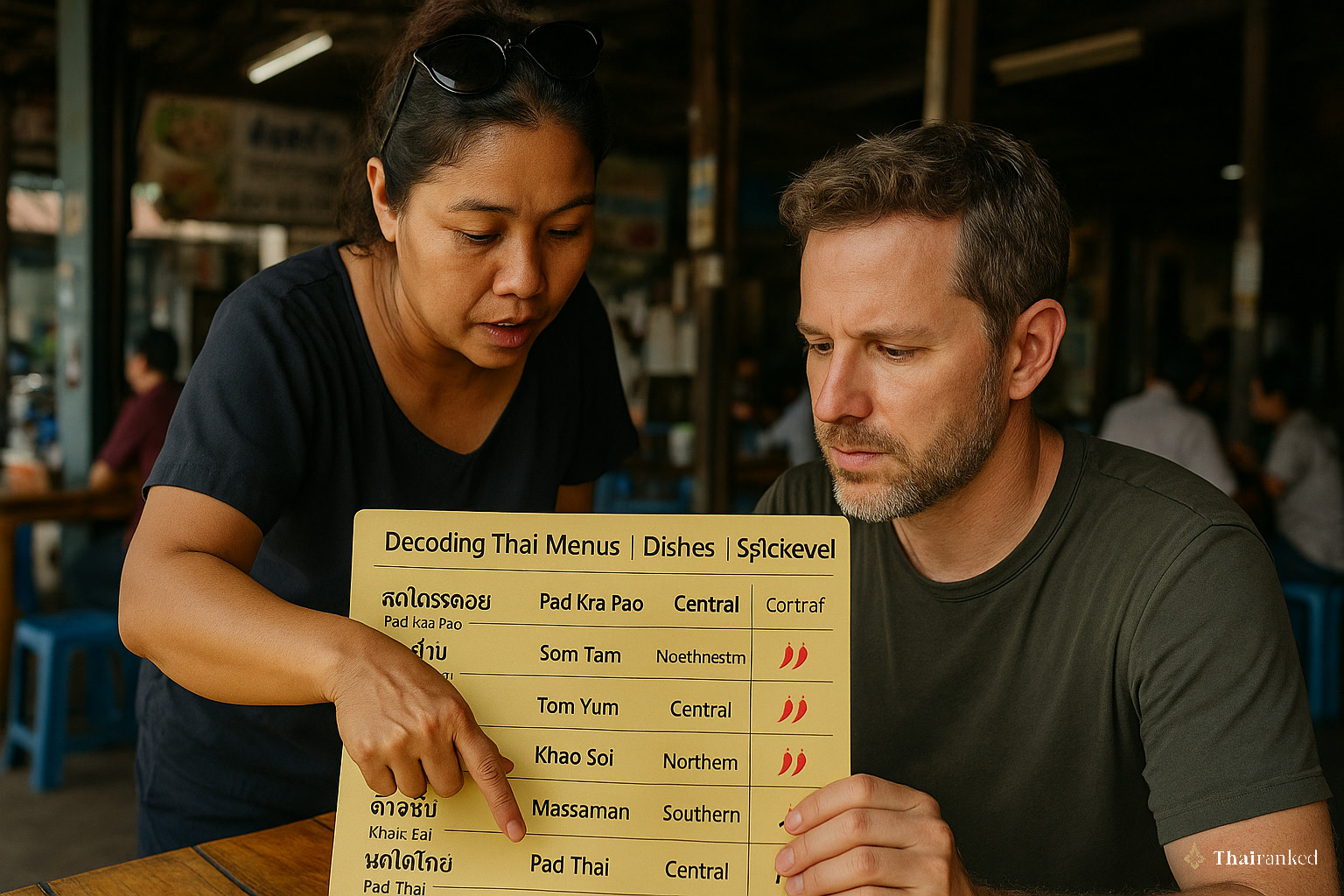
Anyone who’s ever sat down at a bustling local Thai eatery or peered at a handwritten street food sign knows the thrill (and slight panic) of trying to decode Thai menus. Thai food is celebrated worldwide for its bold flavors, but many English-language menus barely scratch the surface of what’s on offer. Whether you’re traveling, living, or just eating out in Thailand, learning to read menus like a local opens up a whole new world of culinary adventures.
Why Thai Menus Can Be a Challenge
Thai restaurants range from glitzy malls to rustic roadside shophouses—and so do their menus. Sometimes you'll find color pictures and English translations, but just as often, the menu is only in Thai, with local script or phonetic Thai versions that seem a world apart from their Western counterparts. Luckily, some knowledge of common Thai dish names, regional specialties, and spice cues will help you order with confidence (and avoid unwelcome chili surprises).
Essential Thai Dish Names (With Pronunciation)
Here’s a list of typical Thai staples you’ll spot on menus nationwide. We’ll break down their names, pronunciation tips, region of origin, and what to expect spice-wise.
- Pad Thai (ผัดไทย, phàt tai) - Savory-sweet stir-fried noodles. National dish, medium-low spice by default, but customizable. See Pad Thai history for fun facts.
- Tom Yum (ต้มยำ, dtôm yam) - Hot and sour soup, usually with shrimp (goong). "Tom" = boil, "yum" = mix or blend. Strong in chili and lime, heavily spiced.
- Som Tam (ส้มตำ, sôm dtam) - Northeastern (Isan) papaya salad, typically spicy, salty, and sour. "Tam" means pounded. Spice level: medium to fire-breathing! Discover more with Isan culture tips.
- Pad Krapow (ผัดกะเพรา, phàt grà-prou) - Stir-fried meat (often pork or chicken) with holy basil and chili. Signature dish of central Thailand. Often spicy unless you ask otherwise.
- Khao Pad (ข้าวผัด, khâao phàt) - Thai fried rice. Mild; can be made with chicken (gai), seafood (talay), or veggies.
- Gaeng Daeng (แกงแดง, gaeng daeng) - Red curry. Central-thai, coconut-based, moderate to spicy heat.
- Gaeng Keow Wan (แกงเขียวหวาน, gaeng khĭeow wăan) - "Sweet green curry." Not dessert! Often one of the hotter, richer curries.
- Massaman (มัสมั่น, mátt-sà-màn) - Southern-influenced Muslim curry. Cardamom, peanuts, potatoes. Surprisingly mild.
- Larb (ลาบ, làap) - Isan-style spicy minced meat salad, often with roasted rice powder. North and northeast classic, can be fiery.
- Khao Soi (ข้าวซอย, khâao soi) - Northern creamy curry noodle soup. Egg noodles, coconut broth, mild to medium spice.
Regional Highlights: North, South, Central, Isan
Thai menus often feature dishes based on the region’s climate, culture, and history. Here’s what to look for by region:
Central Thailand
- More coconut-based curries and stir-fries
- Balanced flavors: sweet, salty, spicy
- Dishes like Pad Thai, Tom Yum, and Green Curry
Northern Thailand
- Milder spices, lots of turmeric and herbs
- Creamy curries and noodle soups like Khao Soi
- Sticky rice as a staple
Isan (Northeastern Thailand)
- Fiery salads (Som Tam, Larb), grilled meats
- Chewy sticky rice, fermented fish
- Very little coconut milk used
South Thailand
- Seafood-heavy, bold & spicy curries
- Influence from Muslim, Malaysian, Indian cuisines (Massaman, Yellow curry)
- Use of coconut cream, turmeric, fresh herbs
For a taste-oriented itinerary, check out Top Places for Traditional Thai Food in Bangkok or Chiang Mai's international fare.
How to Decode Spice Levels on Thai Menus
Spice tolerance varies wildly between Thai regions and restaurants. Here’s how to read between the lines:
- “Phet mak” (เผ็ดมาก) = Very spicy
- “Phet nid noi” (เผ็ดนิดหน่อย) = A little spicy
- “Mai phet” (ไม่เผ็ด) = Not spicy (essential if you can't handle chilies!)
- Some menus use chili icons (🌶️): 1 = mild, 2 = medium, 3+ = very spicy
- Northern dishes tend to be milder, southern dishes pack more heat
- Even seemingly mild dishes can surprise you—always clarify
How to Order Like a Local (Customizing Your Meal)
Thais love customizing their food. Here’s how you can adjust your dish, too:
- Specify heat: “Mai phet” (not spicy), “phet nid noi” (a tiny bit spicy)
- Egg? Add “kai dao” (ไข่ดาว) for a fried egg topping
- Change the protein: “Gai” (chicken), “Moo” (pork), “Neua” (beef), “Goong” (shrimp)
- No MSG: “Mai sai pong chuu rot” (ไม่ใส่ผงชูรส)
- Vegetarian/vegan: “Jay” (เจ) = vegan, “mangsawirat” (มังสวิรัติ) = vegetarian (but fish sauce might sneak in, so double-check!)
See our vegan survival tips for more on dietary tweaks in Thailand.
What About Street Food Menus?
Street food carts may have no menu at all—or a short, hand-lettered list in Thai only. Some tips:
- Point to ingredients or nearby dishes that look good
- Politely ask: “Mee arai bang?” (มีอะไรบ้าง?) = What do you have?
- Learn numbers 1-10 in Thai for portions
- Know that most vendors are flexible—but spicy by default
Don’t forget to try local specialties—maybe check our local islands list to find regional flavors!
Useful Menu Pronunciation & Ordering Phrases
- “Ao…” (เอา…) = I’ll have…
- “Mai sai …” (ไม่ใส่…) = No/add … (e.g., “Mai sai prik” = No chili)
- “Gep dtang” (เก็บตังค์) = The bill, please
- “Khob khun krub/ka” (ขอบคุณครับ/ค่ะ) = Thank you
Final Tips for Navigating Thai Menus Like a Pro
- Don’t be afraid to ask questions with friendly curiosity—Thais appreciate it
- If you’re not sure, order a dish that looks popular with locals
- Try smaller, family-run eateries for authentic flavors
- Embrace surprises—even mixes up can lead to new favorites!
With these menu decoding tips, you’ll not only eat better but experience more of what makes Thai cuisine so legendary. For even more food adventures, see our ranking of Thai drinks you must try or explore how to travel Thailand cheaply for budget-friendly dining tips. Enjoy your next meal—“tan aroi!”
by Thairanked Guide
Thairanked helps you discover great places in Thailand!
Search Hotels & Flights
Related Insights
Discover the best months to visit Thailand, including seasonal weather, top destinations for each region, and tips for enjoying the Andaman and Gulf coasts.
Breeze through Thailand immigration in 2026! Discover the new mandatory TDAC rules, auto-gate hacks, and VIP fast-track tips to skip long airport queues.
Step back in time at the InterContinental Chiang Mai. Visit the preserved suite of legendary singer Teresa Teng (Deng Lijun) and enjoy a tribute afternoon tea. A perfect nostalgic trip for fans.
Learn how to safely enjoy Thailand’s macaques in Lopburi, Railay, and Phuket. Practical tips on avoiding bites, theft, injuries, and respecting local monkey culture.
Thailand winter guide for Dec–Feb: plain-English monsoon and sea conditions, PM2.5 hotspots, and the best month-by-month picks for the North, Andaman and Gulf.
What people ask about
"Decoding Thai Menus: Dishes by Thai Name, Region & Spice Level"
Here you will find answer to the most popular questions.