Beste Aussichtspunkte für den Sonnenaufgang in Thailand, um im Januar Freude zu wecken
January 05, 2026 01:13 AM
Verfolge Thailands inspirierendste Sonnenaufgänge im Januar, von Phu Chi Fa über Samet Nangshe bis Doi Inthanon, mit Zugangstipps, Zeitempfehlungen und Fotovorschlägen für jedes Könnensniveau.

by Thairanked Guide
Thairanked helps you discover great places in Thailand!
Inhaltsverzeichnis
1. Phu Chi Fa (Chiang Rai)
2. Samet Nangshe Viewpoint (Phang Nga)
3. Doi Inthanon – Kew Mae Pan Area (Chiang Mai)
4. Pha Nok Aen – Phu Kradueng National Park (Loei)
5. Khao Takhian Ngo Viewpoint (Khao Kho)
6. Phu Thok Sunrise Viewpoint (Chiang Khan)
7. Panoen Thung – Kaeng Krachan National Park
8. Khao Daeng Viewpoint – Khao Sam Roi Yot
9. Doi Ang Khang Viewpoints
10. Red Lotus Lake (Nong Han Kumphawapi)
Hotels & Flüge suchen
Das könnte Ihnen gefallen

Inhaltsverzeichnis
1. Phu Chi Fa (Chiang Rai)
2. Samet Nangshe Viewpoint (Phang Nga)
3. Doi Inthanon – Kew Mae Pan Area (Chiang Mai)
4. Pha Nok Aen – Phu Kradueng National Park (Loei)
5. Khao Takhian Ngo Viewpoint (Khao Kho)
6. Phu Thok Sunrise Viewpoint (Chiang Khan)
7. Panoen Thung – Kaeng Krachan National Park
8. Khao Daeng Viewpoint – Khao Sam Roi Yot
9. Doi Ang Khang Viewpoints
10. Red Lotus Lake (Nong Han Kumphawapi)
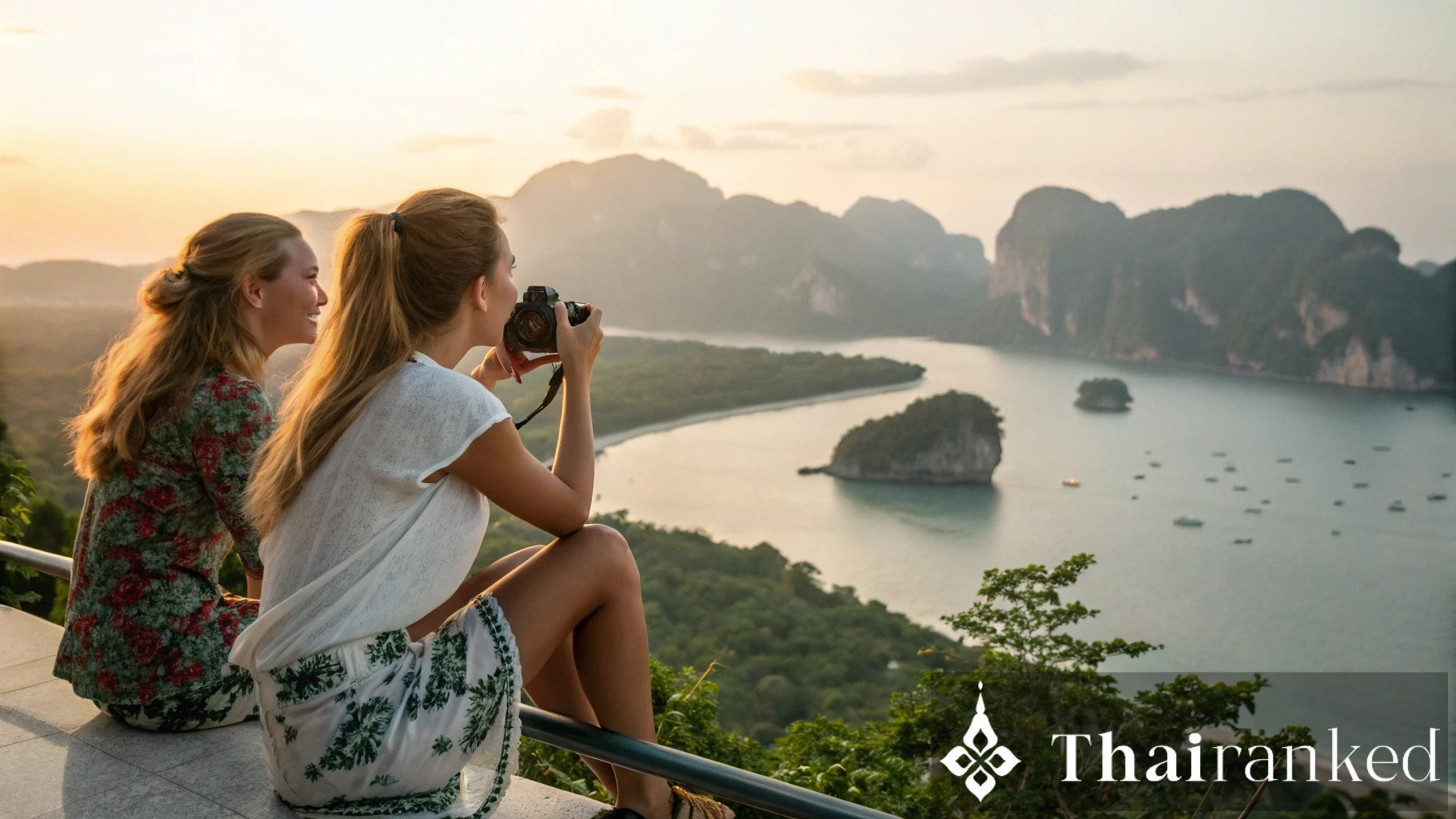
Der Januar in Thailand ist die beste Zeit für Sonnenaufgänge. Frische, trockene Luft schafft traumhafte Nebelseen im Norden, während der Süden klare Horizonte über skulpturalen Kalkstein-Karstlandschaften bietet. Wenn Sie einen Neuanfang ersehnen, ist es die fröhlichste Art, den Tag zu beginnen, Ihren Wecker auf die blaue Stunde zu stellen und die ersten goldenen Strahlen einzufangen. Diese handverlesene Liste umfasst die inspirierendsten Sonnenaufgangsaussichten des Landes, von Bucket-List-Klippen wie Phu Chi Fa und Pha Nok Aen auf Phu Kradueng bis hin zu zugänglichen Schätzen in der Nähe von Bangkok und atemberaubenden Küstenaussichten bei Samet Nangshe. Wir geben praktische Zugangstipps, wann man ankommen sollte und wie man das perfekte Foto anfertigt, damit Sie mit Erinnerungen so strahlend wie der Himmel nach Hause gehen.
Für die besten Farben sollten Sie 45–60 Minuten vor der veröffentlichten Sonnenaufgangszeit ankommen, um tiefes Blau, Rosa und Silhouetten genießen zu können. Nehmen Sie eine Stirnlampe mit, eine leichte Jacke oder Fleece für die kühlen Morgenstunden im Norden und ein Stativ, wenn Sie lange Belichtungen lieben. Überprüfen Sie die Öffnungszeiten der Parks und eventuelle saisonale Straßenbeschränkungen einen Tag im Voraus, insbesondere für Aussichtspunkte in Bergen oder Nationalparks. Wenn Sie planen, unter einer Milliarde Sterne zu campen, bevor Sie Ihre Sonnenaufgangsmission starten, wird Ihnen unser Leitfaden zu Nationalparks in der kühlen Jahreszeit helfen, die perfekte Basis auszuwählen.

1. Phu Chi Fa (Chiang Rai)
Thailand’s signature sea-of-mist cliff edge
Highlight
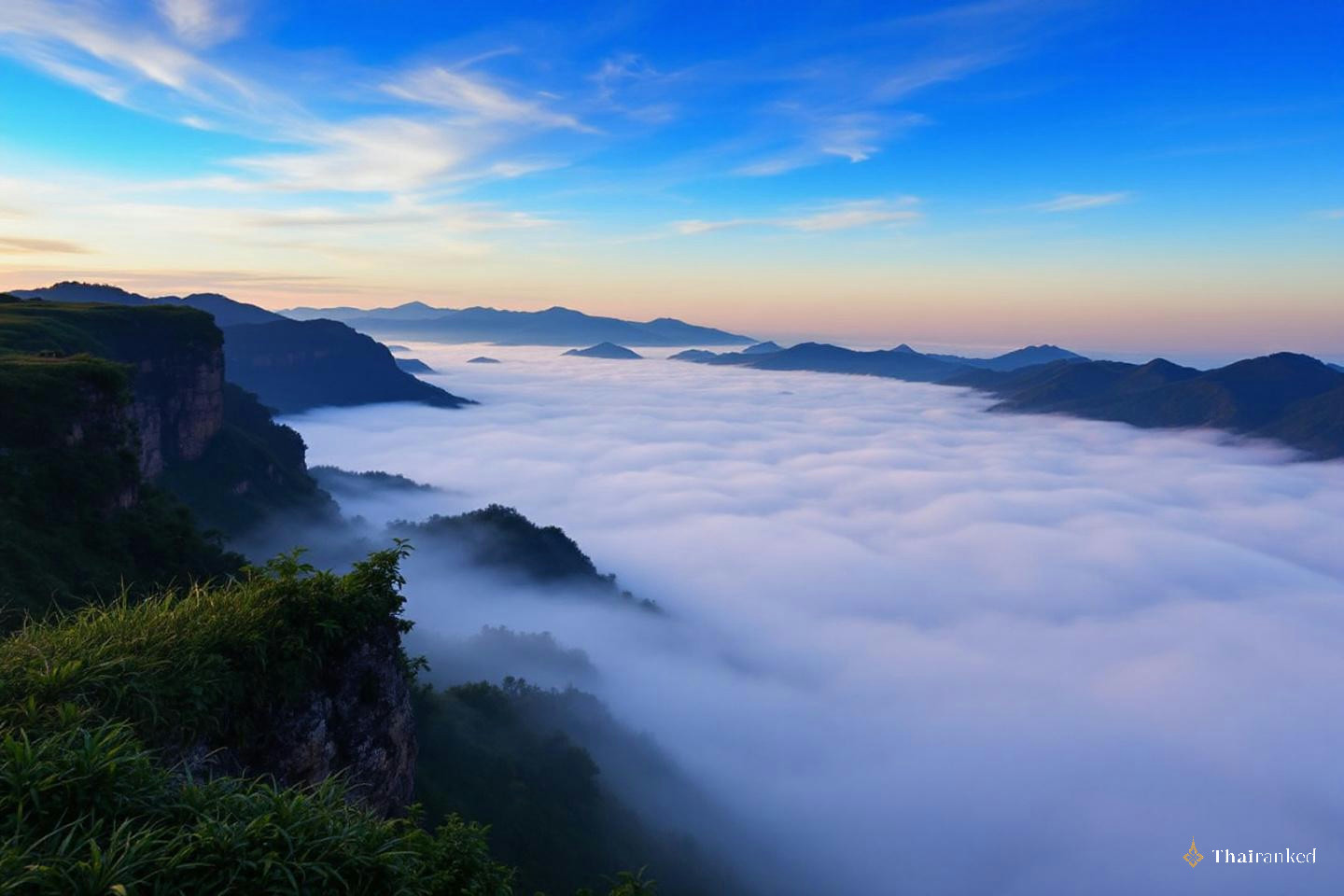
Phu Chi Fa is Thailand’s most iconic sea-of-mist sunrise, a serrated cliff edge pointing toward Laos that lights up in layers of pink and gold. Drive to the Phu Chi Fa car park or nearby villages (Ban Rom Fa Thai), then hike the final 1.5–2 km on a well-trodden trail, about 20–40 minutes depending on pace. In January, mornings are crisp, so bring a fleece, hat, and headlamp. Aim to arrive 45–60 minutes before sunrise to enjoy blue hour and to claim a safe, stable spot along the ridge. Photo tips, shoot east for dramatic silhouettes, then pivot south as the first side-light glances off the grasses and jagged cliffs. A mid-range lens compresses the layered ridges beautifully, while a wide-angle captures the cliff profile and the “sea of clouds.” Weekdays are quieter; if it’s crowded at the summit, wander along the ridge for alternate compositions.
Wichtige Informationen
Chiang Rai
2. Samet Nangshe Viewpoint (Phang Nga)
Karst-studded horizons bathed in golden light
Highlight
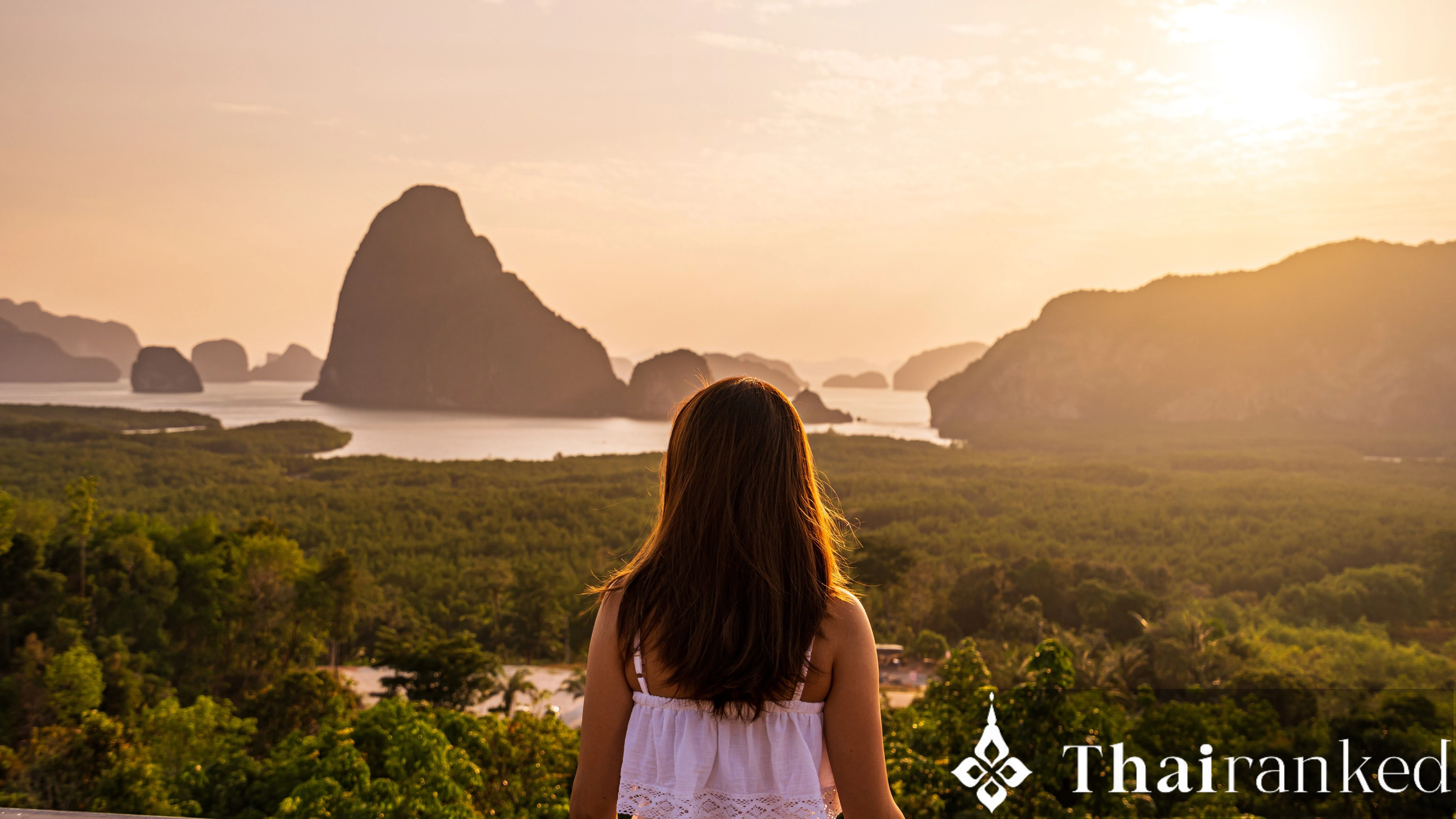
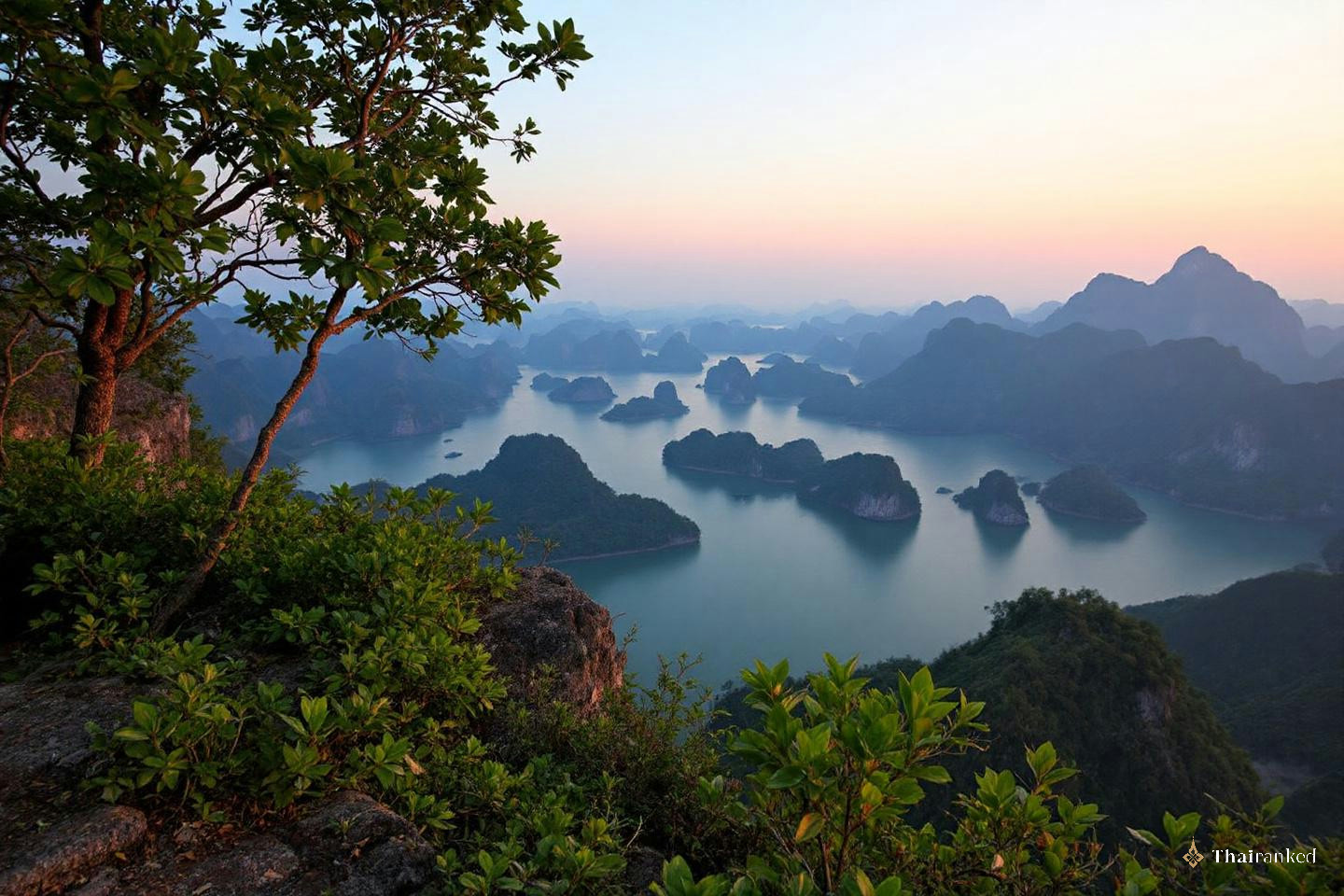
Few places deliver a more photogenic sunrise than Samet Nangshe, where the karst-studded bay glows peach and gold as morning light slowly reveals the mangrove labyrinth below. It’s about 60–90 minutes by car from Phuket Airport, with a steep final ascent; many visitors park below and use a local shuttle. Plan to be on site at least an hour before sunrise to capture the full blue hour palette and the subtle gradations of light on the islands. Bring a tripod for long exposures and a mid-zoom for compressing the karst silhouettes. January often brings clear horizons with occasional low mist over the mangroves, perfect for moody shots. Stay a bit past sunrise as the sun rises higher, when soft backlight outlines the limestone towers and the sky turns pastel. For fewer people, target weekdays or consider overnighting at nearby campsites or bungalows to wake up already on the ridge.
Wichtige Informationen
Phang Nga
3. Doi Inthanon – Kew Mae Pan Area (Chiang Mai)
Thailand’s rooftop for cloud inversions
Highlight
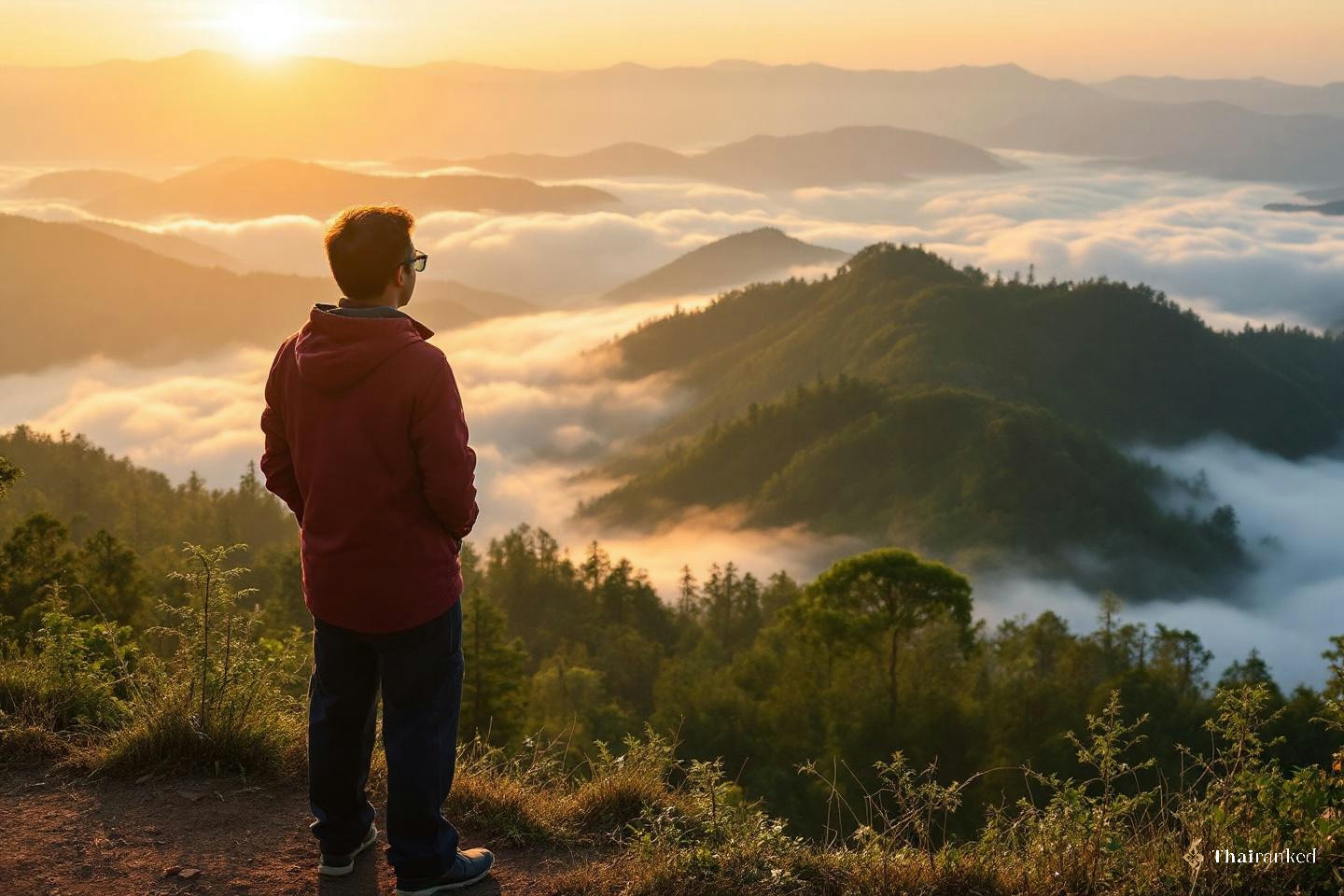
Thailand’s highest peak is sunrise heaven in January, with chilly, crystal-clear mornings and frequent cloud inversions. The Kew Mae Pan area offers classic east-facing views across rolling ridgelines and seas of mist. Drive in well before dawn, factoring in the national park gate and the final winding ascent; dress warmly, temperatures can dip to single digits Celsius. Arrive 45–60 minutes early for blue hour, then watch as first light brushes the montane forest and distant ranges. Photo tips, bring both a wide-angle for sweeping layers and a 70–200mm to compress ridgelines into graphic patterns. If the Kew Mae Pan trail isn’t open or you prefer less walking, nearby roadside pullouts and signed viewpoints also face east. Stay a little after sunrise, when the mist pools glow and the valley reveals subtle greens under soft, directional light.
Wichtige Informationen
Chiang Mai
Siehe auch
4. Pha Nok Aen – Phu Kradueng National Park (Loei)
Pine-framed cliffs and a classic hike-in sunrise
Highlight
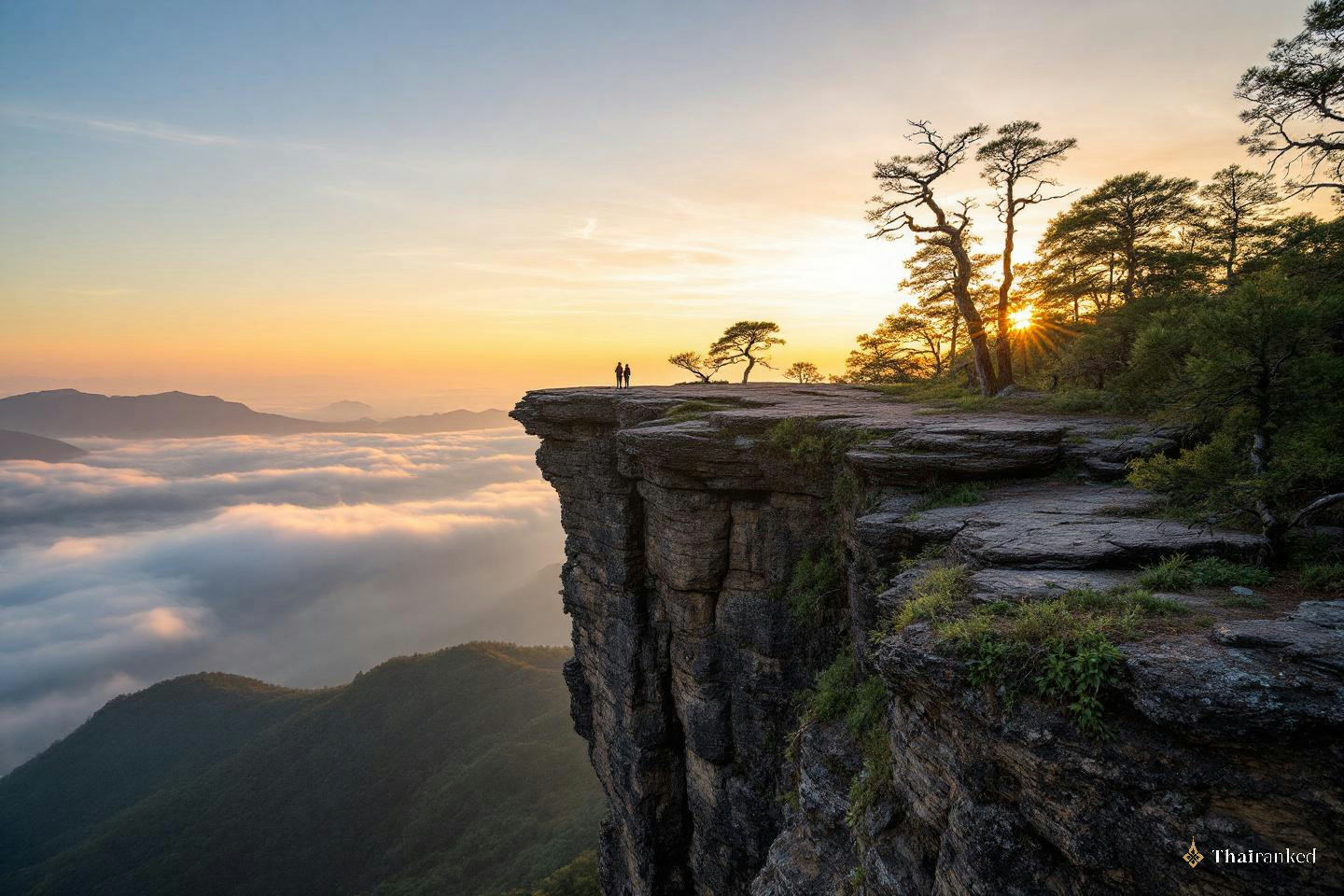
Pha Nok Aen is the classic Phu Kradueng sunrise, a cliff ledge framed by wind-twisted pines that makes a perfect silhouette against the first light. Reaching it is part of the adventure, you’ll hike 5–6 hours up to the plateau the day before, camp near the park HQ, then walk or cycle a gentle 2 km to the viewpoint before dawn. In January, nights are crisp and skies are often clear, so pack warm layers and a headlamp. Arrive an hour early to settle in and scout foregrounds among the rocky outcrops and pines. Photo tips, use a wide lens for the cliff-and-pine composition, then switch to a telephoto as the sun breaks to compress distant mesas and glowing mist. Expect crowds on holidays, but the plateau offers lots of space for alternate angles along the rim.
Wichtige Informationen
Loei
5. Khao Takhian Ngo Viewpoint (Khao Kho)
Sea of mist with drive-up convenience
Highlight
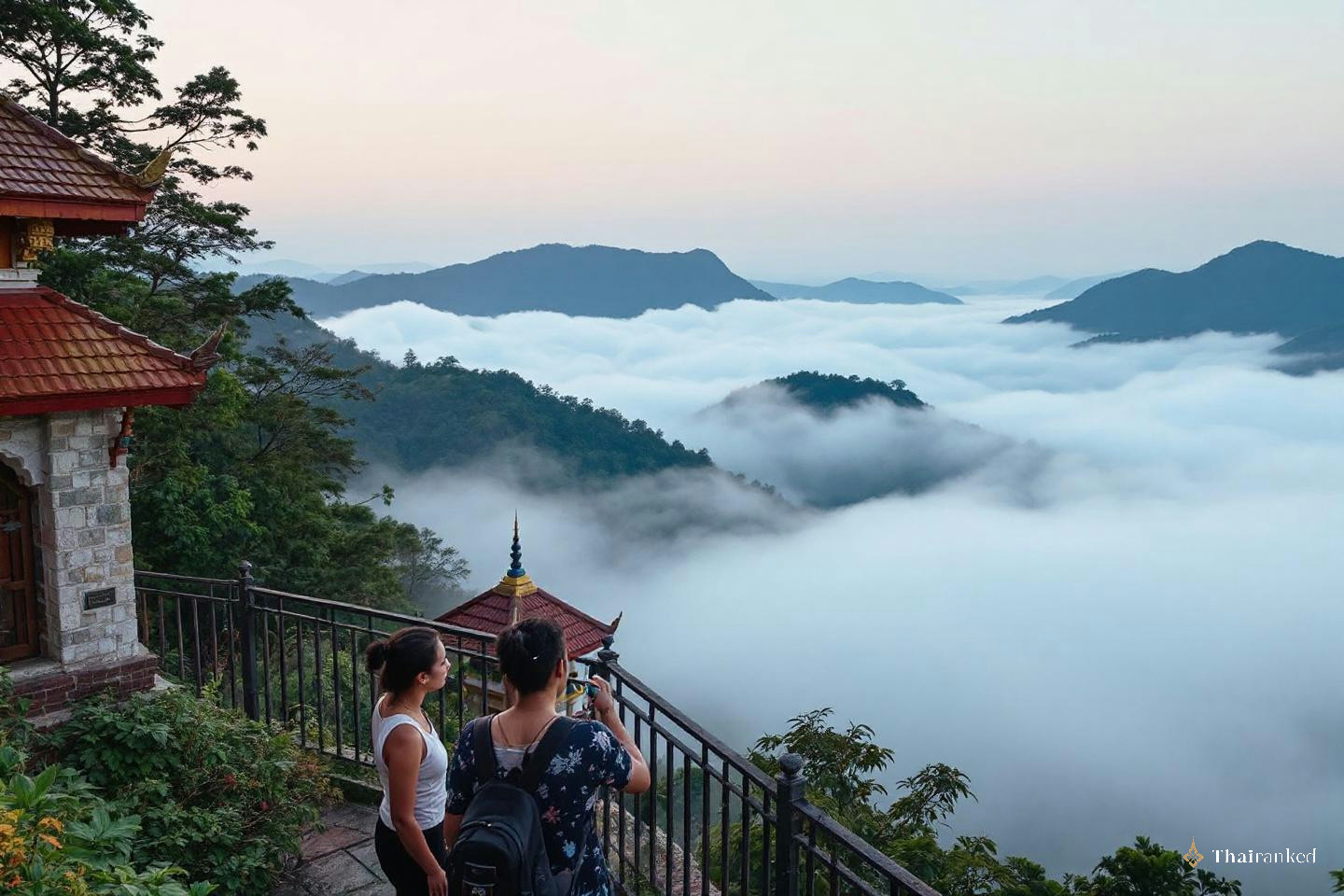
Beloved by Thai sunrise chasers, Khao Takhian Ngo is one of the easiest access points for a glorious sea of mist. The paved road leads almost to the viewpoint, making it a great choice if you want maximum reward with minimal walking. January is peak season for cottony fog rolling through the Phetchabun hills, with soft, warm light shortly after sunrise. Arrive 45–60 minutes early to catch blue hour gradients and to find a spot along the railing. Photo tips, a mid-zoom compresses the pagodas and ridgelines, while a wide angle captures the bowl of mist and surrounding hills. If the fog sits low, wait for it to lift just after sunrise for those dramatic light shafts. Weekdays are quieter, and there are nearby cafés where you can warm up with a hot drink after the show.
Wichtige Informationen
Phetchabun
6. Phu Thok Sunrise Viewpoint (Chiang Khan)
Mekong-side layers and morning mists
Highlight
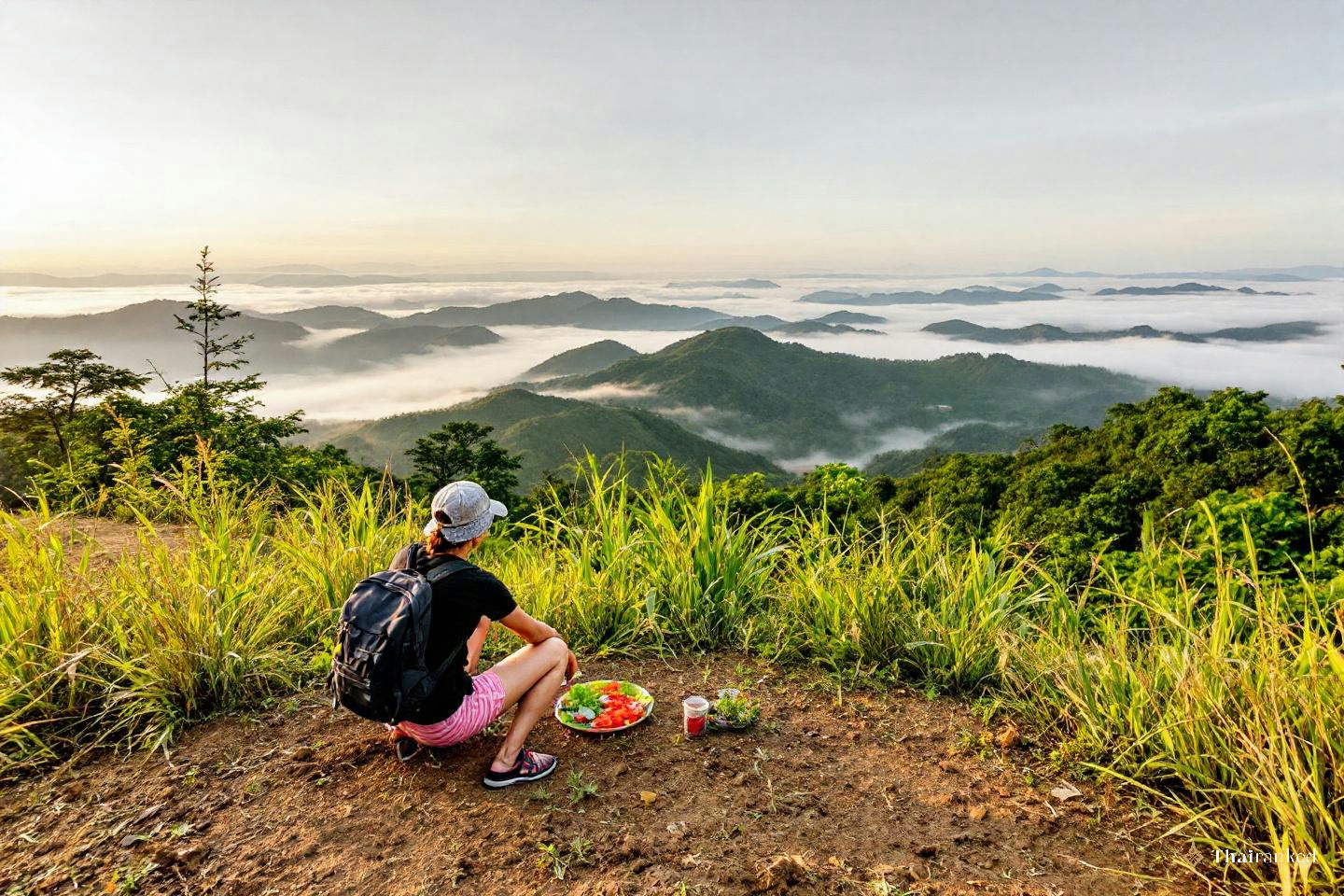
Not to be confused with the cliff in Bueng Kan, Chiang Khan’s Phu Thok is a sunrise favorite for its sweeping views over the Mekong-side hills and frequent morning mists. From Chiang Khan town, local pickups shuttle visitors up pre-dawn, or you can drive most of the way and walk a short, steep section. In January, cool mornings and stable air produce beautiful inversions, so arrive at least 45 minutes early for blue hour. Photo tips, a telephoto lens lets you layer distant ridges into minimalist gradients, while a wider lens frames foreground grasses and simple leading lines. After sunrise, linger as the sun warms the mist, revealing villages and river valleys. It’s popular on weekends and holidays, so consider a weekday visit if you prefer a quieter scene.
Wichtige Informationen
Loei (Chiang Khan)
7. Panoen Thung – Kaeng Krachan National Park
Regulated 4x4 road to a misty kingdom
Highlight
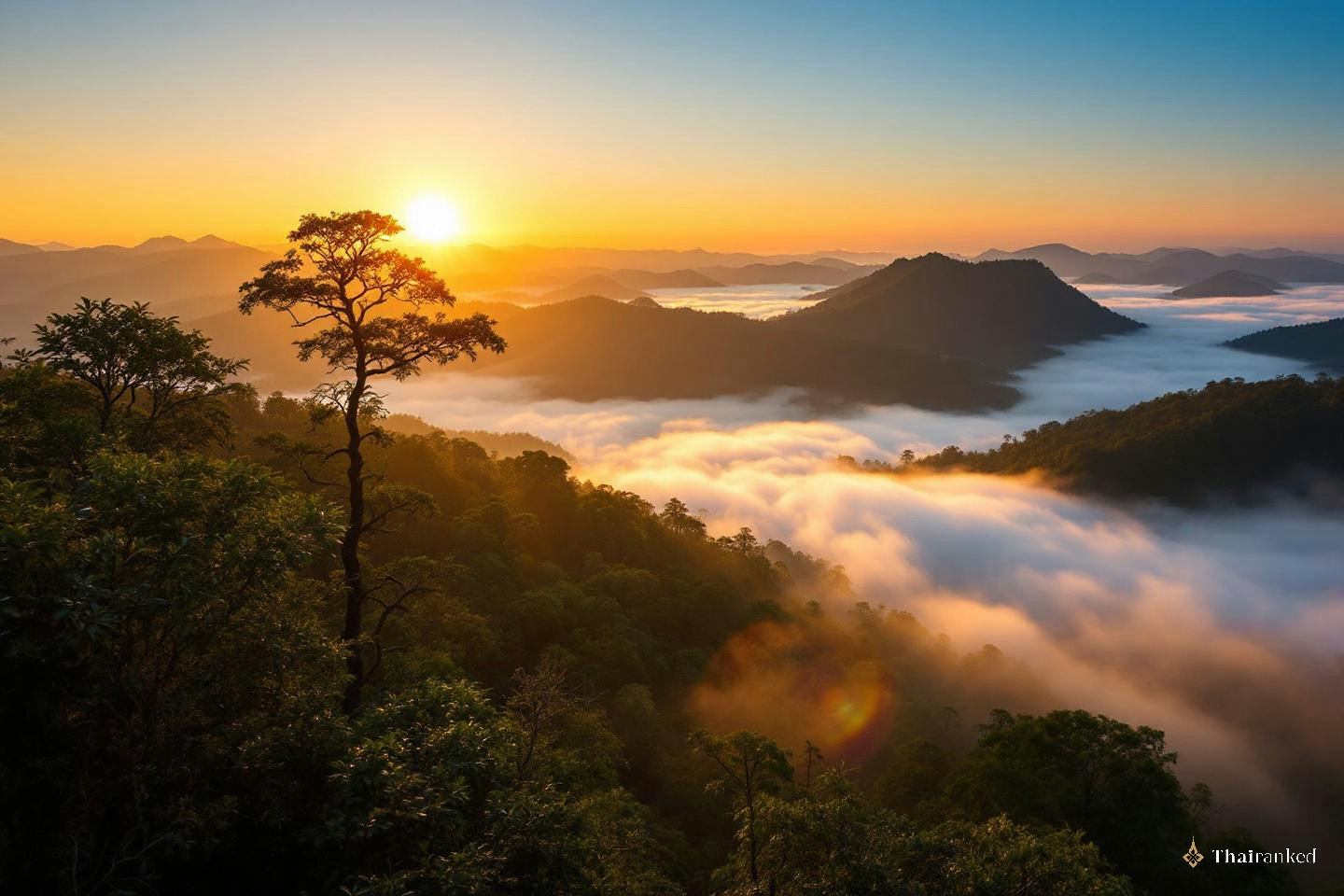
High in Thailand’s largest national park, Panoen Thung rewards early risers with a spectacular sea of mist that fills the forested valleys below. Access requires planning, the steep dirt road is regulated and may require a 4x4 or joining scheduled convoys during opening windows. Many visitors overnight at the Panoen Thung campground so they’re in position before dawn. January typically brings clear stars and crisp mornings, so bring layers and a headlamp. Arrive an hour before sunrise for the full transition from indigo to gold. Photo tips, watch for backlit mist and sunbeams cutting through gaps in the ridgelines, and use a polarizer sparingly to keep the atmospheric glow. If clouds sit high, wait until after sunrise when the fog thins and light spills into the valleys for your most dramatic frames.
Wichtige Informationen
Phetchaburi
8. Khao Daeng Viewpoint – Khao Sam Roi Yot
Coastal karsts and glowing wetlands at dawn
Highlight
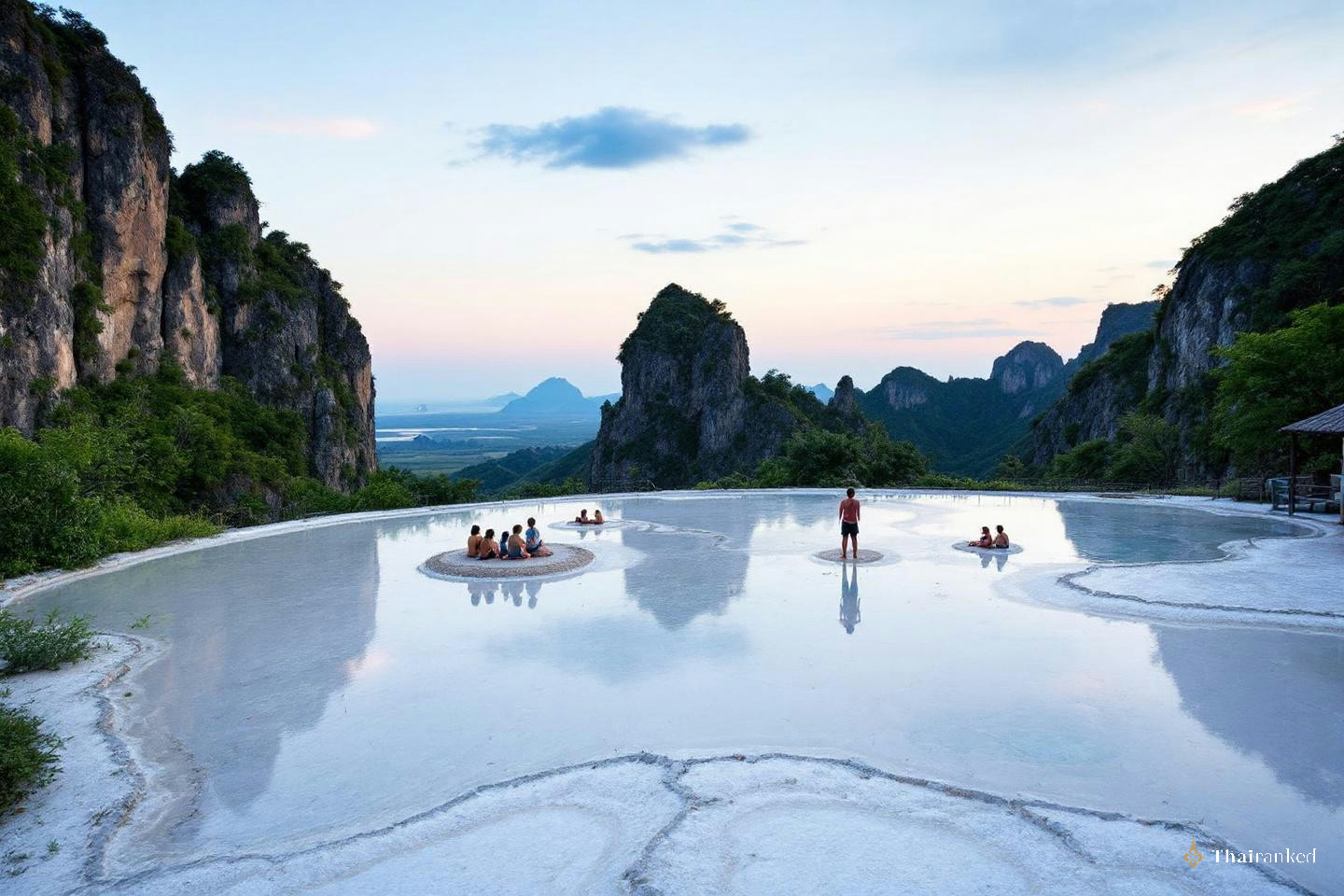
For a coastal take on sunrise, Khao Daeng’s jagged limestone ridge overlooks glassy wetlands and the Gulf of Thailand beyond. The hike is short but steep and rocky, 30–40 minutes with some scrambling, so wear sturdy shoes and bring a headlamp for the pre-dawn ascent. January skies are often clear with soft morning light that paints the karst spires and salt pans in subtle pastels. Arrive 45–60 minutes early for blue hour and to navigate safely in the dark. Photo tips, a wide lens captures the dramatic limestone foreground against the horizon, while a longer focal length picks out patterns in the wetlands below. Keep an eye out for monkeys near the trailhead and be cautious along sharp, exposed sections at the top. Start early to beat the heat on the descent.
Wichtige Informationen
Prachuap Khiri Khan
9. Doi Ang Khang Viewpoints
Terraced farms, cold air, and quiet ridges
Highlight
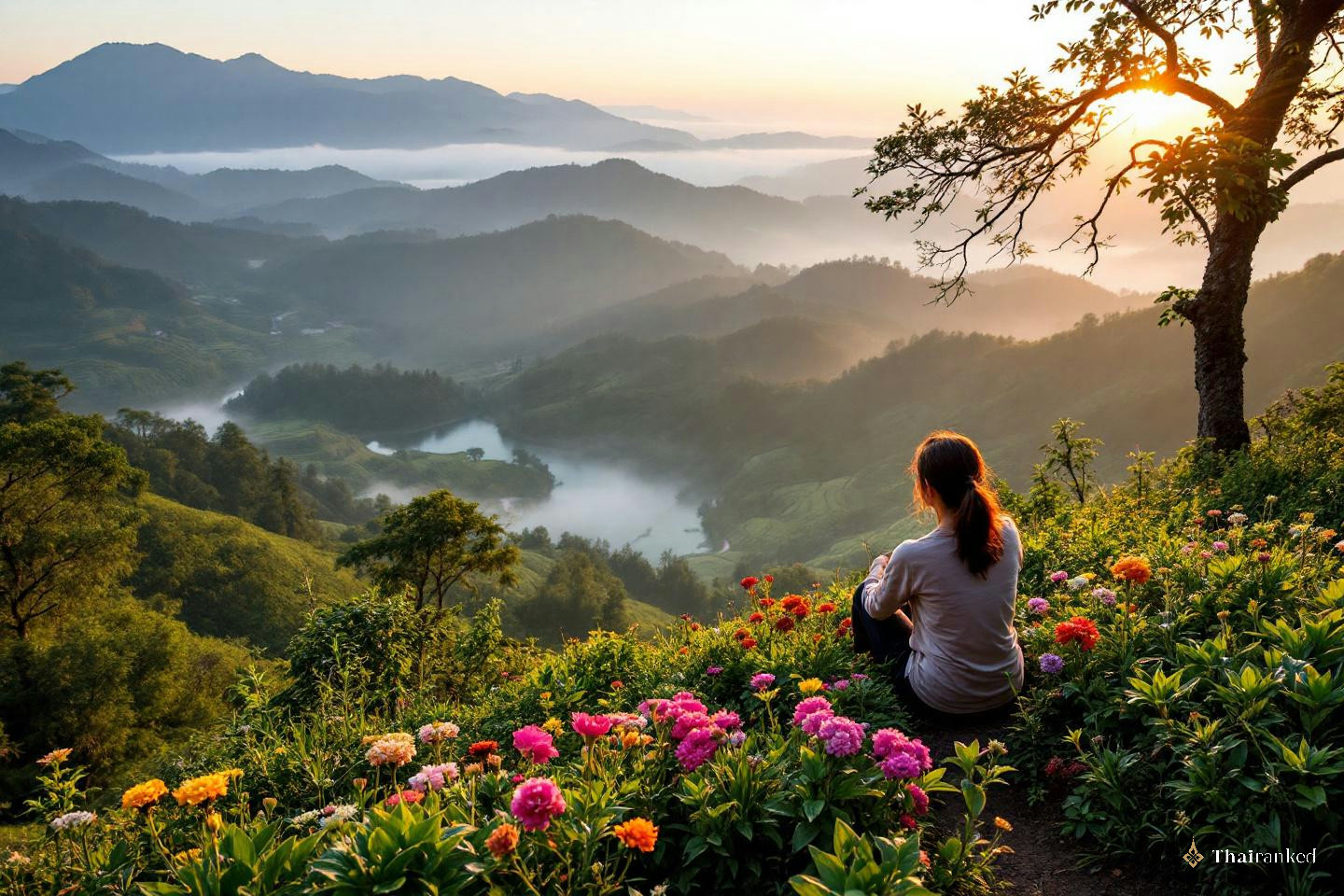
Border-hugging Doi Ang Khang is a quiet alternative to the bigger northern peaks, with chilly mornings, terraced farms, and frequent valley fog in January. The viewpoints around the Royal Agricultural Station and nearby ridges give you east-facing angles over patchwork fields and distant Myanmar hills. Roads are steep and winding, so drive cautiously and arrive early to navigate in the dark. Pack a warm jacket, gloves, and a headlamp. Photo tips, go wide for farm textures leading toward the sunrise, then switch to a telephoto to layer ridges and isolate lone trees floating in mist. After sunrise, walk the garden paths as golden light kisses the flowers and greenhouses for soft, detail-rich shots. Weekdays are wonderfully peaceful and nearby homestays make sunrise access easy.
Wichtige Informationen
Chiang Mai
10. Red Lotus Lake (Nong Han Kumphawapi)
Blooming lilies and pastel skies from a boat
Highlight
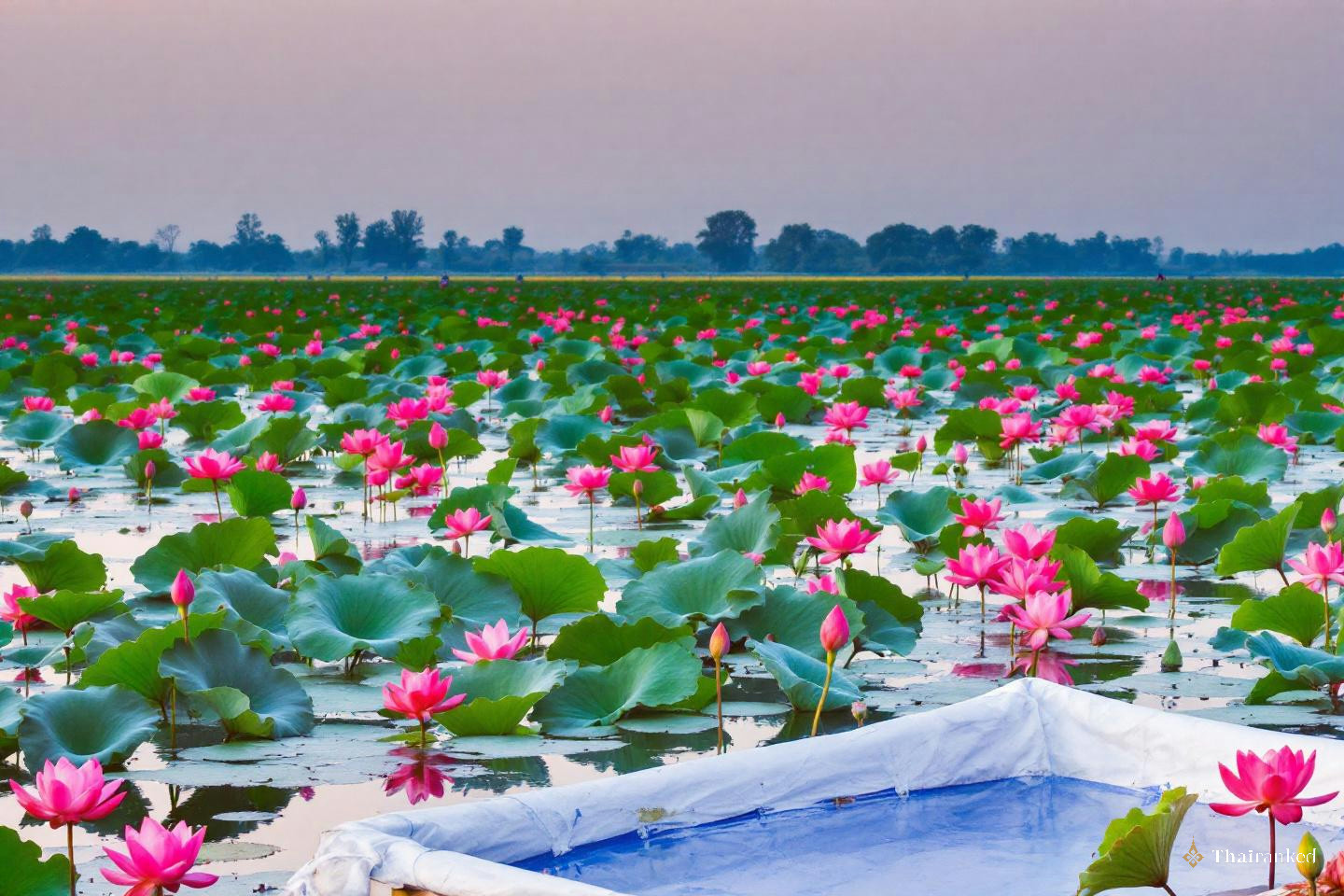
For a sunrise with a twist, glide through millions of blooming red lotuses on Udon Thani’s Nong Han Kumphawapi. Peak bloom is December to February, and flowers open with the early light, so be on a boat just before sunrise to catch both pastel skies and blossoms at their freshest. Hire a boat at the main pier and plan for 60–90 minutes on the water. Photo tips, a wide-angle at water level immerses you in the blooms, while a short tele zoom isolates clusters against the sky. Polarizers help control glare, but keep shutter speeds up if birds take off at dawn. Dress warmly for the wind-chill, bring a dry bag, and expect your best color from blue hour through about 8–9 a.m. when the sun climbs and the lilies fully open.
Wichtige Informationen
Udon Thani
Die Jagd auf den Sonnenaufgang im Januar ist Thailand in seiner aufmunterndsten Form, egal ob Sie über ein Meer aus Nebel in Chiang Rai gleiten oder das erste Licht beobachten, das die Karstlandschaften von Phang Nga bemalt. Die Schlüssel zu einer großartigen Session sind einfach: Kommen Sie früh zur blauen Stunde, packen Sie Schichten für die kühlen Morgen im Norden und halten Sie die Pläne flexibel, falls sich die Parkstraßen oder Öffnungszeiten ändern. Wenn Sie daran interessiert sind, einen Sonnenaufgang in ein ganzes Wochenende im Freien zu verwandeln, schauen Sie sich unsere Empfehlungen für Thailands beste Nationalparks in der kühlen Saison zum Campen, Sternegucken und für nahegelegene Wanderwege an. Und wenn Sie zwischen Aussichtspunkten in der Nähe der Hauptstadt hüpfen, hat unser Bangkok Outdoor-Abenteuerführer Ideen, um Ihre Reiseroute mit Kajakfahren, Wandern und mehr abzurunden.
Egal, welchen Aussichtspunkt Sie wählen, denken Sie daran, dass die Magie oft direkt nach dem Sonnenaufgang geschieht, wenn die tiefen Wolken leuchten und die Höhenzüge golden werden. Verweilen Sie ein wenig länger, nippen Sie an etwas Warmem und lassen Sie das sanfte Licht des Januars den Ton für ein Jahr heller Anfänge setzen.
by Thairanked Guide
Thairanked helps you discover great places in Thailand!
Was Menschen fragen über
"Beste Aussichtspunkte für den Sonnenaufgang in Thailand, um im Januar Freude zu wecken"
Hier findest du Antworten auf die beliebtesten Fragen über Thailand.