Giant Yaksha at Suvarnabhumi Airport: Who Are the 12 Guardians?
January 25, 2026 06:40 AM
Last edited: January 23, 2026

by Thairanked Guide
Thairanked helps you discover great places in Thailand!
Search Hotels & Flights
Related Insights

The Giant Yaksha at Suvarnabhumi Airport: Thailand’s Mythical Guardians
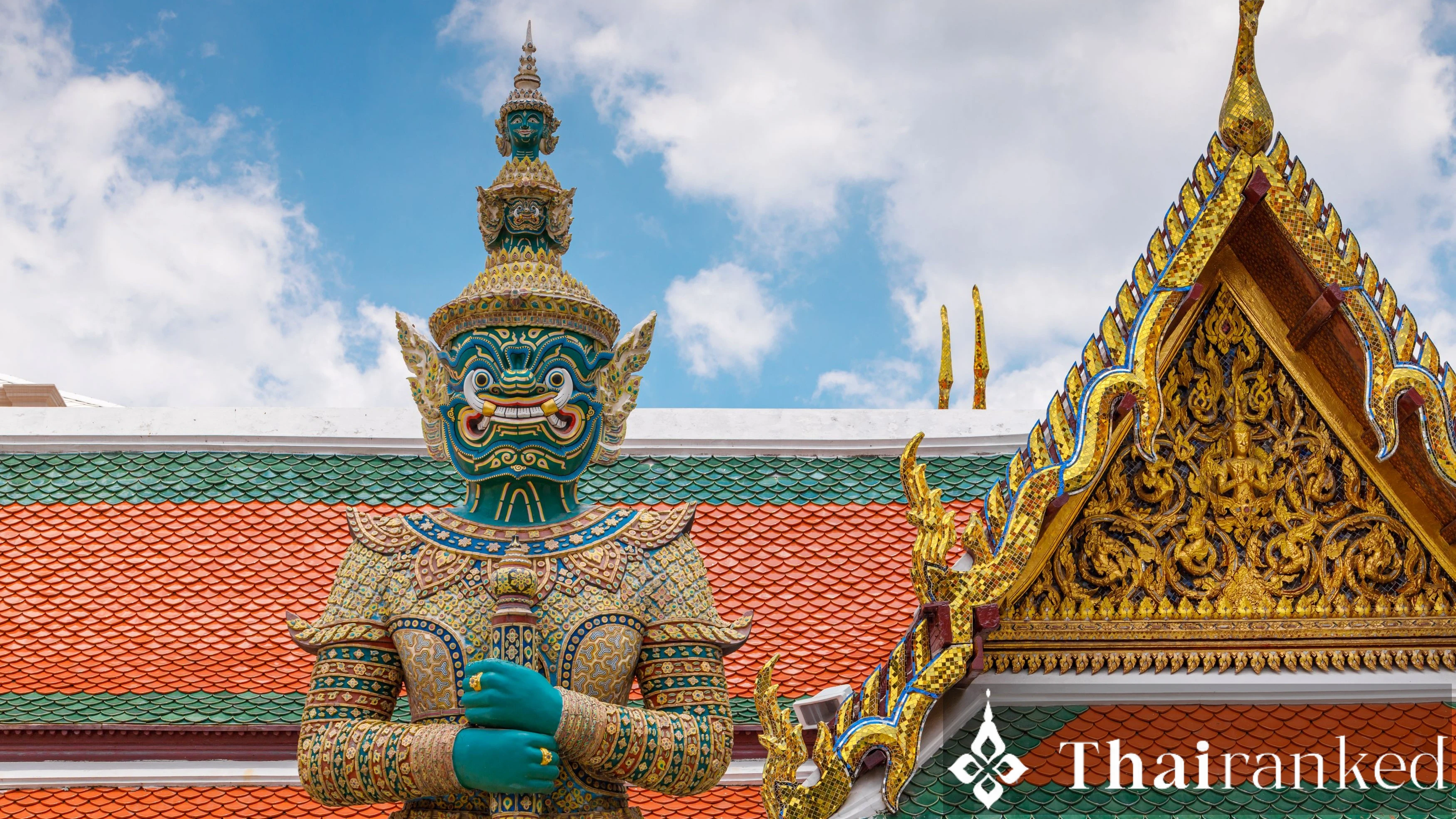
Travelers arriving at Suvarnabhumi Airport are greeted by an incredible sight: twelve towering, elaborately decorated giants known as Yaksha. These iconic statues aren’t just for show, they are guardians with deep roots in Thai mythology, drawn from Thailand’s national epic, the Ramakien. If you’ve ever wondered who these giants are and why they stand watch over Thailand’s busiest airport, you’re in for a treat.
What Are Yaksha?
In Thai culture, a Yaksha (ยักษ์, yak) is a mythological giant often associated with strength, protection, and supernatural power. In Buddhist and Hindu traditions, Yaksha can be both guardians and troublemakers, but in Thailand, they’re best known as the fierce protectors of Buddhist temples and sacred spaces. Their distinctive appearance, bulging eyes, sharp fangs, elaborate armor, and crowns, makes them instantly recognizable.
The Story Behind the Airport’s 12 Giants
The twelve Yaksha at Suvarnabhumi Airport are not random creations. They each represent famous giants from the Ramakien, the Thai version of the ancient Indian epic, the Ramayana. This sweeping saga tells of love, war, magic, and cosmic good versus evil, and it’s woven into Thailand’s art, dance, and popular culture.
The Ramakien in a Nutshell
The Ramakien centers on the hero Phra Ram (the Thai equivalent of Rama), his loyal brother Phra Lak, and his devoted wife Sida. Their main adversary is the demon king Totsakan (Ravana in Sanskrit), who kidnaps Sida and takes her to his kingdom of Lanka. With the help of Hanuman (the monkey general) and magical allies, Phra Ram wages an epic battle to rescue his wife, facing numerous demons, many of whom are depicted as Yaksha.
Who Are the 12 Giant Yaksha at Suvarnabhumi Airport?
Each airport giant is modeled after a specific character from the epic. Here’s a quick introduction to the twelve, with Totsakan at the head:
- Totsakan (Ravana): The ten-faced demon king of Lanka, leader of the giants, and the saga’s central antagonist.
- Thotsagirithon: Brother of Totsakan, a powerful and loyal general in the demon army.
- Thotsarot: Father of Totsakan.
- Maiyarab: The magician giant, known for causing havoc for Phra Ram and his allies.
- Indrajit (Meghnad): The invincible son of Totsakan, famed for his magical prowess and battle skills.
- Nonthok: A minor but pivotal demon from earlier tales, linked to the origins of the Ramayana.
- Kumbhakan: The giant with mystical powers who fought valiantly for Totsakan.
- Phiphek: Totsakan’s wise brother who defected to aid Phra Ram.
- Suriyaphop: Another of Totsakan’s brothers, renowned for his loyalty.
- Thotsakan’s General (Thotsakan’s ally): Several Yaksha are said to represent key generals or guards serving under Totsakan.
- Mangkornkan: A dragon-headed giant with unique magical skills.
- Virulhaka: In some Thai lore, he is a guardian king of the south and often depicted in temple lore.
While exact names can vary, these figures generally represent Totsakan (Ravana), his family, and his primary generals, guardians of darkness in the epic, now recast as protectors of travelers and spaces in Thai culture.
Symbolism: Why Place Giants at the Airport?
Why do these mythic foes now guard an airport? In Buddhist beliefs, Yaksha act as protectors against evil spirits and misfortune. Placing their statues at airports, temples, and important public buildings is thought to provide blessings and safeguard all who pass through. At Suvarnabhumi, the giants send a message: you are being watched over, protected by the timeless legends of Thai culture.
How to Appreciate the Yaksha Statues at Suvarnabhumi
If you have a layover or a few minutes before your flight, snap a photo of the Yaksha and note their brightly colored costumes and meticulous designs. Each color, headgear, and weapon tells its own story. Notice the unique faces, armaments, and even the subtle details on their sashes and jewelry. Some travelers even make a quick wai (Thai greeting) before the statues for luck.
When and Where to See the Giants
The main Yaksha statues are located in the check-in hall on the departures level, impossible to miss. Smaller versions and illustrations may appear throughout the airport, from entrances to lounges.
If you want to dive deeper into Thai myths, consider visiting famous temples like Wat Phra Kaew (the Temple of the Emerald Buddha) in Bangkok, where more Yaksha guard the realm. Our Ayutthaya temple guide is also perfect for those seeking more ancient wonders.
The Influence of the Ramakien Throughout Thailand
The story of the Ramakien is foundational to Thai culture. Beyond airports, you’ll see murals of the Ramakien at palaces, temples, and festivals across the country. The giants also appear in traditional Thai dance, puppetry, classical paintings, and even modern pop culture.
Want to explore more Thai mythology? From the legends of Hin Ta Hin Yai to the origins of Loy Krathong, stories and symbolism run deep in Thailand. Check out our article on Hin Ta Hin Yai and Lanna love legends for another taste of myth in the modern world.
Travel Tips: Experiencing Culture at Suvarnabhumi
- Take time to admire and respect the statues, no climbing or sitting on the base.
- Look out for informational panels near the displays; many explain the character and story.
- For more cultural sites, consider a day trip from Bangkok. Our guide to cycling Bangkok’s historic Rattanakosin Island is a great way to see more Thai architecture and mythic art.
- If you’re traveling further, check for hotels close to Suvarnabhumi so you can make the most of your layover.
Key takeaways
- The 12 Yaksha at Suvarnabhumi Airport represent giants from Thailand’s Ramakien epic.
- Totsakan (Ravana) is the leader, with family and generals as fellow guardians.
- The statues protect travelers in the same way they protect temples.
- Yaksha’s mythic symbolism blends Hindu, Buddhist, and Thai beliefs.
- Beyond the airport, the Ramakien’s influence can be seen in temples, festivals, and Thai art.
by Thairanked Guide
Thairanked helps you discover great places in Thailand!
Search Hotels & Flights
Related Insights
Discover the origins of Khao San Road, from its roots as Bangkok’s biggest rice market to its transformation into a global backpacker and nightlife hotspot.
Discover the history of Wan Dek, Thailand's National Children's Day. Learn why it is celebrated on the second Saturday of January, the unique traditions involved, and the meaning behind the Prime Minister's motto.
Explore the fascinating origins and cultural journey of Pad Krapow, Thailand’s iconic basil stir-fry. Discover its history and significance in Thai cuisine.
Discover Makha Bucha, Thailand’s first major Buddhist holiday, its miracle story, teachings, and essential Thai traditions, making merit and candle processions.
Discover the true meaning of “farang” in Thailand. Is it offensive, neutral, or affectionate? Unpack the word’s origins and expat realities in Thai culture.
What people ask about
"Giant Yaksha at Suvarnabhumi Airport: Who Are the 12 Guardians?"
Here you will find answer to the most popular questions.