Best Regional Thai Cuisines: North vs. South
April 08, 2026 04:34 AM
Last edited: April 08, 2026

by Thairanked Guide
Thairanked helps you discover great places in Thailand!
Search Hotels & Flights
Best Regional Thai Cuisines: North vs. South
Thailand’s food scene is a journey through flavor, spice, civilization, and climate. The country’s geography has shaped two of the most distinct culinary landscapes: Northern and Southern Thai cuisines. Travelers who crave adventure beyond pad thai will find new taste experiences in Chiang Mai’s markets or seaside towns in Phuket. Let’s explore why these regions taste different, which dishes define each, and tips for trying authentic regional food in Thailand.
Why Do North and South Thai Cuisine Differ?
Mountains line the north, framing valleys in Chiang Mai, Chiang Rai, and Lamphun. Here, an ancient Lanna heritage meets cooler weather, sticky rice rituals, and gentle spices. The South faces the Andaman Sea and the Gulf of Thailand, with Malay, Muslim, and Indian influences creeping into kitchens. The heat climbs with the humidity, and so does the spice in the food.
Ingredients tell the story. In the north, glutinous rice dominates. The South prefers jasmine rice and coconut in curries. Herbs differ: northern kitchens use dill and galangal, southern kitchens love turmeric, kaffir lime, and fresher leaves, thanks to a wetter, tropical climate.
Northern Thai Cuisine: Subtle Spice, Hearty Flavors
Eating in the north means sticky rice balled by hand, mild soups, slow-cooked pork, and sauces with earthy chilies and fermented notes. Lanna cuisine celebrates umami above burning heat.
Signature Dishes of the North
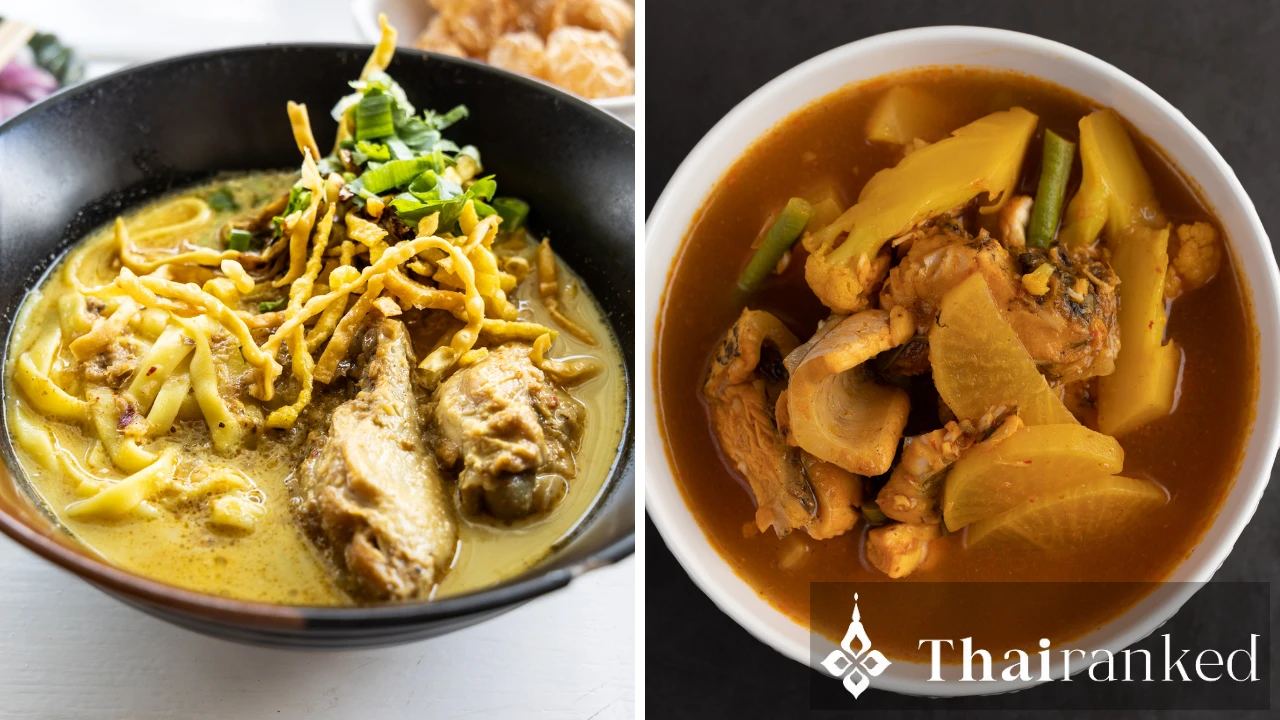
- Khao Soi (ข้าวซอย): Egg noodle curry with rich coconut broth, pickled mustard greens, lime, and fried noodles on top. Try it at a local spot in Chiang Mai. For more recommendations, check our Chiang Mai travel guide.
- Nam Prik Ong (น้ำพริกอ่อง): Tomato and pork chili dip, perfect with boiled vegetables or crispy pork rinds.
- Sai Ua (ไส้อั่ว): Northern Thai herb sausage, grilled and loaded with lemongrass, kaffir lime, and galangal. Buy it at local markets or night stalls.
- Gaeng Hung Lay (แกงฮังเล): Aromatic pork belly curry with ginger, tamarind, and peanuts; less spicy, more savory and tangy.
- Laab Kua (ลาบคั่ว): A minced pork salad but milder than Isan laab, often spiked with local roasted spices.
Fresh vegetables and wild herbs always line the plate. Dipping sauces (nam prik) come with every meal. Meals unfold in a kan tok dinner, food arranged on small round trays served with sticky rice by hand, sitting on floor mats.
Where to Eat Northern Thai Food
Authentic northern cuisine shines in Chiang Mai, traditional markets, and small family-run restaurants. Visit the markets in Chiang Mai, or time your trip with the Chiang Mai Flower Festival for a festive food crawl.
Southern Thai Cuisine: Fiery, Aromatic, and Sea-Infused
The South’s kitchen starts with coconut cream, stacks of fresh seafood, and bold spice. Southern curries set taste buds on fire, then cool the burn with coconut-laced sauces. The region mixes Buddhist and Muslim influences, so you find both pork and halal beef. Proximity to Malaysia and the sea shapes every menu.
Signature Dishes of the South
- Gaeng Tai Pla (แกงไตปลา): Fermented fish viscera curry, packed with fish, vegetables, and spice, a challenge even for locals.
- Gaeng Som (แกงส้ม): Sour and spicy soup made with turmeric, tamarind, and often fish or shrimp. It glows yellow and shocks the palate.
- Khao Yum (ข้าวยำ): Southern rice salad with herbs, shredded coconut, kaffir lime, and spicy sweet fish sauce. Every bite pops.
- Massaman Curry (มัสมั่น): Muslim-inspired, mild, and fragrant curry usually cooked with beef, potatoes, and peanuts.
- Kua Kling (คั่วกลิ้ง): Dry curry stir-fried with minced pork or beef, lemongrass, and yellow curry paste. Spicy and a southern staple.
Coconut milk finds its way into everything, from yellow Penang curry to desserts like khanom tom. Seafood stars in every southern market: prawns, squid, and fish served grilled or in thick, complex stews.
Where to Eat Southern Thai Food
For fresh seafood and southern specialties, head to Krabi’s riverside town or hidden restaurants in Phuket. Read the Krabi Travel Guide or explore the beach clubs in Phuket for contemporary takes on traditional recipes. For spicy food hunters, look up the spiciest Southern Thai dishes, a real heat test.
Key Differences between Northern and Southern Thai Food
- Rice: The north favors sticky rice, the south goes for jasmine or white rice.
- Spice: Southern food burns hotter, northern food builds flavor with herbs and fermentation over heat.
- Protein: Pork, chicken, river fish in the north; seafood, chicken, beef in the south. Pork is rare in southern Muslim-majority towns.
- Sauces: North mixes tomato, fermented soy, and herbs; South uses coconut, tamarind, turmeric, chili, and pungent fermented fish.
- Influences: Northern cuisine reflects Burmese and Yunnanese influences, southern food draws on Malay, Indian, and Muslim cooking.
Tips for Trying Regional Thai Food
- Visit local markets, grab street food, and don’t shy away from small, family-owned restaurants.
- Most Thai cities offer a few regional specialties, but the best flavors come from the source; try Chiang Mai for northern, Phuket or Surat Thani for southern.
- For truly local experiences, eat with your hands when northern sticky rice is on the table. In the south, pair curries with rice and fresh local greens.
- Ask locals about their favorite kanom jeen (fermented rice noodles), curries, or nam prik dips.
- If you want to explore more destinations tied to food, check out routes like the Lisa Route to 10 Hidden Destinations.
Pairing Regional Food with Travel
Bite into northern sausage after hiking in the cool mountains. Cool off with southern kanom jeen and fresh seafood after a dip at the best beaches in Thailand. Find the full list at our Best Beaches in Thailand.
Plan your foodie adventure and mix travel with meals. Stay in Chiang Mai for immersive kan tok dinners, day-trip to Krabi for fish curries, and don’t miss a night market in any town.
Key takeaways
- Northern Thai cuisine features gentle heat, sticky rice, herbal dips, and pork-centric dishes.
- Southern Thai cuisine is bold, spicy, coconut-rich, and heavy on seafood and turmeric-based curries.
- Travelers can try both regional cuisines at their best by visiting Chiang Mai or Phuket/Krabi.
- Each region’s food tells a story of climate, neighbors, and culture; flavor is only the beginning.
- For a deeper dive on traveler tips and hidden food destinations, browse our other food and travel guides on ThaiRanked.
by Thairanked Guide
Thairanked helps you discover great places in Thailand!
Search Hotels & Flights
Related Insights
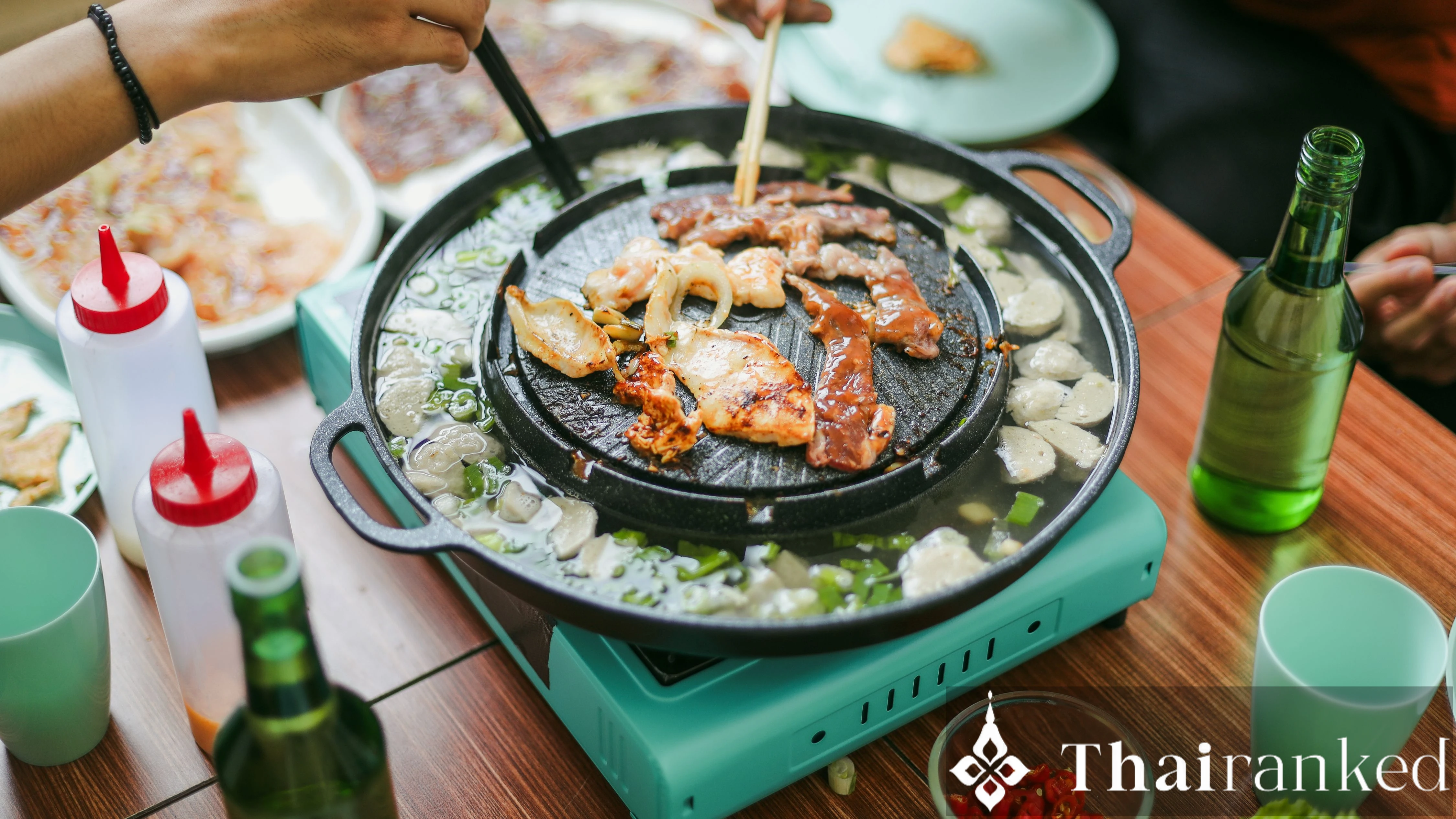
Learn how to eat Moo Kata (Thai BBQ) like a local! Discover authentic grilling tips, sauce-making tricks, and etiquette for a perfect Thai dining experience.

Learn to spot heatstroke symptoms, act fast, and stay safe in Thailand's extreme heat. Essential signs, prevention advice, and response steps.

Discover the best fabrics to beat the Bangkok heat this April. Stay cool, comfortable, and stylish with our guide to hot-weather clothing in Thailand.

First time using BTS or MRT in Bangkok? Get clear, step-by-step instructions on how to buy tickets, enter, ride, and exit Bangkok’s popular train systems.

Discover Thailand’s leading private hospitals, how to book appointments, and use international health insurance for high-quality expat medical care.
What people ask about
"Best Regional Thai Cuisines: North vs. South"
Here you will find answer to the most popular questions.